4 citations
,
September 1993 in “Steroids” This paper details a method for measuring testosterone metabolism into seven androgens using digital autoradiography, which offers high sensitivity and reduces the need for radioactive materials.
 59 citations
,
May 2014 in “Expert Opinion on Therapeutic Targets”
59 citations
,
May 2014 in “Expert Opinion on Therapeutic Targets” This review discusses current therapeutic targets and treatments for androgenic alopecia but reports no clinical results; the authors highlight the challenge of developing multi-target drugs for effective treatment.
 1 citations
,
May 2001 in “Journal of Labelled Compounds and Radiopharmaceuticals”
1 citations
,
May 2001 in “Journal of Labelled Compounds and Radiopharmaceuticals” Scientists at the University of Michigan Medical School successfully created a special compound that can be used to improve imaging of prostate cancer.
2 citations
,
March 2025 in “PNAS Nexus” In this study, researchers used Raman spectroscopy to identify melanin-specific features in mouse hair as potential biomarkers for gamma-radiation exposure, achieving a sensitivity of 88% and specificity of 83%, with classification accuracy declining over time beyond 7 days post-irradiation.
 January 2024 in “Wiadomości Lekarskie”
 This study reported the development of fluorescent markers using wide band gap metal oxides with rare earth ions for early tumor detection and treatment. Testing in animals showed high efficiency and selectivity, with potential applications in contrast-enhanced MRI, targeted drug delivery, and photodynamic cancer therapy.
 1 citations
,
May 2020 in “Beilstein Journal of Organic Chemistry”
1 citations
,
May 2020 in “Beilstein Journal of Organic Chemistry” This study developed a novel smart deoxyribozyme-based fluorescent sensor that efficiently detects androgen receptor mRNA with high selectivity and can be adapted to target various nucleic acid sequences.
2 citations
,
January 1972 In this study, plucked rat hair showed greater accumulation of injected radioisotopes than shaved hair, which may have implications for measuring exposure and understanding follicle tissue processes.
 40 citations
,
October 2009 in “Journal of Biomedical Nanotechnology”
40 citations
,
October 2009 in “Journal of Biomedical Nanotechnology” This review discusses pyrene excimer nucleic acid probes for detecting biomolecules and protein-DNA interactions and reports no new experimental findings.
 6 citations
,
November 2004 in “Bioorganic & Medicinal Chemistry Letters”
6 citations
,
November 2004 in “Bioorganic & Medicinal Chemistry Letters” This study found that arylhydantoin and arylthiohydantoin derivatives with hydroxybutyl or methyl side-chains showed superior androgen receptor binding affinity and may serve as promising radioiodinated AR ligands.
January 2015 in “UNIFESP Institutional Repository (Universidade Federal de São Paulo)” This study found that a 30 Gy radiation dose was most effective in an experimental rabbit model of radiodermatitis, causing significant tissue changes and prolonged effects compared to lower doses and a control group.
 2 citations
,
November 2022 in “Biosensors”
2 citations
,
November 2022 in “Biosensors” This study introduced a new spectrofluorometric method using a synthesized organic fluorophore to effectively analyze darolutamide and thalidomide in pharmaceutical preparations and biofluids.
45 citations
,
February 2011 in “IOP Conference Series Materials Science and Engineering” This study developed a sensor that effectively measures Tl+ cation in solutions with a wide dynamic range and low detection limit, responding linearly within the concentration range 1.0 × 10⁻⁸ to 1.0 × 10⁻¹M.
December 1963 in “Bulletin of Experimental Biology and Medicine” Radioiodine-131 significantly accumulates in skin and hair.
 61 citations
,
April 2014 in “Radiation Research”
61 citations
,
April 2014 in “Radiation Research” This study observed that topically applied RTA 408 reduced the severity of radiation-induced dermatitis in mice, with the highest dose significantly reducing and alleviating skin damage and associated inflammation.
 2 citations
,
January 2024 in “Pakistan Journal of Life and Social Sciences (PJLSS)”
2 citations
,
January 2024 in “Pakistan Journal of Life and Social Sciences (PJLSS)” This study found that hair treatment materials commonly used in Iraq and from international sources had radon, radium, and uranium concentration levels below international safety limits, suggesting they are safe for use.
41 citations
,
February 2021 in “Translational research” This review discusses the role of noncoding RNAs (ncRNAs) in radiation response and highlights their potential as biomarkers for assessing radiation damage, but reports no new clinical results.
1 citations
,
January 1994 in “Drug Development and Industrial Pharmacy” This study suggests that certain combinations of topical radioprotectors and vehicles can reduce radiation-induced hair loss in mice, with effectiveness varying by radiation dose and vehicle type.
 18 citations
,
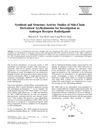
April 2001 in “Bioorganic & Medicinal Chemistry Letters”
18 citations
,
April 2001 in “Bioorganic & Medicinal Chemistry Letters” This study identified the N-(iodopropenyl) derivative 13 as a promising candidate for development as a radioiodinated androgen receptor ligand due to its binding affinity.
 3 citations
,
March 1932 in “Journal of the American Medical Association”
3 citations
,
March 1932 in “Journal of the American Medical Association” This article reviews the historical recognition of radioactive poisoning in luminous dial painting, detailing its symptoms and cessation of dangerous practices, but reports no new clinical results.
January 1997 in “Purdue e-Pubs (Purdue University)” This study suggested that electron spin resonance techniques can potentially measure gamma ray exposure in human hair samples, though variability and time sensitivity pose challenges for accurate dose estimation.
 36 citations
,
January 2018 in “Clinical and Medical Reports”
36 citations
,
January 2018 in “Clinical and Medical Reports” Rare earth elements are crucial in medical imaging and cancer treatment.
11 citations
,
January 1957 in “Journal of Histochemistry & Cytochemistry” This study demonstrated radiocalcium uptake in skin, eye, cartilage, and mucous glands, with the highest concentration in the hair follicle's keratogenous zone.
10 citations
,
January 2004 in “PubMed” This study observed that gamma-ray induced apoptosis in ICR mouse hair follicles could be reduced by pretreatments with diethyldithiocarbamate or green tea, suggesting these agents as potential radioprotectors.
 54 citations
,
July 1967 in “Science”
54 citations
,
July 1967 in “Science” This study found that aged tritiated thymidine breaks down and incorporates into cytoplasmic macromolecules, not DNA, suggesting caution in its use.
9 citations
,
January 2007 in “mediaTUM – the media and publications repository of the Technical University Munich (Technical University Munich)” This study analyzed dosimetric quantities in x-ray microbeam radiation therapy and found that the peak-to-valley dose ratio decreases with depth in the irradiated object.
January 2026 in “Journal of Radiation Research” This study found that using human hair follicle dermal papilla cells, 53BP1 focus counting can estimate radiation doses from 50 mGy after 5 hours, and focus size analysis refines dose estimation for doses ≥ 500 mGy up to 96 hours.
57 citations
,
July 2000 in “Toxicology Letters” This study found that the K6/ODC transgenic mouse model is highly sensitive to identifying genotoxic carcinogens, showing 100% concordance with traditional rodent bioassays.
3 citations
,
November 2024 in “Electrochimica Acta” A new, quick method accurately detects minoxidil in drugs and cosmetics.
January 2014 in “cIRcle (University of British Columbia)” This research found that modifying brachytherapy seeds with contrast-enhancing materials in photoacoustic imaging increased signal-to-noise ratios and imaging depth, and demonstrated potential for tissue differentiation by analyzing temperature-induced changes in PA intensity.
13 citations
,
January 2001 in “Skin pharmacology and physiology” This article discusses a new device for visualizing and quantifying skin distribution of a radioactively labelled compound, but reports no new clinical results.