 December 2023 in “Research and reports in urology”
 This case report from the authors highlights a rare diagnosis of high-grade prostate cancer in a 35-year-old man, showing strong functional recovery and no detectable PSA one year after robotic-assisted radical prostatectomy despite the usual onset being significantly later in life.
 3 citations
,
May 2025 in “Cell Death and Disease”
3 citations
,
May 2025 in “Cell Death and Disease” This study found that METTL1 is upregulated in papillary thyroid cancer tissues and promotes cancer cell proliferation and metastasis through its tRNA methyltransferase activity.
6 citations
,
December 2021 in “Journal of Cancer Research and Therapeutics” In this study, induction nab-paclitaxel plus cisplatin, combined with nimotuzumab and IMRT, followed by S-1 adjuvant chemotherapy, showed excellent survival benefits with tolerable toxicities for stage N3 nasopharyngeal carcinoma patients.
The research found that while Dnmt3a and Dnmt3b are not necessary for skin homeostasis in mice, the loss of Dnmt3a increases squamous tumor formation from carcinogens, and combined deletion of both results in more aggressive and metastatic tumors.
11 citations
,
May 2008 in “British journal of dermatology/British journal of dermatology, Supplement” This case report describes a 32-year-old man who developed SCC of the common bile duct a year after receiving treatment for a malignant proliferating trichilemmal tumour on the scalp.
March 2025 in “Laboratory Investigation” This study examined the clinicopathologic features of mesothelioma of the tunica vaginalis testis in 14 patients, finding that the disease mostly presented as epithelioid type, with a propensity for high-grade tumors, and BAP1 and MTAP loss was uncommon.
This study found that loss of the DNA methyltransferase Dnmt3a, but not Dnmt3b, increased carcinogen-induced squamous tumors in murine epidermis, with combined deletion leading to more aggressive and metastatic carcinomas.
 March 2025 in “American Journal of Medical Genetics Part A”
 In this study, researchers found that mosaic PLCD1 hotspot variants, even without the recognized germline "risk allele," may be a rare but significant genetic cause of nevus trichilemmocysticus, warranting DNA testing and sensitive sequencing technologies for accurate diagnosis.
2 citations
,
May 2011 in “Journal of Clinical Oncology” This study found that paclitaxel poliglumex showed limited effectiveness and was relatively well tolerated in post-menopausal women with advanced NSCLC, suggesting further testing of this treatment may not be justified.
 29 citations
,
October 2016 in “Cell death and differentiation”
29 citations
,
October 2016 in “Cell death and differentiation” This study found that in squamous cell carcinomas, the inhibition of the tumor-suppressor function of TAp73β by ΔNp63α occurs through promoter squelching, not direct protein interaction.
1 citations
,
April 2023 in “Heliyon” In this study, a 68-year-old man with muscle-invasive bladder cancer and renal insufficiency achieved a partial radiological response to neoadjuvant therapy with gemcitabine and Disitamab Vedotin, without significant adverse events, highlighting a potential alternative for cisplatin-ineligible patients.
33 citations
,
May 2017 in “Journal of Clinical Oncology” This phase I study reported that ETC-159, targeting Wnt signalling, showed tolerable safety profiles at doses that inhibit its pathway, though bone turnover markers increased, warranting early and regular monitoring. No tumor responses were observed, but two patients achieved stable disease for several cycles.
7 citations
,
October 2018 in “Journal of Mind and Medical Sciences” This study highlights the need for further exploration and stratification of diagnosis and treatment for diabetes mellitus type 3c, a form secondary to chronic pancreatitis.
May 2024 in “JDDG Journal der Deutschen Dermatologischen Gesellschaft” This case study describes a middle-aged woman diagnosed with a proliferating trichilemmal tumor on her scalp, emphasizing the importance of comprehensive diagnostic approaches and highlighting surgical excision as the primary treatment.
86 citations
,
November 2015 in “Journal of Gastroenterology” This study reported that the NUDT15 R139C genetic variant was significantly associated with thiopurine-induced leukocytopenia in Japanese inflammatory bowel disease patients, independent of 6-thioguanine nucleotide levels.
May 2005 in “Molecular Carcinogenesis” This study found that mrp/plf-mRNA expression in murine skin increases in response to different tumor promoters, suggesting its potential as a short-term biomarker for chemical carcinogenesis.
324 citations
,
May 2002 in “Oncogene” June 2020 in “Zenodo (CERN European Organization for Nuclear Research)” This study suggests that the DNMT3B -579 G>T polymorphism may be a genetic risk factor for colorectal cancer in the Azerbaijani population.
3 citations
,
August 2022 in “International Journal of Molecular Sciences” This study demonstrated that 5-azacytidine treatment may reduce TSC lesion-related hair follicles in mice, suggesting chromatin remodeling agents could be effective for tuberous sclerosis cutaneous lesions lacking tuberin.
January 2011 in “Australasian Journal of Paramedicine” This review discusses the roles of PAX3 in melanocyte development and melanoma progression but reports no new experimental results; the authors propose it as a key regulatory factor and call for further investigation.
 April 2023 in “Cancer research”
 This study suggests that KRTAP2-3 may serve as a novel biomarker to identify cells in the polyaneuploid cancer cell state, which is linked to therapy resistance and poor prognosis in prostate cancer.
32 citations
,
January 2000 in “International Journal of Cancer” In this study, the researchers observed significant down-regulation of Transglutaminase-3 expression in esophageal cancer tissues compared to normal tissues, suggesting its alteration is a common event in esophageal cancer development.
7 citations
,
January 2025 in “Journal of Experimental & Clinical Cancer Research” This study found that PRMT5 inhibitors showed potent anti-tumor activity in models of adenoid cystic carcinoma and that combining these inhibitors with lenvatinib may have additional growth-inhibitory effects.
 April 2022 in “Authorea (Authorea)”
 This study reports two cases where localized prostate cancer with low PSA levels was incidentally detected through CT scans performed for other medical reasons.
 6 citations
,
October 2012 in “Journal of Heredity”
6 citations
,
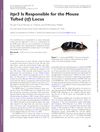
October 2012 in “Journal of Heredity” This study identified the Itpr3 gene as responsible for the tufted hair loss phenotype in the BTBR mouse strain.
24 citations
,
September 2023 in “Science Advances” In this study, deleting the gene Mettl3 in mouse epidermal progenitors resulted in impaired epithelial development and self-renewal, highlighting m6A's crucial role in regulating chromatin modifiers and maintaining normal epithelial tissue function.
May 2019 in “CINECA IRIS Institutial Research Information System (University of Genoa)” This study found that patients with the MITF p.E318K variant are more likely to develop multiple primary melanomas and dysplastic nevi with uncommon dermoscopic patterns compared to non-carriers.
January 2026 in “American Journal of Medical Genetics Part A” The researchers reported two brothers with a new variant of X-linked trichothiodystrophy associated with an RNF113A gene mutation, highlighting features such as intellectual disability and growth failure, but without previously reported endocrinological or genital abnormalities, underlining the importance of genetic counseling for such variants.
 59 citations
,
September 2007 in “Biochemical and Biophysical Research Communications”
59 citations
,
September 2007 in “Biochemical and Biophysical Research Communications” This study found that a gain-of-function mutation in the TRPV3 channel leads to altered hair development in DS-Nh mice by affecting the anagen and telogen phases, highlighting TRPV3's role in hair growth regulation.
May 2022 in “The journal of investigative dermatology/Journal of investigative dermatology” This study found that TET2 plays a tumor-suppressive role in preventing squamous cell carcinomas by regulating 5-hydroxymethylcytosine levels, suggesting therapeutic potential for DNA methylation dynamics.