 August 2022 in “Case reports”
 In this case report, isotretinoin treatment led to complete remission of folliculitis decalvans lesions in a 26-year-old male after a year and a half, despite the lack of certain histopathology images and control tests; the findings also suggest potential familial clustering needing further genetic investigation.
 21 citations
,
June 2022 in “Molecules”
21 citations
,
June 2022 in “Molecules” This review discusses the phytochemistry and pharmacological activities of Perilla frutescens, detailing its bioactive compounds and their potential health benefits, but reports no new clinical results.
 16 citations
,
October 2023 in “Molecular cancer”
16 citations
,
October 2023 in “Molecular cancer” This study reviews the etiology and treatment of skin cancer, focusing on nanotechnology's role in addressing drug resistance and evaluating nanoparticles' potential to improve treatment outcomes, including overcoming multidrug resistance.
 8 citations
,
June 2022 in “Cosmetics”
8 citations
,
June 2022 in “Cosmetics” This study found that coffee berry extract demonstrated anti-aging properties in skin and hair cells, showing significant anti-collagenase activity and stimulating hair-related gene expression, suggesting its potential for use in cosmeceuticals.
1 citations
,
May 2024 in “Pharmaceutics” This review discusses the potential benefits and challenges of using hemp actives like cannabinoids, terpenes, and flavonoids in skincare products, emphasizing their anti-inflammatory, antimicrobial, and antioxidant properties and strategies to enhance their penetration and integration in natural and sustainable cosmeceuticals.
1 citations
,
February 2024 in “Cosmetics” In this review, researchers explored the potential of cannabinoids, particularly cannabidiol, as a holistic treatment for acne vulgaris, highlighting their lipostatic, anti-inflammatory, antiproliferative, and antimicrobial effects in modulating acne-related factors like sebum production and inflammation.
January 2026 in “International Journal of Molecular Sciences” This review discusses the diverse industrial applications of hemp beyond traditional fiber uses, highlighting its phytochemical components with antioxidant and antimicrobial properties that are explored in agrochemicals, cosmetics, and food sectors.
 January 2025 in “AAPS PharmSciTech”
 Transethosomes improve drug delivery through the skin and show promise for treating various conditions.
January 2018 in “Journal of human virology & retrovirology” This study highlights the need to examine the impact of lifestyle drugs on society, particularly focusing on usage patterns among youth and the general public.
 4 citations
,
July 2022 in “Medicina-lithuania”
4 citations
,
July 2022 in “Medicina-lithuania” This study found that women with PCOS in Poland had higher anxiety and depression levels and lower ego-resiliency compared to healthy women, often using passive stress-coping strategies.
58 citations
,
November 2018 in “Cochrane library” This study found that oral isotretinoin may slightly improve physician-assessed acne severity but is associated with more minor adverse effects compared to standard oral antibiotics plus topical treatment, based on low-quality evidence.
 15 citations
,
June 2019 in “Experimental Dermatology”
15 citations
,
June 2019 in “Experimental Dermatology” The authors suggest that the neuroendocrine system of the skin represents a promising target for repurposing drugs, such as cannabidiol and fingolimod, as topical treatments for inflammatory skin diseases.
 2 citations
,
May 2023 in “International Journal of Molecular Sciences”
2 citations
,
May 2023 in “International Journal of Molecular Sciences” This review discusses current knowledge about the TRPV3 ion channel's role in skin functions and diseases, highlighting its potential as a therapeutic target for pain and itch, though suitable ligands are limited.
February 2026 in “Health Science Reports” In this review, the authors emphasize the importance of understanding drug chemical structures to help general physicians better manage and treat acne, although no specific results are reported.
 12 citations
,
June 2003 in “Journal of the European Academy of Dermatology and Venereology”
12 citations
,
June 2003 in “Journal of the European Academy of Dermatology and Venereology” This review discusses the range and management of adverse cutaneous reactions to psychotropic medications and emphasizes the need for awareness among clinicians, concluding with a call for careful monitoring and patient education.
3 citations
,
January 2000 This article argues that psychoactive drugs are often beneficial in treating dermatological conditions with psychiatric or psycho-emotional components but does not present new clinical evidence.
5 citations
,
January 2020 in “Research journal of pharmacy and technology” This review explores the potential benefits of non-psychoactive Cannabidiol for reducing stress and pain associated with Polycystic Ovarian Syndrome and reports no new clinical findings.
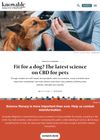 May 2024 in “Knowable Magazine”
 This source reports that various studies and case reports suggest CBD may help pets with ailments like epilepsy, arthritis, and skin issues, though findings are inconsistent and further research is needed due to variable factors such as dosages and hemp product quality.
7 citations
,
October 2023 in “European Journal of Pharmacology” This study found that Cannabidivarin (CBDV) promotes neuronal differentiation and inhibits oligodendrocyte maturation via TRPV1 modulation, highlighting its potential in neural stem cell research.
 May 2023 in “bioRxiv (Cold Spring Harbor Laboratory)”
 This study found that Cannabidivarin (CBDV) promotes neuronal survival, proliferation, and differentiation via TRPV1 activation but inhibits oligodendrocyte differentiation in postnatal neurogenesis.
 January 2024 in “Clinical dermatology open access journal”
 This paper reviews existing research on the cosmetic benefits of hemp-derived cannabinoids for skin and hair, highlighting their unique mechanisms of action, while discussing formulation, legal, and regulatory challenges associated with using these compounds in cosmetic products.
 January 2022 in “International review of movement disorders”
 In this review, the authors found that cannabinoids and steroid-related drugs show potential for treating Tourette syndrome, but existing evidence is limited and further research is needed to confirm their efficacy and safety.
16 citations
,
November 2018 in “Medicinal Chemistry” The authors concluded that newly synthesized N-acyl-L-tryptophanyl-isoleucine amides showed high anxiolytic activity in animal models, comparable to diazepam, through interaction with the TSPO receptor.
In this study, researchers synthesized the fictional compound 1-hydroxyindole and discovered its potential medical applications, including anti-aging properties, itch relief for atopic dermatitis, and as a stronger treatment for dementia compared to cilostazol. Additionally, they found that 1-methoxyindole derivatives function as anticancer agents in diets.
This review discusses the role of neuroactive steroids in physiological processes and their potential involvement in neuropsychiatric disorders, but it reports no new experimental findings.
 100 citations
,
May 2003 in “Journal of Neuroscience”
100 citations
,
May 2003 in “Journal of Neuroscience” This study found that neuroactive steroids like DHEA and pregnenolone influence cocaine-induced appetence in mice through their interaction with the ς1 receptor, suggesting a role in individual vulnerability to addiction.
2 citations
,
April 2020 in “Journal of Mind and Medical Sciences” This study reviewed reports on interactions between psychotropic drugs and natural beverages, finding that substances like grapefruit juice and St John's wort can significantly affect drug metabolism, emphasizing the need for physician-patient education on drug administration to prevent harmful interactions.
 40 citations
,
December 2019 in “Neurobiology of Stress”
40 citations
,
December 2019 in “Neurobiology of Stress” This review focuses on neuroactive steroids' influence on GABA-ergic signaling and discusses challenges in developing them for various therapeutic uses, citing recent excitement from FDA approval of allopregnanolone for postpartum depression but reporting no new results.
91 citations
,
May 2003 in “PubMed” This study found that neuroactive steroids, through their interaction with the sigma1 receptor, influence the acquisition of cocaine's rewarding effects in mice, suggesting a role in drug addiction vulnerability.
22 citations
,
February 2002 in “European Neuropsychopharmacology” The researchers found that using hair analysis to detect past use of cannabinoids or amphetamines in individuals with psychosis was limited by individual variations in hair growth rates, affecting the method's reliability.