
In this study, researchers used a mouse model to identify an adipocyte-to-fibroblast conversion pathway that promotes mast-cell recruitment and dermal fibrosis in atopic dermatitis, suggesting a potential therapeutic approach to block this process and reduce inflammation and fibrosis.

This study investigated the mechanisms of Platycladi Cacumen in treating androgenetic alopecia, identifying potential key components and targets but found no specific targets or regulatory mechanisms.
 December 2025 in “Cureus”
 In this retrospective cohort study, researchers found that patients with androgenetic alopecia using 5α-reductase inhibitors had a significantly higher risk of developing dry eye disease compared to those not using these medications.
 December 2025 in “Nature Communications”
 This study demonstrated that skin organoids derived from human stem cells can model cutaneous tuberculosis, revealing that fibrosis development in Mycobacterium tuberculosis-infected organoids is linked to the PI3K-AKT and AP1 pathways in fibroblasts, and suggesting the potential for antifibrotic treatment evaluation.
 October 2025 in “Frontiers in Veterinary Science”
 This study found that treating secondary hair follicle stem cells from Arbas cashmere goats with 10 μg/mL quercetin for 48 hours significantly boosted cell proliferation and reduced apoptosis by activating several signaling pathways, suggesting a potential strategy to enhance cashmere production.
 October 2025 in “Clinical Cosmetic and Investigational Dermatology”
 This study synthesizes knowledge of how dendritic cell signals, epithelial integrins, and fibroblast activity converge on TGF-β1 to maintain or disrupt skin healing, contrasting normal and fibrotic scar formation and suggesting possible integrin and immune-targeted treatments for skin fibrosis.
 August 2025 in “Scientific Reports”
 This study found that the protein C4BPA may link insulin resistance and acne vulgaris by influencing lipid metabolism and inflammatory pathways, suggesting it as a potential mediator in the pathogenesis of both conditions.
 July 2025 in “Scientific Reports”
 This study found that dermal papilla cell-conditioned medium can protect against UV-induced skin aging in a mouse model by modulating ferroptosis pathways, highlighting its potential for treating oxidative stress-related skin conditions.

This review suggests that the inner root sheath of human hair follicles may have broader regulatory roles beyond structural support, potentially impacting processes like folliculogenesis, anagen phase regulation, and immunomodulation.
 April 2025 in “Scientific Reports”
 This study explores how Astragaloside A from traditional Chinese medicine may combat lung adenocarcinoma by regulating key signaling molecules like STAT3 and AKT, using techniques such as network pharmacology and molecular docking to understand its mechanisms in cellular models.
 April 2024 in “bioRxiv (Cold Spring Harbor Laboratory)”
 In a keratinocyte-specific knockout mouse model, this study found that deleting GRK2 disrupted hair follicle homeostasis, causing cyst-like structures, abnormal growth patterns, and eventual hair loss, suggesting potential links to immune-mediated alopecias.
 December 2023 in “Research and reports in urology”
 This case report from the authors highlights a rare diagnosis of high-grade prostate cancer in a 35-year-old man, showing strong functional recovery and no detectable PSA one year after robotic-assisted radical prostatectomy despite the usual onset being significantly later in life.
 November 2023 in “Frontiers in cell and developmental biology”
 This source reviews mechanisms and existing treatments for hair aging, highlighting factors like oxidative stress and DNA repair defects that affect hair follicle and stem cell function, and discusses research limitations and future directions in the field.
 June 2023 in “SPIRE - Sciences Po Institutional REpository”
 This study suggests that extracellular vesicles from prostate cancer cells could aid in identifying tumor heterogeneity and serve as biomarkers, while also playing a role in SARS-CoV-2 infection in nasopharyngeal mucus.

This study found significantly higher P-Smad2 levels in both lesional and nonlesional skin of organ transplant recipients, suggesting elevated TGF-β signaling might contribute to their increased cancer susceptibility.
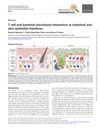 January 2023 in “Discovery immunology”
 T cells and bacteria in the gut and skin help maintain health and protect against disease.
 January 2023 in “Åbo Akademi University Research Portal”
 This study found that vimentin is essential for proper wound healing and cell growth by influencing EMT signaling and mTOR activity in mice.
 January 2023 in “Book of Abstracts”
 COVID-19 can cause different types of hair loss, with telogen effluvium being the most common.
 March 2021 in “bioRxiv (Cold Spring Harbor Laboratory)”
 This study found that the absence of Hif-p4h-2 in specific mouse skin cells disrupted hair follicle development, leading to hair loss due to irregular keratin formation and pathway signaling.

In this study, botulinum toxin type A injections reduced the severity of treatment-resistant scalp psoriasis in more patients compared to placebo over a 12-week period.
 January 2018 in “Stem cell biology and regenerative medicine”
 This review discusses the interplay between signaling/transcription factor-mediated and epigenetic mechanisms in skin development and regeneration, highlighting the need for further exploration of epigenome reorganization in these processes.
 January 2016 in “Research Explorer (The University of Manchester)”
 Activating the Eda/Edar pathway improves wound healing by enhancing hair follicle growth.
 January 2014 in “Journal of Investigative Dermatology”
 Proteins like aPKC and PDGF-AA, substances like adenosine and ATP, and adipose-derived stem cells all play important roles in hair growth and health, and could potentially be used to treat hair loss and skin conditions.
 March 2011 in “European Urology Supplements”
 The document concludes that a new biosensor can efficiently detect prostate cancer cells and that standardized referrals help find significant cancers effectively.
 September 2009 in “European Urology Supplements”
 This study found that a 3 mm margin around the prostate CTV may be adequate if accompanied by frequent imaging, but superior-inferior displacements were notably greater than in other directions.
 4 citations
,
March 2018 in “PloS one”
4 citations
,
March 2018 in “PloS one” This study found that among men over 70, certain genetic variants associated with skin pigmentation affect serum PSA levels, with implications for how sun sensitivity and exposure may influence prostate cancer risk.
1 citations
,
October 2008 in “Urology” PSA levels help determine prostate size and guide treatment choices for benign prostatic hyperplasia.
 April 2022 in “Indian Journal of Forensic Medicine & Toxicology”
 This study found that PSA concentrations in peripheral blood are related to androgen levels, suggesting that PSA is a valuable marker for diagnosing hyperandrogenism in women.
 April 2012 in “The Journal of Urology”
 This study found that among prostate cancer patients undergoing a biopsy, those with metabolic syndrome tended to have a lower Gleason score compared to those without the syndrome.
 8 citations
,
June 2016 in “Clinical Chemistry”
8 citations
,
June 2016 in “Clinical Chemistry” This review discusses the expression of PSA in hormonally-regulated tissues and female malignancies, emphasizing its potential as a diagnostic biomarker and role in antidoping initiatives.