 7 citations
,
February 2019 in “Journal of pharmacological sciences”
7 citations
,
February 2019 in “Journal of pharmacological sciences” This study found that Bazhengsan significantly reduced inflammation and hyperplasia in male rats with nonbacterial prostatitis, indicating potential as a treatment for chronic prostatitis.
September 2023 in “Journal of the American Academy of Dermatology” This study evaluated the effect of guselkumab on moderate to severe plaque psoriasis and found that median PASI improvements increased from around 60% at week 4 to over 90% by week 12 of treatment across multiple clinical trials.
 April 2016 in “The Journal of Sexual Medicine”
 This study analyzed 3,295 cases from the FDA Adverse Event Reporting System to describe demographics and reporting trends of post-finasteride syndrome, finding that most reports came from patients rather than health professionals.
 1 citations
,
July 2016 in “Mağallaẗ Kulliyyaẗ al-ṭibb Baġdād”
1 citations
,
July 2016 in “Mağallaẗ Kulliyyaẗ al-ṭibb Baġdād” This study found that women with polycystic ovary syndrome had significantly higher levels of prostate-specific antigen, which positively correlated with testosterone levels, the LH/FSH ratio, and hirsutism severity.
 April 2016 in “The Journal of Sexual Medicine”
 PFS affects some women, steroids easily bought online, hypogonadism info unreliable, low testosterone linked to CVD.
 2 citations
,
March 2016 in “The Journal of Dermatology”
2 citations
,
March 2016 in “The Journal of Dermatology” The researchers reported that the facial Psoriasis Log-based Area and Severity Index (fPLASI) more reliably and sensitively captured clinical improvement in facial psoriasis than the existing facial Psoriasis Area and Severity Index (fPASI).
 September 2023 in “Acta dermato-venereologica”
 This study found that pilonidal sinus disease is a common comorbidity with hidradenitis suppurativa and is linked with increased disease severity, suggesting it may serve as a sentinel event for identifying high-risk patients.
March 2013 in “Faculty Opinions – Post-Publication Peer Review of the Biomedical Literature” This study found that screening for prostate cancer did not significantly reduce prostate cancer-specific mortality in a meta-analysis of five randomized controlled trials, although one trial reported a benefit in a specific age subgroup.
46 citations
,
January 2005 in “PubMed” This paper discusses risk factors and prevention strategies for acute urinary retention secondary to benign prostatic hyperplasia, emphasizing the role of PSA levels and the benefits of medications like finasteride and alpha-blockers, but reports no new clinical results.
 June 2023 in “Research Square (Research Square)”
 This study found that among male Han Chinese, a higher polygenic risk score was linked to increased risk and poorer treatment outcomes for benign prostatic hyperplasia.
 127 citations
,
May 2004 in “PubMed”
127 citations
,
May 2004 in “PubMed” This randomized pilot study suggests that finasteride may benefit some men with category IIIA chronic pelvic pain syndrome, although it is not recommended as monotherapy unless benign prostatic hyperplasia is also present.
 September 2010 in “European Urology Supplements”
 Opioid use may lower PSA levels, suggesting a possible role in prostate cancer control; PSA testing is useful for detecting prostate cancer; serum triglycerides are not linked to prostate cancer risk; and higher urethral PSA levels may be associated with local hormone activity.
 1 citations
,
July 2018 in “Current Sexual Health Reports”
1 citations
,
July 2018 in “Current Sexual Health Reports” This review discusses the occurrence of persistent sexual, physical, neurological, and psychiatric side effects known as post-finasteride syndrome after 5x-reductase inhibitor treatment, and emphasizes the importance of evaluating these risks for patients with benign prostatic hyperplasia or androgenic alopecia.
 December 2007 in “Röntgenpraxis”
 This review discusses various treatments for androgenic alopecia, highlighting FDA-approved options and other commonly used therapies, but reports no new clinical results.
January 2018 in “프로그램북(구 초록집)” This study found no correlation between serum PSA levels and the severity of androgenetic alopecia at baseline in men.
In this study, Paljeong-san pharmacopuncture reduced dihydrotestosterone levels and inhibited prostate tissue proliferation in a rat model of benign prostatic hyperplasia.
 September 2021 in “Physiology News”
 This abstract contains only graphic design specifications and reports no new research findings.
 16 citations
,
January 2000 in “The Journal of clinical endocrinology and metabolism/Journal of clinical endocrinology & metabolism”
16 citations
,
January 2000 in “The Journal of clinical endocrinology and metabolism/Journal of clinical endocrinology & metabolism” This study found that serum PSA levels are higher in hirsute women and can be significantly reduced by antiandrogen treatment, suggesting PSA as a marker of androgen action in females.
January 2014 in “cIRcle (University of British Columbia)” This research found that modifying brachytherapy seeds with contrast-enhancing materials in photoacoustic imaging increased signal-to-noise ratios and imaging depth, and demonstrated potential for tissue differentiation by analyzing temperature-induced changes in PA intensity.
 March 2016 in “Reactions Weekly”
 Post-finasteride syndrome causes various symptoms in men using finasteride, with no known cure.
 May 2025 in “The Journal of Rheumatology”
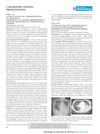
 This case report highlights a rare instance of diffuse alveolar hemorrhage in a patient with catastrophic antiphospholipid syndrome, emphasizing the importance of early recognition and multidisciplinary management.
 April 2019 in “The Journal of Urology”
 This study found that in 45-year-old German men, the use of metformin, insulin, and ACE inhibitors was associated with lower PSA levels, while low dose finasteride resulted in notable PSA decrease.
 6 citations
,
January 2010 in “Neoplasma”
6 citations
,
January 2010 in “Neoplasma” In this study, researchers found that shorter CA repeats in the ERbeta gene are correlated with PSA expression, and PSA immunoexpression is associated with increased disease-free survival in breast cancer.
 December 2025 in “Zenodo (CERN European Organization for Nuclear Research)”
 This policy brief reports that post-drug syndromes like Post-Finasteride Syndrome are largely overlooked in current pharmacovigilance systems, which prioritize acute drug reactions, resulting in inadequate recognition and management of persistent medication-induced conditions.
 January 2023 in “International Journal of Clinical and Medical Education Research”
 This paper discusses prostate cancer diagnosis and treatment controversies and advocates for individualized approaches, reporting no new findings.
20 citations
,
December 2015 in “Der Urologe” Combining medications is more effective for treating benign prostatic syndrome symptoms.
 April 2010 in “The Journal of Urology”
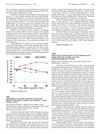
 Human prostate cells produce more WISP1/CCN4 when there's not enough oxygen.
 April 2013 in “The Journal of Urology”
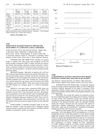
 Researchers created a simple tool to predict bladder blockage from prostate enlargement using urine flow rate and prostate volume.
 March 2013 in “The Journal of Urology”
 This study found that patients with androgenetic alopecia frequently had higher PSA levels and more significant urinary symptoms, likely due to older age, though prostate weight did not differ.
 December 2025 in “Zenodo (CERN European Organization for Nuclear Research)”
 This policy brief found that post-drug syndromes are under-recognized in current pharmacovigilance systems, leading to inadequate risk assessments and prolonged patient harm from persistent drug-induced conditions.