 54 citations
,
November 1998 in “Archives of dermatology”
54 citations
,
November 1998 in “Archives of dermatology” This article discusses the potential role of nutritional ingredients, such as thiols and tannins, in triggering pemphigus, and reports no new empirical findings.
15 citations
,
December 1972 in “Journal of Investigative Dermatology” 2 citations
,
December 2010 in “PubMed” This study reported that a new two-point bending stiffness method effectively correlated with sensory assessments for hair styling gels but not for hair styling sprays, likely due to differences in polymer/hair composites.
 7 citations
,
February 1998 in “Polymer journal”
7 citations
,
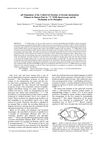
February 1998 in “Polymer journal” This study found that the stability of the coiled-coil structure in human hair keratin is maintained by ion-pairing and hydrophobic interactions, which are disrupted as pH approaches 7.0.
 April 2016 in “The journal of investigative dermatology/Journal of investigative dermatology”
 The researchers reported that disrupting the RPGRIP1L gene in mice impaired desmosome function, causing skin blistering, and their findings suggest that PKCβII inhibition could help treat pemphigus.
15 citations
,
December 2020 in “The Journal of General Physiology” This study found that acid regulation of the TRPV3 channel can inhibit its function from outside the cell while facilitating it from inside, providing insights into skin barrier and disorder mechanisms related to tissue acidosis.
 November 2021 in “International journal of research - granthaalayah”
 This study presents additional data suggesting that the absence of nerve endings in certain segments of human hair follicles influences the asymmetrical distribution of electrical charges, as indicated by no precipitation of Potassium Ferricyanide crystals.
19 citations
,
February 2016 in “Journal of Biological Chemistry” In this study, researchers observed that knocking out KCNQ3 in mice increased firing frequencies in response to stimuli, particularly at slow mechanical indentation velocities, indicating a role in mechanosensory neuron sensitivity.
 December 2025 in “Nature Communications”
 This study in male rats identified a unique type of mechanoreceptor, the club-like ending, which responds only to touch and not to self-motion during whisking, contrasting with other receptors that show mixed selectivity.
 6 citations
,
September 2021 in “Experimental Brain Research”
6 citations
,
September 2021 in “Experimental Brain Research” In this study, researchers found that the glabrous skin of the rat forelimb contains sparse Meissner corpuscles and Merkel complexes, with more slowly adapting afferents in the palm and rapidly adapting afferents in the digit extremity.
 66 citations
,
July 2007 in “Journal of Molecular Medicine”
66 citations
,
July 2007 in “Journal of Molecular Medicine” This study in mice demonstrated that stress or nerve growth factor injection increases sensory neuron activity related to skin innervation, suggesting a strong connection between stress perception and neurogenic skin inflammation.
 124 citations
,
December 2016 in “Pharmaceuticals”
124 citations
,
December 2016 in “Pharmaceuticals” This review discusses the functions and potential therapeutic targeting of TRP ion channels in the skin, noting their involvement in both physiological processes and various pathological conditions, but reports no new experimental results.
7 citations
,
May 2007 in “Nutrition Journal” This study found that due to variability in measurements, hair pluckability is not a reliable indicator of adult nutritional status, although it may hold potential in certain emergency situations if improved for consistency.
 October 2021 in “Journal of Investigative Dermatology”
 In this research, investigators used in vitro models to study the Merkel cell-neurite complex and reported that mechanical stimulation, similar to gentle touch, can induce molecular changes that are potentially relevant to hair growth, thus contributing to the understanding of its underlying mechanisms.
August 2024 in “Postgraduate Medical Journal” A rare skin reaction from cancer treatment was successfully managed with topical treatments and antihistamines.
13 citations
,
December 2009 in “Journal of the Peripheral Nervous System” This laboratory study concluded that TRPA1 and TRPV1 channels do not play a role in mechanotransduction processes in slowly adapting type II mechanoreceptors in isolated rat sinus hair follicles.
83 citations
,
March 1995 in “PLANT PHYSIOLOGY” This study found that the Nod factor from Rhizobium meliloti, particularly at concentrations of 10-8 and 10-7 M, induced specific membrane depolarization and root-hair deformation in Medicago sativa, depending on the stage of cell differentiation.
109 citations
,
April 1997 in “Archives of Dermatological Research” The researchers reported that mast cell and nerve fiber interactions in mouse skin are highly selective for nerve fiber types and vary depending on the hair cycle phase.
109 citations
,
November 2011 in “Nature Neuroscience” 28 citations
,
February 2010 in “Experimental Dermatology” This study concluded that the frizzy mutation in mice is linked to a T to A transversion in Prss8 and is orthologous to the 'hairless' mutation in rats.
4 citations
,
September 2015 in “JAAD case reports” This article reviews the characteristics and inheritance patterns of keratosis follicularis spinulosa decalvans, but it does not present new clinical findings, noting the disease's complex and poorly understood pathogenesis.
January 2000 in “Neuroscience Research” 77 citations
,
September 2017 in “Journal of Investigative Dermatology” This study found that TRPV3 ion channels on human epidermal keratinocytes suppress cell proliferation, induce cell death, and trigger a proinflammatory response, suggesting a role in cutaneous inflammatory processes.
42 citations
,
July 1993 in “Journal of Investigative Dermatology”  5 citations
,
January 2021 in “IEEE Access”
5 citations
,
January 2021 in “IEEE Access” In this study, researchers demonstrated that treating platelet rich plasma with microsecond pulsed electric fields effectively activates platelets and induces similar or higher growth factor release compared to traditional bovine thrombin, suggesting a potential clinical use that may be more cost-effective and practical.
5 citations
,
July 1999 in “Journal of Anatomy” This study found that methylene blue staining may reveal anatomical details of intraepidermal nerve fibre endings in the rat mystacial pad with greater clarity than the zinc iodide-osmium tetroxide technique.
 September 2007 in “Journal of Investigative Dermatology”
 ANp63 is crucial for skin integrity, new filaggrin gene mutations link to eczema, hair can regrow from non-stem cells, sunburns are increasing, and glucocorticoids help treat skin allergies by affecting immune cells.
 3 citations
,
April 2021 in “PLoS ONE”
3 citations
,
April 2021 in “PLoS ONE” The authors concluded that controlling voltage, pulse width, and calcium concentration in pulse electric field-activated platelet-rich plasma enhances the release of growth factors and serotonin without causing clot formation, suggesting potential clinical advantages over bovine thrombin-activated PRP.
1 citations
,
December 1997 in “Archives of dermatology” This report describes a case of trichostasis spinulosa, a condition with pruritic, black papules on the face caused by keratotic plugs with embedded vellus hairs.
14 citations
,
December 2001 in “Journal of autoimmunity” This study found that immunity to self-prion peptides could be induced in Lewis rats, but in older rats, it was associated with severe skin inflammation and hair loss.