This review discusses the unique characteristics and possible pathophysiology of spiny keratoderma, reporting no new clinical results, but suggests that some therapies might alleviate symptoms.
28 citations
,
June 1995 in “The Journal of Dermatology” This study reports that flaky skin mice exhibit skin and nail features that closely resemble human psoriasis vulgaris, suggesting they may serve as a natural model for this condition.
1 citations
,
May 2003 in “The journal of investigative dermatology/Journal of investigative dermatology” This paper reviews several dermatological studies, including findings on hair growth, skin damage, bullous pemphigoid, and psoriasis treatments, and reports no new clinical results.
 2 citations
,
May 2023 in “International Journal of Molecular Sciences”
2 citations
,
May 2023 in “International Journal of Molecular Sciences” This review discusses current knowledge about the TRPV3 ion channel's role in skin functions and diseases, highlighting its potential as a therapeutic target for pain and itch, though suitable ligands are limited.
27 citations
,
October 2002 in “International Journal of Dermatology” This study presents a microscopic analysis of the pruritic variant of trichostasis spinulosa in two patients and reviews existing literature, reporting no new clinical results.
1 citations
,
May 2022 in “European Journal of Dermatology” This study found that while no predictive factors for response to vismodegib were identified, longer treatment duration was associated with a lower risk of relapse in basal cell carcinoma patients.
 November 2022 in “The journal of investigative dermatology/Journal of investigative dermatology”
 This study found that STRIP1 and the STRIPAK complex play a key role in regulating F-actin and cell-cell junctions, which are essential for maintaining the epidermal barrier in mouse skin.
2 citations
,
August 2023 in “Molecules” This study found that a quinazoline derivative, SH-340, increased skin barrier-associated factors and inhibited TSLP expression and STAT6 phosphorylation in human primary keratinocytes, suggesting potential benefits for alleviating inflammation and improving skin barrier function in atopic dermatitis.
 1 citations
,
April 2018 in “Journal of Investigative Dermatology”
1 citations
,
April 2018 in “Journal of Investigative Dermatology” In this study, researchers found that the variability in growth factor expression, particularly TGFβ1, in PRP samples could influence patient responses to hair loss treatment with PRP therapy.
 September 2025 in “International Journal of Environmental Sciences”
 This study explored the stem of Moullava spicata and found it to be rich in secondary metabolites and natural antioxidants, showing significant concentration-dependent antioxidant activity, which supports its ethnomedicinal use and provides a basis for further pharmacological research.
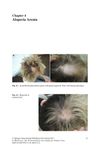 December 2016 in “Springer eBooks”
 A 45-year-old woman with autoimmune diseases experienced patchy hair loss due to alopecia areata, which has no cure but can be treated, with varying success.
July 2026 in “Environmental Science & Technology” This study found that nanoplastics' aggregation behavior on human skin, influenced by factors like concentration, photoaging, and organic constituents, affects their penetration potential through sweat glands and hair follicles, highlighting potential dermal exposure risks.
 August 2024 in “Journal of Clinical Medicine”
 This study aimed to assess pruritus in lichen planopilaris and frontal fibrosing alopecia, analyzing its correlation with dermoscopic features, but it reports no specific clinical results.
 66 citations
,
April 1995 in “The journal of cell biology/The Journal of cell biology”
66 citations
,
April 1995 in “The journal of cell biology/The Journal of cell biology” In this study, researchers reported that a keratinocyte growth factor-Ig fusion protein could specifically detect and localize KGFRs in epithelial tissues, suggesting a method for histochemical detection of growth factor receptors.
 June 2020 in “Journal of Investigative Dermatology”
 This study found that platelet-derived growth factor secretion in PRP therapy for alopecia is highly variable between patients, which may contribute to inconsistent clinical responses.
 8 citations
,
January 2017 in “Stem Cells International”
8 citations
,
January 2017 in “Stem Cells International” This study found that overexpression of sFRP4 in skin cells reduces Wnt signaling activation, leading to decreased melanocyte differentiation in regenerating hair follicles.
 40 citations
,
December 2012 in “PLoS ONE”
40 citations
,
December 2012 in “PLoS ONE” This study found that selective deletion of Ctip2 in epidermal keratinocytes in adult mice leads to atopic dermatitis-like inflammation and suggests Ctip2 plays a crucial role in skin barrier maintenance and inflammatory regulation.
November 2025 in “Journal of Investigative Dermatology” Keloid fibroblasts cause itch and pain by releasing more histamine.
 May 2011 in “Value in Health”
 This study found that the oral Janus kinase inhibitor CP-690,550 has a direct effect on reducing pruritus in patients with psoriasis, independent of clinician-assessed improvements in psoriasis severity.
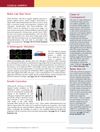 January 2016 in “Experimental Dermatology”
 This article in Experimental Dermatology does not include an abstract or any new research findings.
114 citations
,
January 2016 in “Current topics in developmental biology/Current Topics in Developmental Biology” This review discusses the diverse roles of Frizzled proteins in developmental and homeostatic processes and reports no new experimental findings.
63 citations
,
December 1998 in “Biochimica et Biophysica Acta (BBA) - Protein Structure and Molecular Enzymology” The study improved understanding of keratin fiber structure by showing consistent microfibril diameter but varying distances and electron density profiles.
88 citations
,
March 2004 in “Journal of Investigative Dermatology” July 2024 in “Journal of Investigative Dermatology” PRP preparation partially activates platelets, causing varied growth factor release.
 April 2016 in “The journal of investigative dermatology/Journal of investigative dermatology”
 This study found that the occipital scalp had significantly higher epidermal nerve fiber density than the frontoparietal scalp, which may explain increased sensitivity in some patients.
30 citations
,
July 1993 in “Journal of Investigative Dermatology”  February 2018 in “BMJ case reports”
 This case report describes an 18-year-old woman with a pruritic rash featuring extensive confluent scaly erythema, hyperkeratotic follicular plugging, and waxy keratoderma on palms and soles.
 286 citations
,
April 2009 in “The journal of neuroscience/The Journal of neuroscience”
286 citations
,
April 2009 in “The journal of neuroscience/The Journal of neuroscience” This study found that TRPA1-deficient mice exhibited normal cold sensitivity but had decreased mechanical response in nociceptors, suggesting TRPA1's role in mechanotransduction.
 1 citations
,
March 2023 in “Frontiers in Cardiovascular Medicine”
1 citations
,
March 2023 in “Frontiers in Cardiovascular Medicine” A specific gene variant is linked to heart disease, increased heart muscle, curly hair, and thick skin on palms and soles.
This presentation suggests that the activation of TRPV3 channels by fruit acids and carvacrol contributes to exfoliation and may underlie the skin-resurfacing effects of chemical peels.