52 citations
,
June 1991 in “Journal of Virology” In this study, researchers found that the ability of hamster polyomavirus to cause lymphoid tumors in Syrian hamsters may be linked to its association with the tyrosine kinase p59fyn.
211 citations
,
February 1994 in “Proceedings of the National Academy of Sciences” This study found that overexpression of parathyroid hormone-related peptide in transgenic mice skin disrupted normal hair follicle development, suggesting a role for the peptide in the early stages of follicle formation.
26 citations
,
June 2003 in “PubMed” In this study, severe hair loss occurred in PKC epsilon transgenic mice treated with DFMO during skin tumor prevention, highlighting a link between polyamine biosynthesis, hair follicle maintenance, and metastasis suppression.
 1 citations
,
October 2025 in “Iranian journal of pharmaceutical research”
1 citations
,
October 2025 in “Iranian journal of pharmaceutical research” This study suggests that geranyl acetate may offer protective, anti-inflammatory, and cytoprotective effects against PPD-induced toxicity in keratinocyte cells, indicating its potential as a plant-derived treatment.
September 2025 in “Global Journal of Pharmacy & Pharmaceutical Sciences” This review analyzes PDRN's molecular mechanisms and therapeutic applications in anti-aging dermatology but reports no new clinical results, highlighting the need for more standardized protocols and long-term evaluations.
 5 citations
,
July 2022 in “Orphanet journal of rare diseases”
5 citations
,
July 2022 in “Orphanet journal of rare diseases” This study found that RSPO1 mutations in patients with a 46XX disorder of sexual development contribute to impaired skin integrity and increased risk of squamous cell carcinoma in areas subject to friction.
28 citations
,
December 2015 in “Journal of biological chemistry/The Journal of biological chemistry” This study found that prostasin's proteolytic activity is necessary for normal hair follicle development in mice, but not for interfollicular epidermal development.
53 citations
,
May 1996 in “The Journal of Clinical Endocrinology & Metabolism” This study identified multiple mutations in the 5 alpha-reductase-2 gene among male pseudohermaphrodites in the Dominican Republic, suggesting they do not share a common ancestry.
July 2024 in “Journal of Investigative Dermatology” PRP preparation partially activates platelets, causing varied growth factor release.
 2 citations
,
October 1990 in “The Lancet”
2 citations
,
October 1990 in “The Lancet” Some people have a genetic variation that makes them less effective at breaking down drugs.
63 citations
,
May 2015 in “PloS one” This study found that GALT5 and GALT2 are redundant enzymes essential for O-glycosylation of AGPs, with mutations leading to significant growth and development defects in plants.
 January 2016 in “Faculty Opinions – Post-Publication Peer Review of the Biomedical Literature”
 A substance called prostaglandin D2 is found more in bald scalps and it stops hair from growing. Blocking its receptor could potentially treat hair loss.
 April 2019 in “Journal of Investigative Dermatology”
 This study identifies a mechanism where dsRNA activates TLR3 to induce RA production, promoting hair follicle regeneration in mice and suggesting a potential role in human tissue regeneration.
 April 2019 in “The journal of investigative dermatology/Journal of investigative dermatology”
 This study demonstrates that extracellular ATP induced by UV radiation promotes melanin production in human melanocytes, suggesting ATP-induced purinergic signaling may influence skin pigmentation.
 April 2025 in “Journal of Skin and Stem Cell”
 This review discusses the potential of polydeoxyribonucleotide (PDRN) for various dermatological treatments and highlights its significant effects on wound healing, anti-aging, acne scars, and hair loss, but emphasizes the need for further clinical studies.
 14 citations
,
May 2021 in “Marine Drugs”
14 citations
,
May 2021 in “Marine Drugs” This review discusses the therapeutic properties of polydeoxyribonucleotides derived from marine organisms for wound healing and inflammation, but it reports no new clinical results.
 33 citations
,
May 2006 in “Journal of Investigative Dermatology”
33 citations
,
May 2006 in “Journal of Investigative Dermatology” This study found that high levels of parathyroid hormone-related protein expression can result in the production of shorter hair shafts, likely through effects on angiogenesis.
 June 2025 in “Frontiers in Physiology”
 This study demonstrated that PGF 2α significantly stimulates hair growth in human hair follicles via a receptor-driven mechanism, with a notably stronger response in intermediate follicles than in terminal ones, suggesting potential clinical significance for conditions like alopecia.
 May 2012 in “Faculty Opinions – Post-Publication Peer Review of the Biomedical Literature”
 Prostaglandin D2, found in higher levels in bald scalps, stops hair growth, suggesting that blocking its receptor could potentially treat hair loss.
June 2023 in “Clinical Cosmetic and Investigational Dermatology” This report describes a 60-year-old female with pretibial pruritic papular dermatitis who showed significant improvement of skin lesions after one month of treatment with oral pentoxifylline. The authors highlight the unique clinical and histological features of PPPD and propose pentoxifylline as a potential therapy.
 July 2022 in “Research Square (Research Square)”
 This study found that Egyptian women with frontal fibrosing alopecia had lower serum PPARγ levels and a higher occurrence of PPARG gene polymorphism compared to healthy controls, suggesting a potential role for PPARγ in the condition's development.
 5 citations
,
December 2017 in “The Journal of Dermatology”
5 citations
,
December 2017 in “The Journal of Dermatology” This report describes a unique case of Schöpf–Schulz–Passarge syndrome in a Taiwanese man linked to a previously unreported homozygous WNT 10A mutation, underscoring its role in ectodermal dysplasia.
This study found that simultaneous inactivation of pRb and p53 genes in mice's epidermis accelerates aggressive squamous cell carcinoma development, highlighting p53 as a key tumor suppressor.
70 citations
,
August 2006 in “Cancer Research” This study found that inhibiting AP-1 activity in mice modified tumor development, leading to transdifferentiation between squamous and sebaceous tumors, with molecular analysis suggesting AP-1's role in maintaining tumor cell identity.
 July 2020 in “European urology open science”
 Methylated gene parts may cause finasteride-resistance in some enlarged prostate patients.
 May 2022 in “Frontiers in Cell and Developmental Biology”
 This study identified that in pig embryos, the miR-29a-5p/EDAR/lncRNA627.1 ceRNA complex plays a critical role in inhibiting hair placode precursor cells proliferation and regulating hair placode formation through the suppression of EDAR expression, which may provide insights into similar mechanisms affecting human hair conditions.
 8 citations
,
June 2019 in “Scientific Reports”
8 citations
,
June 2019 in “Scientific Reports” This study found that the retinoid receptor and PPAR pathway are involved in hair follicle miniaturization in androgenetic alopecia, alongside androgen receptors.
 October 2024 in “Journal of the Endocrine Society”
 This study examined uncharacterized CYP21A2 gene variants related to non-classic congenital adrenal hyperplasia and found that several mutations reduce enzyme activity, which may help improve diagnostic and treatment strategies.
July 2026 in “Journal of Investigative Dermatology” This study uncovered that bimatoprost, a prostaglandin analog, promotes hair growth by activating hair follicle progenitor cells through two pathways: the PTGFR-MAPK signaling axis and an unexpected IGF1R-PCAD-AKT signaling axis, suggesting new potential targets for treating hair disorders.
 13 citations
,
November 2009 in “Journal of Dermatological Science”
13 citations
,
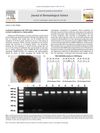
November 2009 in “Journal of Dermatological Science” This article discusses various dermatological studies cited by previous authors and reports no new clinical results.