 6 citations
,
February 2023 in “Advances in Therapy”
6 citations
,
February 2023 in “Advances in Therapy” This study found that patients with rheumatoid arthritis, atopic dermatitis, and alopecia areata receiving baricitinib had low incidence rates of adverse events, especially among low-risk individuals, with varying rates among those at higher risk.
 6 citations
,
November 2019 in “The application of clinical genetics”
6 citations
,
November 2019 in “The application of clinical genetics” This study identified a significant genetic association between the TNFα gene and alopecia areata susceptibility in the Jordanian Arab population.
 6 citations
,
September 2019 in “Journal of cosmetic dermatology”
6 citations
,
September 2019 in “Journal of cosmetic dermatology” This study found that lower serum melatonin levels were associated with increased skin aging grades among individuals in Ulaanbaatar, suggesting melatonin loss may contribute to earlier skin aging.
 6 citations
,
April 2017 in “JAMA Dermatology”
6 citations
,
April 2017 in “JAMA Dermatology” This study concluded that visits to emergency and urgent care centers for severe sunburn treatment are largely avoidable and contribute to significant healthcare costs.
6 citations
,
January 2013 in “Journal of Cosmetics Dermatological Sciences and Applications” This study found that lichen planopilaris is a common cause of scalp scarring alopecia in adults and has distinctive clinical features that help differentiate it from other similar conditions.
 5 citations
,
January 2022 in “Asian Pacific Journal of Cancer Prevention”
5 citations
,
January 2022 in “Asian Pacific Journal of Cancer Prevention” This study found that the rs2228570 polymorphism of the VDR gene was associated with an increased risk of melanoma, while the rs731236 polymorphism was linked to a protective effect against the disease in Colombian patients.
 4 citations
,
March 2022 in “Journal of The American Academy of Dermatology”
4 citations
,
March 2022 in “Journal of The American Academy of Dermatology” Direct-to-consumer teledermatology is not effectively reaching underserved populations due to language, technology, and insurance barriers.
4 citations
,
August 2015 in “PubMed” This study found that the prevalence of androgenetic alopecia in Turkish society is higher than in Asian and African communities but similar to European populations.
 4 citations
,
January 2015 in “Journal of Mid-life Health”
4 citations
,
January 2015 in “Journal of Mid-life Health” This study found that the most common skin disorders among perimenopausal Indian women were eczematous and urticaria, potentially linked to heightened sensitivity to environmental factors.
3 citations
,
October 2024 in “Archives of Dermatological Research” This study found that alopecia areata was associated with an increased risk of hematological malignancies, particularly non-Hodgkin lymphoma, but not with solid malignancies, except in certain severe cases.
 3 citations
,
April 2018 in “Cosmetics”
3 citations
,
April 2018 in “Cosmetics” This study found that females with androgenic alopecia experienced greater improvements in hair density after cosmetic treatments compared to males, in a cohort stratified by age and gender.
 3 citations
,
April 2017 in “Clinical Drug Investigation”
3 citations
,
April 2017 in “Clinical Drug Investigation” The researchers concluded that after the 2013 EMA recommendation, there was an overall reduction in CPA/EE prescriptions, but no substantial change in patient diagnoses or potential concurrent hormonal contraceptive use.
2 citations
,
January 2025 in “Advances in Skin & Wound Care” This study from ISTAP emphasizes the importance of preventing skin tears, particularly in vulnerable populations like older adults and neonates, and recommends strategies such as using silicone-based adhesives, emollient therapy, and maintaining a safe environment to reduce the risk of these injuries.
2 citations
,
December 2022 in “International journal of molecular sciences” This study compared RNA-seq results from horse plucked-hair and skin-biopsy samples, finding that plucked hairs were enriched with hair-follicle keratinocytes, while biopsies showed enrichment for other cell types.
 2 citations
,
April 2021 in “Journal of The American Academy of Dermatology”
2 citations
,
April 2021 in “Journal of The American Academy of Dermatology” This study found that female pattern hair loss was highly prevalent among a multiracial Brazilian population, affecting over 30% of women, and age was a significant risk factor.
 2 citations
,
January 2018 in “Annals of Dermatology”
2 citations
,
January 2018 in “Annals of Dermatology” This review discusses the potential association between androgenetic alopecia and metabolic syndrome, and notes AGA might be linked to arterial stiffness; it reports no new clinical findings and calls for further research.
2 citations
,
January 1986 in “PubMed” This study measured elemental content in anagen hair fibers of Caucasian people aged 10-69 and found average levels of sulfur, zinc, calcium, and chlorine, establishing a baseline for future research.
1 citations
,
September 2025 in “Eye” This pharmacovigilance study found that certain systemic medications, including finasteride, bortezomib, and dupilumab, were disproportionately reported in association with eyelid disorders like blepharitis, meibomian gland dysfunction, and chalazia, suggesting these drugs may contribute to these conditions though benefits might still outweigh the risks.
1 citations
,
October 2024 in “BMC Infectious Diseases” This study found that post-COVID-19 syndrome incidence varied significantly by gender and identified ALP levels as a potential biomarker for its detection, challenging current diagnostic criteria.
1 citations
,
January 2024 in “PubMed” This study observed that fatigue, joint pain, hair loss, and menstrual disorders were the most persistent long-term side effects reported by the Saudi population after COVID-19 vaccination.
 1 citations
,
December 2022 in “The journal of investigative dermatology/Journal of investigative dermatology”
1 citations
,
December 2022 in “The journal of investigative dermatology/Journal of investigative dermatology” This review discusses various methods for processing and separating human skin samples for research purposes, evaluating factors like processing time and cell viability, but reports no new experimental findings.
 1 citations
,
December 2022 in “Clinical, cosmetic and investigational dermatology”
1 citations
,
December 2022 in “Clinical, cosmetic and investigational dermatology” In this study, Arab hair was found to have a higher thickness and lower density compared to other ethnicities, suggesting these factors should be considered in diagnosing and treating hair issues in Arabs.
1 citations
,
May 2016 in “Journal of Veterinary Diagnostic Investigation” In this study, exotic lice were found to be widespread among mule deer in California, with younger age classes and low blood selenium concentrations being significantly associated with infestation.
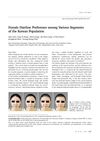 1 citations
,
January 2014 in “Annals of Dermatology”
1 citations
,
January 2014 in “Annals of Dermatology” This study surveyed hairline preferences and found that the M-shaped contour was most preferred overall, with lower forehead heights favored by men and those without a history of hair transplantation.
1 citations
,
May 2011 in “DOAJ (DOAJ: Directory of Open Access Journals)” In this study, researchers detected all three genotypes associated with the MLPH gene's R199H polymorphism in a population of Czech pointer dogs, which is linked to coat color dilution.
March 2026 in “Jurnal Biomedika dan Kesehatan” In this pilot study of Indonesians, the rs1998076 genetic variant was not significantly linked to androgenetic alopecia, though the GG genotype showed a non-significant trend toward higher odds, while clinical factors like age and hypertension were correlated with increased risk.
 February 2026 in “Diabetes Metabolic Syndrome and Obesity”
 This study identified a higher basal metabolic rate as an independent and causally relevant risk factor for nonalcoholic fatty liver disease in the Chinese population, noting that sex-specific effects may require tailored management strategies.
 December 2025 in “Portuguese Journal of Dermatology and Venereology”
 In this study, researchers conducted a retrospective analysis of 16 cases of erosive palmoplantar lichen planus in North East India, finding a higher prevalence in pediatric and male patients, with common clinical features including plantar involvement and histopathological indicators such as basal cell degeneration.
April 2025 in “British Journal of Dermatology” This study identified three genetic loci influencing hair density in East Asian populations and found associations with demographic and lifestyle factors like age, sex, and BMI. The results also suggest possible genotype-specific responses to finasteride for managing hair disorders.
 December 2024 in “International Journal For Multidisciplinary Research”
 This study found that monotherapy and topical medications are primarily used to treat pediatric skin diseases, with a variety of drugs prescribed indicating the complexity of these conditions.