 215 citations
,
March 2018 in “Archives of Toxicology”
215 citations
,
March 2018 in “Archives of Toxicology” This study found that PM2.5 exposure induced oxidative stress in human keratinocytes and mouse skin, causing cellular damage, which was mitigated by the antioxidant N-acetyl cysteine.
January 2026 in “Pharmaceutical journal/The pharmaceutical journal” In this report, the European Medicines Agency confirmed in 2025 that finasteride, a drug used to treat hair loss in men, is linked to suicidal thoughts, a concern previously raised by patient advocacy groups.
January 2026 in “Dermatologic Therapy” This study found that Pinus massoniana needles extract may promote hair regrowth in a mouse model of androgenetic alopecia, potentially by reducing oxidative stress and affecting immune, metabolic, and apoptosis-related pathways.
13 citations
,
July 2016 in “Indian Journal of Dermatology” This report describes two Saudi brothers with dermatopathia pigmentosa reticularis who exhibited normal hair shafts despite their condition.
 25 citations
,
August 2010 in “Acta Biomaterialia”
25 citations
,
August 2010 in “Acta Biomaterialia” This study achieved a first by successfully forming large quantities of dermal papilla spheroidal microtissues, which retained their hair induction potential, using a micropatterned culture system.
October 2014 in “The journal of investigative dermatology/Journal of investigative dermatology” This review discusses the formation and goals of the Pediatric Dermatology Research Alliance (PeDRA) but reports no new clinical results; it emphasizes collaborative research to advance treatment options for pediatric skin disorders.
 205 citations
,
March 2012 in “Science Translational Medicine”
205 citations
,
March 2012 in “Science Translational Medicine” PGD2 stops hair growth and is higher in bald men with AGA.
 5 citations
,
December 2021 in “Frontiers in Cell and Developmental Biology”
5 citations
,
December 2021 in “Frontiers in Cell and Developmental Biology” This review outlines how peptidyl arginine deiminases (PADIs) and protein citrullination are involved in hair follicle regeneration and inflammatory alopecia, but presents no new clinical findings.
 10 citations
,
September 1997 in “Molecular carcinogenesis”
10 citations
,
September 1997 in “Molecular carcinogenesis” This study found that mirex and TPA promote papilloma formation in CD-1 mouse skin through distinct populations of mutant Ha-ras cells, resulting in additive tumor yields.
 5 citations
,
May 2018 in “Drug Safety”
5 citations
,
May 2018 in “Drug Safety” This study found that using electronic healthcare record data can provide valuable early insights into the clinical context of about half of the new safety signals evaluated within a regulatory environment.
 1 citations
,
April 2019 in “Journal of Investigative Dermatology”
1 citations
,
April 2019 in “Journal of Investigative Dermatology” This study examined the safety and efficacy of dupilumab in adolescents with moderate-to-severe atopic dermatitis, finding that it was well tolerated and significantly improved symptoms over 52 weeks, with its safety profile similar to that in adults.
January 2010 in “대한미용학회지” This study observed that Polygoni mulitiflori Radix water extracts accelerated hair regrowth in mice by enhancing enzyme activities and increasing IGF-1 gene expression related to hair growth.
5 citations
,
October 2021 in “Journal of the American Academy of Dermatology” PRAME helps distinguish between benign and malignant skin cells in most cases.
 January 2026 in “Biomaterials Science”
 This research outlines the characteristics and potential applications of a GMP-compliant sodium polyphosphate formulation (Na-polyP-GMP) in cellular energy storage and ATP-dependent processes like skin regeneration and wound healing.
 July 2024 in “jurnal ABDIMAS Indonesia”
 In this study, the authors observed that among elderly participants, 59.1% did not experience depression, correlating with measured average levels of apolipoprotein A and B. They suggest early screening can help manage apolipoprotein levels, potentially reducing depression risk and improving quality of life.
16 citations
,
April 2000 in “Contact dermatitis” In this report, a 19-year-old Japanese man experienced severe and prolonged urticarial reactions following treatment with diphenylcyclopropenone for alopecia universalis, emphasizing the need for caution with potent sensitizers.
April 2025 in “The Egyptian Journal of Hospital Medicine” This study suggests that expanding the Egyptian premarital screening program to include dermatological conditions, sexually transmitted diseases, and andrological disorders could enhance marriage stability.
June 2026 in “Biomedical and Therapeutics Letters” This review discusses AMH and ovarian morphology as complementary markers in diagnosing PCOS/PMOS and reports no new clinical results, highlighting the need for a multidomain approach in diagnosis and treatment.
September 2023 in “Journal of the American Academy of Dermatology” Bullous pemphigoid can look like erythema multiforme, so awareness is needed for proper treatment.
6 citations
,
February 1998 in “PubMed” This study found that patients with MPA had significantly lower zinc and manganese levels and higher copper levels in their hair compared to hair-healthy men.
 6 citations
,
April 2017 in “Frontiers in Pharmacology”
6 citations
,
April 2017 in “Frontiers in Pharmacology” This study found that several compounds from Yangxue Shengfa capsule may promote hair growth by enhancing cell proliferation in vitro, suggesting potential use in treating androgenetic alopecia.
 86 citations
,
March 2018 in “ACS Biomaterials Science & Engineering”
86 citations
,
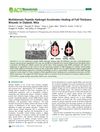
March 2018 in “ACS Biomaterials Science & Engineering” This study found that MDP hydrogel significantly accelerated wound healing and improved tissue formation in diabetic mice compared to a standard clinical hydrogel and control buffer.
 3 citations
,
July 2018 in “Biomedicine & pharmacotherapy”
3 citations
,
July 2018 in “Biomedicine & pharmacotherapy” This study suggests that paeoniflorin's protective effects on brain astrocytes may be mediated by TSPO and neurosteroids biosynthesis.
14 citations
,
September 2017 in “Clinical and Experimental Dermatology” In this report, a 26-year-old man with folliculitis decalvans unresponsive to standard treatments experienced significant disease clearance after 25 months of systemic photodynamic therapy, marking the first documented use of this therapy for this condition.
2 citations
,
January 2009 in “Xi'an Jiaotong Daxue xuebao” This study found that finasteride treatment was effective for male pattern alopecia and that hair loss significantly impacted patients' quality of life and psychological well-being.
21 citations
,
February 2023 in “Bioengineering” This review outlines current European legislation and manufacturing standards for platelet-rich plasma (PRP) products and provides guidance for clinicians implementing autologous PRP treatments, without reporting new clinical results.
 47 citations
,
December 2016 in “Scientific Reports”
47 citations
,
December 2016 in “Scientific Reports” This study found that women with PMS were more likely to use suppression rather than reappraisal for emotion regulation, and increased suppression was linked to higher skin conductance levels in these women.
1 citations
,
September 2024 in “Cosmetics” This study found that permanent makeup pigments were applied at similar depths as traditional tattoo inks in mice but faded over time due to larger inorganic pigments.
August 2026 in “Quality in Sport” This review discusses evidence that regular physical activity and tailored dietary interventions improve metabolic health in women with PMOS, advocating for personalized lifestyle management in their care, and reports no new clinical results.
 3 citations
,
July 2021 in “Life science alliance”
3 citations
,
July 2021 in “Life science alliance” This study observed that disrupting the Pnkp gene in adult mice resulted in a premature aging-like phenotype, suggesting PNKP's vital role in maintaining normal growth and survival of certain progenitor cell populations.