 1 citations
,
September 2013 in “The Journal of Dermatology”
1 citations
,
September 2013 in “The Journal of Dermatology” An 8-year-old girl developed a rare skin condition in a linear pattern on one side of her body after a lung infection, which improved with treatment.
 2 citations
,
March 2016 in “The Journal of Dermatology”
2 citations
,
March 2016 in “The Journal of Dermatology” The researchers reported that the facial Psoriasis Log-based Area and Severity Index (fPLASI) more reliably and sensitively captured clinical improvement in facial psoriasis than the existing facial Psoriasis Area and Severity Index (fPASI).
February 2026 in “Biomedicine & Pharmacotherapy” In this study, researchers developed EPO-derived peptides that enhanced hair growth by stimulating dermal papilla cells and increasing IGF-1 expression without triggering systemic erythropoietic effects in tested models, indicating a promising approach for treating hair loss.
 April 2017 in “Journal of Investigative Dermatology”
 In this study, HPH-15, a newly synthesized compound, demonstrated potential in reducing skin fibrosis in a mouse model by targeting underlying pathogenic mechanisms and exhibited a good safety profile, warranting further clinical trials for fibrotic skin disorders like systemic sclerosis.
 1 citations
,
April 2016 in “Journal of Investigative Dermatology”
1 citations
,
April 2016 in “Journal of Investigative Dermatology” This study found that NLRP1 in human melanoma cells promotes tumor growth by enhancing inflammasome activation and suppressing caspase-3 activity.
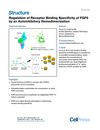 24 citations
,
July 2017 in “Structure”
24 citations
,
July 2017 in “Structure” In this study, researchers found that ligand homodimerization controls the receptor binding specificity of the FGF9 subfamily, preventing off-target activation of FGFR "b" isoforms.
11 citations
,
February 2011 in “International Journal of Molecular Sciences” This article reviews sPLA2-mediated phospholipid metabolism using sPLA2 transgenic/knockout mice and lipid mass spectrometry, offering insights into the distinct roles of sPLA2 enzymes in various biological events.
 September 2017 in “The journal of investigative dermatology/Journal of investigative dermatology”
 This study reports that the loss of Langerhans cells in lichen planopilaris scars may be linked to the downregulation of ITG αvβ6, which is not seen in other scar formation diseases.
 103 citations
,
March 2015 in “Nature Communications”
103 citations
,
March 2015 in “Nature Communications” This study identified a genetic locus associated with idiopathic scoliosis in females, which might influence spinal gene expression and was previously linked to protection from early-onset alopecia.
April 2026 in “UNC Libraries” This case report describes a 49-year-old woman with metastatic adrenocortical carcinoma in the liver who experienced an abscopal effect after pulse electric field ablation, with PET/CT imaging showing complete resolution of three untreated lesions two months post-treatment.
July 2017 in “OPAL (Open@LaTrobe) (La Trobe University)” In this study, researchers investigated the role of the ATX-LPA axis in asthma pathogenesis using human and mouse models and highlighted the potential for developing new ATX inhibitors as effective asthma treatments.
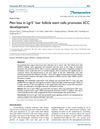 24 citations
,
January 2019 in “Theranostics”
24 citations
,
January 2019 in “Theranostics” This study found that loss of the Pten gene in Lgr5+ hair follicle stem cells promoted squamous cell carcinoma formation through the Akt/β-catenin signaling pathway.
 April 2023 in “Journal of Investigative Dermatology”
 This research reexamined transcriptomic data to study stem and progenitor cell proliferation in psoriasis, finding that the number of committed progenitor cells increased eight-fold in psoriatic skin without altering stem cell numbers, potentially identifying new therapeutic targets.
This study highlights the successful design of recombinant fortilin constructs for potential drug development targeting atherosclerotic plaque formation in cardiovascular disease.
 64 citations
,
January 2010 in “The FASEB Journal”
64 citations
,
January 2010 in “The FASEB Journal” This study found that prolactin is a key regulator of keratin expression in human hair follicles, enhancing specific keratin types and influencing epithelial stem cell-associated keratins.
 51 citations
,
July 2010 in “Trends in Endocrinology and Metabolism”
51 citations
,
July 2010 in “Trends in Endocrinology and Metabolism” This review discusses prolactin production and regulation in human skin and hair follicles, highlighting its potential broader implications but reports no new empirical results.

This study explored the structure and function of lipocalin prostaglandin D synthase, revealing its dual role in substrate catalysis and as a lipophilic ligand carrier, potentially informing future drug delivery design.
 4 citations
,
November 2016 in “Journal of Cutaneous Pathology”
4 citations
,
November 2016 in “Journal of Cutaneous Pathology” This letter discusses three plasmacytoid dendritic cell-related parameters that may help differentiate lupus alopecia from lichen planopilaris, but it reports no new study results.
 3 citations
,
April 2021 in “PLoS ONE”
3 citations
,
April 2021 in “PLoS ONE” The authors concluded that controlling voltage, pulse width, and calcium concentration in pulse electric field-activated platelet-rich plasma enhances the release of growth factors and serotonin without causing clot formation, suggesting potential clinical advantages over bovine thrombin-activated PRP.
 4 citations
,
July 2021 in “bioRxiv (Cold Spring Harbor Laboratory)”
4 citations
,
July 2021 in “bioRxiv (Cold Spring Harbor Laboratory)” This study suggests that BLMP-1 is important for timely molting and oscillatory gene expression in C. elegans, indicating a potentially conserved mechanism for rhythmic skin regeneration.
 31 citations
,
February 2014 in “Journal of dermatological science”
31 citations
,
February 2014 in “Journal of dermatological science” This study found that placental growth factor (PlGF) enhanced hair shaft elongation and accelerated hair follicle growth, suggesting its potential as a therapeutic target for alopecia.
 12 citations
,
June 2020 in “Frontiers in Cell and Developmental Biology”
12 citations
,
June 2020 in “Frontiers in Cell and Developmental Biology” This study found that the PP2A-B55α regulatory subunit is crucial for ectodermal development in mice, with knockout embryos displaying severe neural and epidermal defects and failing to survive to birth.
 182 citations
,
November 2017 in “Molecular Aspects of Medicine”
182 citations
,
November 2017 in “Molecular Aspects of Medicine” This review discusses various therapeutic strategies targeting platelet-derived growth factor signaling in diseases like cancer and atherosclerosis, and evaluates existing treatments without presenting new clinical data.
3 citations
,
May 2019 in “Journal of Cosmetic Dermatology” This study suggests that the dipeptide Pro-Ile has FGF18-like activity, can penetrate model human epidermis, and may have potential as a cosmetic ingredient for skin and hair regulation.
June 2024 in “Clinical and Experimental Obstetrics & Gynecology” In this study, women with recurrent implantation failure after IVF/ICSI had significantly lower platelet, plateletcrit, and lymphocyte counts, but these parameters were not effective for predicting the condition.
1 citations
,
July 2024 in “Journal of lasers in medical sciences” This case study reports that treating a female patient with facial partial unilateral lentiginosis using a 532-nm Nd:YAG fractional picosecond laser resulted in significant improvement in pigmentation without notable side effects, indicating it may be an effective and well-tolerated treatment option.
 206 citations
,
September 2010 in “PLoS ONE”
206 citations
,
September 2010 in “PLoS ONE” This study found that using a Picosecond IR Laser (PIRL) on mouse skin led to less tissue damage and scarring compared to conventional surgical lasers and tools.
This chapter provides dermatology trainees with insights on managing lichen planopilaris, emphasizing treating active disease to prevent further hair loss and recommending a tapered course of oral steroids for disease stabilization.
71 citations
,
May 2019 in “Rheumatology” This study observed that PD-1+CXCR5-CD4+T peripheral helper cells are significantly elevated in patients with systemic lupus erythematosus and are correlated with disease activity indicators, suggesting their potential role in lupus pathogenesis.
1 citations
,
March 2013 in “Journal of Dermatological Case Reports” This case report describes an atypical presentation of lichen planopilaris affecting only facial vellus hair, without scalp involvement, in a 46-year-old man.