 89 citations
,
February 2002 in “Australasian journal of dermatology”
89 citations
,
February 2002 in “Australasian journal of dermatology” This case report describes the first known instance of fibrosing alopecia associated with cutaneous lichen planus, suggesting fibrosing alopecia may be a variant of lichen planopilaris.
 October 2021 in “Journal of Investigative Dermatology”
 In this study, researchers found that using a novel Leontopodium alpinum (Edelweiss) extract led to increased hair density and prolonged anagen phase in both ex vivo human hair follicles and a 5-month clinical trial, suggesting potential as an anti-hair loss treatment.
24 citations
,
August 2022 in “Immunity” This study found that control of Demodex mite colonization in mice required skin ILC2s and IL-13, highlighting their role in maintaining HF integrity and limiting mite overgrowth.
 August 2023 in “Journal of Chromatographic Science”
 This study developed a reliable UHPLC-MS/MS method to measure flavonoids from Pinus massoniana needles in rat plasma for pharmacokinetics, aiding further research on their potential use in external preparations to prevent hair loss.
43 citations
,
November 1988 in “The Journal of Comparative Neurology” This study examined the sensory innervation of hair follicles in the furry skin of rat hindlimbs, finding significant differences among hair types in their innervation patterns and densities.
December 1978 in “Indian Journal of Otolaryngology and Head & Neck Surgery” January 2000 in “The Mouseion at the JAXlibrary (Jackson Laboratory)” This study identified a new mouse mutation associated with noninflammatory proliferative skin disease and hair abnormalities, drawing parallels to human conditions like Netherton's syndrome and monilethrix.
4 citations
,
April 2024 in “Clinical Cosmetic and Investigational Dermatology” This review examines the trichoscopic characteristics of scalp DLE and LPP, correlating these findings with histopathological data, but provides no new clinical results.
15 citations
,
June 2023 in “Journal of Microbiology and Biotechnology” In this study, researchers found that an ethyl acetate extract of the green microalga Scenedesmus deserticola significantly increased the viability of human dermal fibroblasts by over 20% compared to a control and identified a potent anti-UV compound, loliolide, through further fractionation.
April 2022 in “Actas Dermo-Sifiliográficas” This article discusses the case of a 59-year-old woman with a history of progressive facial hyperpigmentation and explores potential connections between her condition and her family history, but reports no clinical findings.
 62 citations
,
January 2000 in “Developmental dynamics”
62 citations
,
January 2000 in “Developmental dynamics” This study found that Notch-related genes, including Notch1 and Notch2, and their ligands and regulators, have distinct patterns of expression during mouse hair vibrissa follicle development and the adult hair cycle.
27 citations
,
October 2002 in “International Journal of Dermatology” This study presents a microscopic analysis of the pruritic variant of trichostasis spinulosa in two patients and reviews existing literature, reporting no new clinical results.
 January 2024 in “Arquivo Brasileiro de Medicina Veterinária e Zootecnia/Arquivo brasileiro de medicina veterinária e zootecnia”
 This study reports that treating a feline with progressive pruritus, alopecia, and FIV infection with imidacloprid and moxidectin resulted in remission of clinical signs and elimination of Demodex cati mites, as confirmed by parasitological examination and genetic sequencing.
January 1981 in “Purdue e-Pubs (Purdue University)” This study observed that the pig integument is similar to human skin in both light and electron microscopy, with minimal postnatal developmental differences noted.
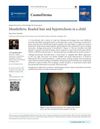 January 2026 in “Cosmoderma”
 In this clinical case study, a 9-year-old girl was diagnosed with monilethrix, a hereditary hair shaft disorder characterized by weak, beaded hair, with management focusing on minimizing hair trauma.
2 citations
,
March 1994 in “Journal of the European Academy of Dermatology and Venereology” This case report describes two female patients with white piedra of the scalp who showed remarkable improvement in hair condition after using 2% miconazole nitrate lotion for 8 weeks.
 2 citations
,
August 2020 in “Natural Product Communications”
2 citations
,
August 2020 in “Natural Product Communications” This study found that the topical application of a mixture of Platycladus orientalis leaf extract and α-terpineol promoted hair growth in mice by inducing early anagen transition and increasing growth factor expressions.
20 citations
,
July 2005 in “Experimental dermatology” This study found that the fuzzy mutation in mice is linked to both structural hair defects and accelerated hair follicle cycling, influencing the regulation of hair cycle phases such as catagen and anagen.
1 citations
,
February 2022 in “Zenodo (CERN European Organization for Nuclear Research)” This study found that Peperomia pellucida extract may promote hair growth, improve male libido and fertility, and support renal cell health.
 3 citations
,
April 2021 in “Chemical & Pharmaceutical Bulletin”
3 citations
,
April 2021 in “Chemical & Pharmaceutical Bulletin” This study found that indole glycosides from Calanthe discolor Lindl. can significantly promote the proliferation of human hair follicle dermal papilla cells, potentially through upregulating specific growth factors.
This study found that the hydroalcoholic extract of Urtica dioica L. demonstrated some clinical efficacy in reducing lesion severity in guinea pigs with Microsporum canis infections, suggesting potential as a supplementary topical treatment for tinea corporis.
11 citations
,
October 2017 in “Mycoses” In this case report, an 80-year-old male with severe sycosis barbae and no animal contact was successfully treated with oral terbinafine after diagnostic sequencing identified Trichophyton verrucosum as the infecting species.
 165 citations
,
September 2001 in “Genes & development”
165 citations
,
September 2001 in “Genes & development” This study found that Cutl1 mutant mice experienced retarded lung differentiation and abnormal hair follicle morphogenesis, indicating the vital role of CDP in lung development and hair follicle cell-lineage specification.
 20 citations
,
January 2014 in “Journal of the European Academy of Dermatology and Venereology”
20 citations
,
January 2014 in “Journal of the European Academy of Dermatology and Venereology” This article includes no new results; it discusses ongoing treatment approaches for frontal fibrosing alopecia and lichen planopilaris.
 April 2018 in “Journal of Investigative Dermatology”
 This study suggests that macrophages play a more substantial role in the pathogenesis of Lichen planopilaris compared to Frontal fibrosing alopecia, as indicated by increased CD68+ cells in Lichen planopilaris.
 13 citations
,
September 2017 in “Skin appendage disorders”
13 citations
,
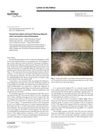
September 2017 in “Skin appendage disorders” Some women with Frontal Fibrosing Alopecia also have Lichen Planopilaris, which can lead to more symptoms and affect hair outside the scalp.
 1 citations
,
February 2021 in “Journal of Natural Remedies”
1 citations
,
February 2021 in “Journal of Natural Remedies” This study found that a combination of Ficus religiosa and Morus alba extracts promoted hair growth and Hair Follicle regeneration in a mouse model of hair loss by inducing the anagen phase and upregulating stem cell-associated genes.
13 citations
,
March 2011 in “Acta Paediatrica” This case report describes a 5-year-old girl who developed kerion celsi from an untreated scalp infection, likely contracted from a guinea pig, leading to significant hair loss and the need for a wig.
7 citations
,
February 2011 in “Journal of dermatology” This study identified a specific LIPH gene mutation (736T>A) as common in Japanese patients with autosomal recessive woolly hair/hypotrichosis, potentially indicating its role in the condition's manifestation within this population.
June 2025 in “British Journal of Dermatology” This reported case of lichen planopilaris in siblings suggests a potential genetic predisposition, supporting the hypothesis of inherited susceptibility in this condition.