3 citations
,
June 2025 in “Gyemyeong uidae haksulji” This review suggests that PDRN shows promise as a safe and versatile regenerative agent for wound healing and other dermatological applications, based on its dual mechanisms and clinical evidence of efficacy.

This study found that the Padina arborescens extract and its component MOGG may prevent hair loss by inhibiting 5α-reductase activity, promoting cell proliferation, opening the KATP channel, and increasing PGE2 production in laboratory settings.

This study found that Plakophilin 1 regulates innate immune responses in keratinocytes by controlling RNA helicase activity, balancing inflammation during epidermal immune challenges.
6 citations
,
March 2007 in “BioTechniques” This study observed that PCR-based genotyping for cre-loxP mice can lead to errors due to cre-mediated recombination in non-target tissues like tails, affecting the detection of lox alleles.
This study utilized a pigmented human epidermal equivalent model to incorporate melanocytes into the epidermis and found enhanced differentiation potential compared to conventional in vitro systems, reflecting in vivo cellular trajectories and highlighting melanocyte-to-keratinocyte communication pathways.
 5 citations
,
March 2019 in “Journal of lipid research”
5 citations
,
March 2019 in “Journal of lipid research” This study reports new fluorogenic ceramidase substrates and highlights RBM14C24:1 as an efficient substrate for neutral ceramidase, while RBM15C18:1 is the best probe for measuring ACER1 and ACER2 activities, potentially aiding high-throughput screening for ceramidase inhibitors.
46 citations
,
May 1995 in “Proceedings of the National Academy of Sciences” This study demonstrated that a specific 9-kbp fragment of the bovine keratin 6 gene effectively directs tissue-specific and inducible expression in transgenic mice, suggesting potential applications for targeted gene therapy in hyperproliferative skin conditions.

This study identified a genetic locus associated with rhabdomyosarcoma susceptibility in mice and found that specific differentiation markers are linked to the regression of basal cell carcinoma.
 3 citations
,
May 2011 in “Journal of the American Academy of Dermatology”
3 citations
,
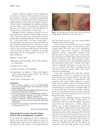
May 2011 in “Journal of the American Academy of Dermatology” This case report describes a 54-year-old woman who developed hypertrichosis around a leg ulcer while using PGE1 ointment, suggesting a potential side effect of the treatment.
 August 1994 in “Molecular Endocrinology”
 This study found that AtT-20 pituitary cells with higher cAMP-dependent kinase activity had larger calcium currents and significantly increased beta-endorphin release compared to cells with lower kinase activity.
26 citations
,
November 2019 in “Medical Science Monitor” This study found that photobiomodulation via LED light at 630 nm and 810 nm increased proliferation and mineralization in osteoblast-like cells, with comparable effects between the two wavelengths.
December 2024 in “Biochemical and Biophysical Research Communications” LMWP-PDGFA shows promise for improving hair health and treating hair loss with fewer side effects.
 10 citations
,
November 2015 in “Experimental Dermatology”
10 citations
,
November 2015 in “Experimental Dermatology” The study observed that mRAGE expression is prevalent in keratinocytes of the healthy human epidermis and may regulate inflammation and apoptosis to maintain skin homeostasis rather than responding to aging processes.
 260 citations
,
July 2010 in “Cell”
260 citations
,
July 2010 in “Cell” This study identifies mutations in the SRD5A3 gene as a cause of a new type of congenital disorder of glycosylation, impacting mental, ophthalmologic, and cerebellar functions.
 July 2025 in “The Egyptian Journal of Hospital Medicine”
 This study found that serum GPER-1 levels may serve as a biomarker for differentiating androgenetic alopecia from telogen effluvium and healthy controls, although its ability to distinguish between AGA and TE is limited.
 October 2025 in “Dermatology Practical & Conceptual”
 This study found that ChatGPT 4.0 and Gemini 1.5 Flash provided more accurate and user-friendly responses to androgenetic alopecia questions than Deepseek R1, suggesting they could be effective tools for patient education with physician guidance.
 April 2017 in “The journal of investigative dermatology/Journal of investigative dermatology”
 This study reports that 71% of patients treated with the gamma-secretase inhibitor PF-03084014 for desmoid tumors experienced dermatologic side effects, such as follicular lesions and pruritic eruptions, which were managed with topical or systemic treatments.
14 citations
,
June 2024 in “Food Chemistry X” This review highlights that pomegranate leaf exhibits potential health benefits, such as anti-cancer, anti-diabetic, anti-inflammatory, and neuroprotective effects in vitro and in animal models, but calls for comprehensive human clinical trials to confirm these therapeutic benefits and ensure safety.
6 citations
,
January 2014 in “Genetics and Molecular Research” This study constructed a hair follicle-specific expression vector for IGFBP-5 in Inner Mongolia Cashmere goat cells, allowing for future functional genetic analyses and potential use in nuclear transfer.
 April 2023 in “Journal of Investigative Dermatology”
 In this study, the KPAI and KP-IGA scoring systems for assessing keratosis pilaris showed excellent interrater and intrarater reliability, offering standardized measures for clinical and research use.
 33 citations
,
October 2013 in “Journal of The American Academy of Dermatology”
33 citations
,
October 2013 in “Journal of The American Academy of Dermatology” In this study, pioglitazone treatment in patients with lichen planopilaris showed limited success, with significant improvement seen in only a minority of cases.
 25 citations
,
May 2013 in “Journal of mammary gland biology and neoplasia”
25 citations
,
May 2013 in “Journal of mammary gland biology and neoplasia” This review examines the roles of Hedgehog and Gli proteins in mouse embryonic mammary development and suggests that Gli3-repressor-mediated off-state of Hedgehog signaling determines mammary fate over hair follicle fate.
3 citations
,
April 2024 in “Molecular Human Reproduction” This study found that paxillin knockdown in human granulosa-derived cells and mouse models decreased androgen receptor protein levels and altered gene expression, suggesting paxillin's role in protecting against androgen excess effects, as observed in a polycystic ovary syndrome mouse model.
 91 citations
,
May 2003 in “American Journal of Pathology”
91 citations
,
May 2003 in “American Journal of Pathology” This study found that prolactin and its receptor are expressed in the murine hair follicle epithelium, influencing hair cycle phases by down-regulating keratinocyte proliferation during anagen and inducing premature catagen.
This study reports that a novel series of compounds can potently and selectively inhibit glycogen synthase kinase-3, which activates glycogen synthase in insulin receptor-expressing cells and primary rat hepatocytes.
147 citations
,
April 1997 in “Oncogene” This study found that transgenic mice expressing IGF-1 in their skin showed significant skin changes, early hair follicle generation, and a higher propensity to develop tumors after chemical promotion, suggesting IGF-1's role in skin carcinogenesis.
1 citations
,
November 2022 in “Diagnostics” This case report identifies a 32-year-old woman with undiagnosed PHPT-1a who exhibited complete pseudo-anodontia and persistent patchy alopecia areata, suggesting these may be new nonclassical features of a GNAS pathogenic variant.
 15 citations
,
November 1994 in “International Journal of Dermatology”
15 citations
,
November 1994 in “International Journal of Dermatology” This study found that while the combination of oral propranolol and intradermal injections in guinea pigs led to psoriasiform changes, it did not fully mimic psoriasis.
 9 citations
,
December 2023 in “Journal of Neuroimmune Pharmacology”
9 citations
,
December 2023 in “Journal of Neuroimmune Pharmacology” This study found that systemic administration of NDP-MSH, a melanocortin receptor agonist, provided neuroprotective effects on dopaminergic nigrostriatal neurons in a mouse model of Parkinson's disease, reducing neuroinflammation and suggesting a role for regulatory T cells in these neuroprotective effects.
14 citations
,
July 1994 in “Journal of Investigative Dermatology”