9 citations
,
August 2021 in “Journal of clinical medicine” This review discusses pili torti, a rare hair shaft disorder, and reports no new clinical results; it emphasizes the need to investigate underlying conditions in affected individuals.
1 citations
,
November 2013 in “Actas dermo-sifiliográficas/Actas dermo-sifiliográficas” This article reviews the presentations from the First Symposium of Ichthyosis Experts in Spain, held to address the challenges in organizing care for ichthyosis patients, and reports no new clinical results.
January 2025 in “European Journal of Pharmacology” This study found that forsythoside A, a compound from Forsythia suspensa, may counteract DHT-induced hair regrowth inhibition by selectively inhibiting TRPV3 channels.
 December 2024 in “Nutrients”
 In this review, skin changes like hair loss and brittle nails linked to nutritional deficiencies common in eating disorders are examined as critical diagnostic tools, highlighting the need for integrated care involving dermatologists, psychiatrists, and nutritionists for effective management.
55 citations
,
July 1983 in “Journal of the American Academy of Dermatology” This case study of three siblings highlights the importance of recognizing dermatologic signs—alopecia and periorificial dermatitis—for early diagnosis and treatment of biotin-responsive multiple carboxylase deficiency.
1 citations
,
November 2011 in “Turkish Journal of Dermatology” In this case report, a 6-year-old male with biotinidase deficiency experienced marked improvement in dermatological symptoms, including alopecia and periorificial lesions, following biotin treatment.
 July 2023 in “Clinical, cosmetic and investigational dermatology”
 In this study, reflectance confocal microscopy was used to diagnose periorificial dermatitis, revealing specific skin changes such as hair follicle dilatation, increased vascular density, and inflammation, which help distinguish it from similar conditions.
50 citations
,
March 1992 in “PubMed” This review discusses the clinical manifestations of malnutrition in children, particularly highlighting the overlapping skin changes from various nutrient deficiencies, and reports no new clinical results.
50 citations
,
May 1985 in “The journal of pediatrics/The Journal of pediatrics” This study reported successful treatment of biotin deficiency in three patients receiving total parenteral nutrition, suggesting current biotin supplementation recommendations may be inadequate to maintain normal biotin status.
31 citations
,
March 1963 in “American journal of diseases of children” This report details a case of acrodermatitis enteropathica in a 4-month-old infant, noting the disorder's rarity and familial transmission, and includes a literature review with no new clinical results.
2 citations
,
June 2013 in “Journal of Dermatological Case Reports” This article presents a case of Olmsted syndrome in a 5-year-old boy, adding to the limited number of reported cases of this rare keratinization disorder.
 October 2025 in “BMC Pediatrics”
 This case report describes an 8-year-old boy with acrodermatitis enteropathica who showed significant recovery from severe symptoms after receiving a therapeutic zinc supplement.
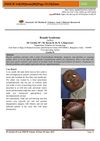 June 2022 in “Journal of medical science and clinical research”
 This case report describes a weaning infant diagnosed with Brandt syndrome displaying periorificial dermatitis and rapid symptom improvement following zinc supplementation.
49 citations
,
July 1994 in “British journal of dermatology/British journal of dermatology, Supplement” This study observed that 13 out of 38 children with methylmalonic and propionic acidaemia exhibited specific cutaneous manifestations, suggesting these conditions may include skin symptoms more often than previously thought.
January 2020 in “Turkish Journal of Dermatology” This case report describes a 9-month-old boy with zinc deficiency-related symptoms, including hair loss and diarrhea, ultimately diagnosed as acrodermatitis enteropathica and improved with zinc therapy.
This study found that areola formation in mice requires a combination of pregnancy hormones and mechanical strain, with individual stimuli causing only modest changes in epidermal proliferation and connective tissue remodeling.
 January 2024 in “Journal of Cosmetics Dermatological Sciences and Applications”
 This study found that 23.8% of participants with pattern hair loss had occipital involvement, with higher rates in females (35.6%) compared to males with early-stage hair loss (12.1%), illustrating significant gender differences in hair loss progression.
80 citations
,
November 2009 in “Aesthetic Surgery Journal” This study found that women have more and deeper perioral wrinkles than men, possibly due to having fewer skin appendages.
3 citations
,
February 2015 in “Mechanisms of development” This study observed that areola formation in mice requires exposure to pregnancy hormones and mechanical strain, beyond individual stimuli like hormonal milieu or strain alone.
 September 2023 in “Clinical, Cosmetic and Investigational Dermatology”
 The researchers reported that one-third of women with female pattern hair loss in their study had occipital region involvement, which is important for diagnosing and planning treatment, including hair restoration surgery, as the occipital region is often used as a normal reference.
 36 citations
,
April 2017 in “journal of current ophthalmology”
36 citations
,
April 2017 in “journal of current ophthalmology” This review highlights essential preoperative assessments for ophthalmologists and non-oculo-facial surgeons performing upper facial rejuvenation, emphasizing the importance of understanding ocular and periocular anatomy to achieve both cosmetic and functional improvements.
 1 citations
,
October 2018 in “Operative techniques in otolaryngology--head and neck surgery”
1 citations
,
October 2018 in “Operative techniques in otolaryngology--head and neck surgery” This article reviews both minimally invasive and surgical procedures used to treat periorbital aging, highlighting advancements in rejuvenation techniques for areas like the eyebrows and eyelids.
35 citations
,
February 1993 in “International Journal of Dermatology” This report describes two cases where pemphigus lesions developed at sites of cosmetic procedures, suggesting these treatments might trigger the disease and should be distinguished from other post-surgery complications.
 March 2026 in “Journal of Skin and Stem Cell”
 In this study, lower serum adiponectin levels and altered lipid profiles were observed in patients with periorbital melanosis, suggesting an association with metabolic syndrome.
October 2021 in “Operative techniques in otolaryngology--head and neck surgery” This article reviews various surgical techniques to improve ocular and cosmetic outcomes in patients with facial paralysis but reports no new clinical results; it emphasizes tailored long-term management strategies.
 February 2025 in “Quality in Sport”
 This review reports that pregnancy-specific dermatoses, including AEP, PEP, ICP, and PG, present overlapping clinical features and can significantly impact fetal outcomes, particularly ICP and PG, which are linked to preterm birth and stillbirth.
6 citations
,
January 2015 in “Indian Dermatology Online Journal” This case report describes a unique presentation of porokeratotic eccrine ostial and dermal duct nevus with lesions on the dorsum of the hand and a focal lichenoid infiltrate, differing from typical palm and sole involvement.
September 2023 in “Journal of the American Academy of Dermatology” Recognizing IPPP is crucial to prevent misdiagnosis and unnecessary treatments.
 20 citations
,
August 2009 in “Journal of The European Academy of Dermatology and Venereology”
20 citations
,
August 2009 in “Journal of The European Academy of Dermatology and Venereology” This study found that the occipital scalp is significantly involved in female pattern hair loss, with some patients showing clinically visible alopecia.
 1 citations
,
April 2023 in “Clinical, cosmetic and investigational dermatology”
1 citations
,
April 2023 in “Clinical, cosmetic and investigational dermatology” This study reviewed existing literature and reported two cases of perinevoid alopecia, suggesting that melanocyte antigens may be involved in its development.