 1 citations
,
January 2023 in “Journal of Drugs in Dermatology”
1 citations
,
January 2023 in “Journal of Drugs in Dermatology” This review discusses Graham-Little Piccardi-Lasseur syndrome, a rare dermatosis with limited treatment options, emphasizing the importance of early diagnosis through physical exam and dermoscopy, but reports no new results.
 September 2024 in “Journal of the American Academy of Dermatology”
 In this case report, a 53-year-old woman with Little-Graham-Piccardi-Lassueur-Syndrome responded well to a treatment regimen of hydroxychloroquine, methotrexate, and other therapies, effectively halting the progression of this rare dermatosis characterized by alopecia and hyperkeratotic eruptions.
November 2020 in “Acta Medica Bulgarica/Acta medica Bulgarica” This case report details two patients with Graham-Little-Piccardi-Lassueur syndrome who showed marked skin lesion improvement with corticosteroid treatment, though cicatricial scalp alopecia remained unresponsive.
40 citations
,
October 2012 in “Journal of the American Academy of Dermatology” This study found that the Cutaneous Lupus Disease Area and Severity Index (CLASI) is correlated with both physician-assessed and patient-reported outcomes in cutaneous lupus erythematosus, particularly highlighting concerns about body image in visible areas.
7 citations
,
August 2017 in “Genetic testing and molecular biomarkers” This report suggests that patients with primary spontaneous pneumothorax should be evaluated for FLCN mutations, as they may indicate Birt-Hogg-Dube syndrome and associated cancer risks.
23 citations
,
August 1983 in “PubMed” This case report details a 17-year-old girl with systemic lupus erythematosus and recurrent infections linked to a complete isolated Clq deficiency.
June 2020 in “Jurnal Penyakit Dalam Indonesia” This case study highlights that primary biliary cholangitis in a patient with systemic lupus erythematosus can respond well to ursodeoxycholic acid therapy, and anti-DFS70 findings may require further evaluation for other nonsystemic autoimmune conditions.
 1 citations
,
June 2022 in “JCRPE”
1 citations
,
June 2022 in “JCRPE” This study reports that metreleptin treatment in a boy with congenital generalized lipodystrophy significantly improved metabolic complications and overall health outcomes during the first year of therapy.
 1 citations
,
September 2013 in “The Journal of Dermatology”
1 citations
,
September 2013 in “The Journal of Dermatology” An 8-year-old girl developed a rare skin condition in a linear pattern on one side of her body after a lung infection, which improved with treatment.
19 citations
,
September 2010 in “Journal of the European Academy of Dermatology and Venereology” This study found that while the CLASI is generally useful for assessing disease activity and damage in cutaneous lupus erythematosus, it may not accurately reflect all subtypes, indicating a need for revision.
 June 2023 in “British Journal of Dermatology”
 This study reports a unique case of coinheritance of BRCA2 and CYLD pathogenic variants in a man with metastatic malignant cylindroma, suggesting that recognizing such genetic profiles in rare conditions can provide new treatment options, including the potential use of therapies targeting BRCA deficiency.
 January 2025 in “Recent Patents on Anti-Cancer Drug Discovery”
 In this study, neoadjuvant treatment with durvalumab combined with albumin-bound paclitaxel and carboplatin in patients with driver gene-negative stage III NSCLC showed a 65% objective response rate and was associated with high pathological response rates and improved immune function, with most adverse events being mild.
 June 2025 in “Revista Brasileira de Fisioterapia Pelvica”
 In this case report, four sessions of the Broad Ligament Maneuver were associated with improvements in ovarian function and regression of PCOS symptoms, including normalizing menstrual flow and decreasing hirsutism.
 3 citations
,
September 2015 in “Journal of Vascular Surgery”
3 citations
,
September 2015 in “Journal of Vascular Surgery” This study found that chemical lumbar sympathectomy with 5% phenol effectively treated idiopathic livedo reticularis in most patients, offering a potential long-lasting solution with repeatable efficacy upon recurrence.
 2 citations
,
June 2020 in “Dermatology and therapy”
2 citations
,
June 2020 in “Dermatology and therapy” In this case report, narrowband-UVB phototherapy successfully treated a rare instance of Graham Little-Piccardi-Lassueur syndrome, a variant of lichen planopilaris, as investigated through non-invasive imaging techniques.
 16 citations
,
September 2018 in “Journal of Molecular Liquids”
16 citations
,
September 2018 in “Journal of Molecular Liquids” This study investigated a nanostructured system using PS-b-PAA diblock copolymer for incorporating the hydrophobic photosensitizer ClAlPc, finding it effective in causing cellular damage in Caco-2 cells under light while demonstrating no cytotoxicity without light, suggesting its potential use in photodynamic therapy.
 April 2018 in “The journal of investigative dermatology/Journal of investigative dermatology”
 This study found that in a mouse model of Focal Dermal Hypoplasia, treatment with lithium carbonate improved skin disease symptoms compared to controls, though disease severity varied and posed interpretation challenges.
 1 citations
,
October 2023 in “Skin research and technology”
1 citations
,
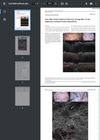
October 2023 in “Skin research and technology” This study found that line-field confocal optical coherence tomography effectively visualized key diagnostic features of classic lichen planopilaris in real time, suggesting its potential as a valuable diagnostic tool.
 1 citations
,
December 2021 in “Tropical Journal of Pharmaceutical Research”
1 citations
,
December 2021 in “Tropical Journal of Pharmaceutical Research” This study concluded that adding Kanglaite injection to gemcitabine and cisplatin chemotherapy for advanced non-small cell lung cancer improved response rates and reduced adverse side effects.
January 2025 in “Dermatology Research and Practice” In this research, RNA expression analysis of scalp biopsies from lichen planopilaris patients revealed changes in specific genes after treatments with hydroxychloroquine, narrow band UVB, or low level laser light therapy, suggesting potential biomarkers and implicating M2 macrophages in the disease's immunopathogenesis.
19 citations
,
July 2017 in “Clinical and experimental dermatology” This study provides one of the first descriptions of the demographic, clinical, and therapeutic characteristics of lichen planopilaris in Chilean adults, reporting that treatment usually reduced or halted disease progression.
2 citations
,
February 2018 in “Journal of bone oncology” This study found that low-dose chemotherapy for solitary bone lesions of Langerhans cell histiocytosis in children led to quicker recovery, higher quality of life at 3 months, and was more cost-effective compared to surgery.
 33 citations
,
March 2017 in “Dermatologic Surgery”
33 citations
,
March 2017 in “Dermatologic Surgery” In this clinical study, low-level laser therapy using the HANDI-DOME LASER device increased hair counts by 51% compared to controls, indicating its potential as a safe and effective treatment for androgenetic alopecia in women aged 18 to 60.
19 citations
,
December 2008 in “Arthritis Care & Research” This study found that the decision board is a reliable and valid tool for assessing treatment preferences in systemic lupus erythematosus patients, who tended to favor oral medication due to concerns about side effects.
7 citations
,
April 2008 in “Progrès en Urologie”  October 2014 in “Journal of the Portuguese Society of Dermatology and Venereology”
 This paper presents a therapeutic approach with excellent results in a case of lichen planopilaris overlapping with dermatomyositis and scleroderma, although broader applicability is not discussed.
This chapter provides dermatology trainees with insights on managing lichen planopilaris, emphasizing treating active disease to prevent further hair loss and recommending a tapered course of oral steroids for disease stabilization.
 July 1998 in “Proceedings of SPIE”
 This study found that Low Power Laser therapy may be an effective complementary treatment for scalp alopecia and crural ulcers, showing quicker and potentially better results than conventional treatments.
 June 2024 in “Journal of Clinical Oncology”
 This study observed that dalpiciclib is associated with fewer adverse events like diarrhea and hepatotoxicity compared to other CDK4/6 inhibitors, potentially offering better patient-perceived safety and quality of life.