March 2026 in “Journal of Investigative Dermatology” Genetic factors, especially PADI3 gene variants, contribute to CCCA in women of African descent.
11 citations
,
January 2018 in “Jaypee's international journal of clinical pediatric dentistry” This report describes the clinical presentation of Papillon-Lefèvre syndrome in two brothers and reviews the related literature, without providing new clinical outcomes.
 July 2025 in “Journal of Clinical Research and Reports”
 This abstract provides a narrative overview of polycystic ovary syndrome, discussing its symptoms and related health issues, and does not include new research findings.
 November 2017 in “Elsevier eBooks”
 This article reviews the complications and health risks associated with polycystic ovary syndrome and reports no new clinical findings.
October 2019 in “Al Mustansiriyah Journal of Pharmaceutical Sciences” This study found that the CTLA-4 gene polymorphism (rs733618) has no association with polycystic ovarian syndrome in the studied population.
 December 2022 in “Cumhuriyet medical journal”
 This study observed that women with PCOS and no hyperandrogenism (group 3) had similar metabolic issues to those with classic PCOS, while those with no menstrual dysfunction (group 2) had milder issues related to lipid and insulin resistance.

This paper addresses diagnostic criteria and treatment options for polycystic ovary syndrome, emphasizing lifestyle changes and combination oral contraceptives as primary management strategies, but it reports no new clinical results.
 June 2022 in “COJ Biomedical Science & Research”
 PCOS management includes lifestyle changes and medications to improve fertility.
 1 citations
,
September 2024 in “BMC Ophthalmology”
1 citations
,
September 2024 in “BMC Ophthalmology” This study found significantly elevated central corneal thickness and intraocular pressure in patients with polycystic ovary syndrome, suggesting it should be considered in evaluating anterior segment diseases and glaucoma in women.
5 citations
,
January 2023 in “International Journal of Environmental Research and Public Health” This study found that women with PCOS who reported the highest levels of physical activity also reported better outcomes in BMI, mental health, and sleep quality, suggesting that enhancing motivation may improve participation in physical activity.
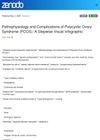 May 2026 in “Zenodo (CERN European Organization for Nuclear Research)”
 This infographic reviews the pathophysiology and complications of PCOS, illustrating how genetic and environmental factors contribute to its development, and highlights associated metabolic and neuroendocrine effects.
 February 2024 in “Brazilian Journal of Implantology and Health Sciences”
 This review discusses the high prevalence of dermatological manifestations like hirsutism and acne in PCOS patients and explores various therapeutic approaches, highlighting the need for early recognition and treatment.
 May 2017 in “InTech eBooks”
 This review discusses various types of primary cicatricial alopecias, categorized by the predominant type of inflammatory cells involved, and reports no new clinical results.
 215 citations
,
January 2011 in “Reproductive Biology and Endocrinology”
215 citations
,
January 2011 in “Reproductive Biology and Endocrinology” Among reproductive-aged women in Iran, this study found that the prevalence of PCOS varied significantly depending on the diagnostic criteria used, with estimates ranging from 7.1% to 14.6%.
December 2024 in “Iraqi journal of Medical Sciences” This study found that women with PCOS had significantly lower vitamin D levels and higher serum prolactin and testosterone than women without PCOS, suggesting a link between vitamin D deficiency and PCOS symptom severity.
3 citations
,
June 2025 in “Gyemyeong uidae haksulji” This review suggests that PDRN shows promise as a safe and versatile regenerative agent for wound healing and other dermatological applications, based on its dual mechanisms and clinical evidence of efficacy.
 24 citations
,
July 2012 in “Current Opinion in Obstetrics & Gynecology”
24 citations
,
July 2012 in “Current Opinion in Obstetrics & Gynecology” This review discusses the diagnostic criteria and treatment options for adolescent polycystic ovary syndrome, highlighting ongoing debates and the need for further research, without presenting new clinical results.
January 2018 in “Murdoch Research Repository (Murdoch University)” This study identified putative causal mutations for PCOS among first-degree relatives, although functional analysis of a specific GDF9 mutation was unsuccessful.
1 citations
,
February 2023 in “IntechOpen eBooks” This chapter discusses photodynamic therapy and its potential applications beyond cancer treatment, including conditions like alopecia and angina, but reports no new clinical findings.
 April 2022 in “International Journal of Health Sciences (IJHS)”
 This qualitative study assesses various treatment approaches for PCOS and suggests that yoga, diet, exercise, and therapies like mindfulness-based cognitive therapy may help manage symptoms from a holistic perspective.
2 citations
,
April 2021 in “JAAD International” This article discusses the potential safety of platelet-rich plasma therapy for cicatricial alopecia but highlights that its effectiveness is still uncertain; no new empirical results are provided.
 150 citations
,
October 2012 in “Clinical Endocrinology”
150 citations
,
October 2012 in “Clinical Endocrinology” In this retrospective cohort study, women with polycystic ovary syndrome showed high incidence and age-specific prevalence rates of type 2 diabetes, myocardial infarction, and angina, particularly in those over 65.
February 2026 in “Expert Review of Endocrinology & Metabolism” This review discusses the dermatologic manifestations and management of polycystic ovary syndrome, underscoring the need for mechanism-based, personalized treatments and integrated mental health support, but reports no new clinical results.
 11 citations
,
November 2017 in “Hong Kong Medical Journal”
11 citations
,
November 2017 in “Hong Kong Medical Journal” This review discusses the increased cardiometabolic risk associated with polycystic ovary syndrome and highlights the need for tailored management, but it reports no new results.
 May 2024 in “International Seven Multidisciplinary Journal”
 This study reviewed the literature to explore the dermatological symptoms associated with Polycystic Ovary Syndrome, such as hirsutism and acne, highlighting the importance of a multidisciplinary approach for optimal management of the syndrome, including controlling circulating androgen levels.
 4 citations
,
January 2022 in “Open Health”
4 citations
,
January 2022 in “Open Health” This article discusses the challenges in treating PCOS, highlights the role of lifestyle interventions, and notes the lack of effective treatment beyond symptomatic management for this common reproductive health issue.
May 2026 in “International Journal of Innovative Technologies in Social Science” This review reports that lifestyle modification, including diet and exercise, is essential for managing PCOS, while pharmacological and complementary treatments address specific symptoms like menstrual irregularities and insulin resistance.
 10 citations
,
January 2019 in “The Nurse Practitioner”
10 citations
,
January 2019 in “The Nurse Practitioner” This article reviews diagnostic and treatment guidelines for polycystic ovary syndrome, discussing how nurse practitioners can enhance patients' quality of life through education; it reports no new clinical results.
 January 2022 in “International Research Journal of Ayurveda & Yoga”
 This paper reviews Ayurvedic theories and practices in understanding and treating PCOS, suggesting it can be addressed with tridosha pacifying, agnivardhak chikitsa, and uttarvasti based on pathogenesis insights.
 18 citations
,
April 2016 in “Endocrinology and Metabolism Clinics of North America”
18 citations
,
April 2016 in “Endocrinology and Metabolism Clinics of North America” This review discusses the diagnostic challenges of PCOS in adolescents, noting that the persistence of hyperandrogenism and oligomenorrhea is required for diagnosis, while genetic studies suggest involvement of the hypothalamic-pituitary-ovarian axis.