27 citations
,
September 2021 in “Microbiology Spectrum” This study found that multimetal starvation by the immune protein calprotectin triggers unique regulatory responses in Pseudomonas aeruginosa, beyond those seen with individual metal shortages.
 May 2025 in “The Journal of Rheumatology”
 This case report highlights the rare occurrence of overlapping syndromes including SLE, RA, and AAV in a patient with discoid lupus erythematosus, noting the persistent role of prior viral infection remains unclear.
June 2024 in “Bioscientia Medicina Journal of Biomedicine and Translational Research” In this study, researchers observed that among pediatric alopecia areata patients at Dr. M. Djamil General Hospital Padang, patchy alopecia was most common, affecting 80% of cases, with frequent trichoscopic features including yellow dots, black dots, and broken hairs.
 2 citations
,
January 1997 in “Leprosy Review”
2 citations
,
January 1997 in “Leprosy Review” This case report documents a rare instance of a female Indian patient with borderline-lepromatous leprosy experiencing generalized leprous alopecia of the scalp and lepromatous lymphadenitis of the suboccipital node.
 13 citations
,
March 2016 in “Journal of Cutaneous Pathology”
13 citations
,
March 2016 in “Journal of Cutaneous Pathology” This review of 1360 scalp biopsy specimens revealed that 12.5% of cases involved multifactorial alopecia, highlighting the diagnostic complexity of multiple forms of alopecia present in single biopsies.
11 citations
,
January 2009 in “Indian journal of dermatology, venereology, and leprology” This review discusses the characteristics, geography, and treatment challenges of dermatitis cruris pustulosa et atrophicans in men, emphasizing the need for further research on its etiology and management; it presents no new clinical findings.
1 citations
,
January 2025 in “International Journal of Dermatology” This study found that in patients with alopecia areata and atopic dermatitis, 61.5% showed improvement with dupilumab treatment, but 38.5% experienced worsened or new-onset alopecia areata, with higher baseline IgE levels linked to better responses.
2 citations
,
October 1931 in “Archives of Dermatology and Syphilology” This report describes a rare case of scalp kerion due to microsporosis in a Portuguese child, noting the unusual combination with other microsporid features and treatment details.
July 2024 in “JAAD Case Reports” This article discusses the clinical and histological features of alopecia areata, a T-cell-mediated autoimmune disorder causing unpredictable nonscarring hair loss, without providing new clinical findings.
 March 2017 in “BIRDEM Medical Journal”
 This report discusses two cases of sarcoidosis with cutaneous manifestations that posed a diagnostic challenge, without presenting new clinical results.
 January 2026 in “Dermatology Online Journal”
 This case report highlights that CCCA can present with multifocal patchy hair loss in younger men of African descent, suggesting the need for careful evaluation when diagnosing atypical alopecia patterns.
14 citations
,
January 2010 in “Dermatology” This study reports five cases of congenital triangular alopecia featuring a central island of short terminal hair, with the cause remaining unknown.
 4 citations
,
July 2005 in “International Journal of Dermatology”
4 citations
,
July 2005 in “International Journal of Dermatology” This article does not contain an abstract and presents no new clinical findings, instead discussing prior cases and literature on infant alopecia universalis and the potential role of topical PUVA therapy.
 3 citations
,
March 2012 in “Actas Dermo-Sifiliográficas”
3 citations
,
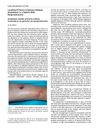
March 2012 in “Actas Dermo-Sifiliográficas” An elderly man with skin amyloidosis and abnormal blood proteins was monitored without finding widespread disease after 18 months.
 4 citations
,
January 2018 in “JEADV. Journal of the European Academy of Dermatology and Venereology/Journal of the European Academy of Dermatology and Venereology”
4 citations
,
January 2018 in “JEADV. Journal of the European Academy of Dermatology and Venereology/Journal of the European Academy of Dermatology and Venereology” Panitumumab can cause excessive ear hair growth.
10 citations
,
October 2011 in “Dermatologica Sinica” This case report describes a patient who developed multiple skin reactions, including eczematous lesions and alopecia areata, during adalimumab treatment, but found no improvement in pustulosis palmoplantaris with different biologics.
2 citations
,
November 2023 in “Indian Dermatology Online Journal” In this case report, a 4-year-old Indian girl with linear and annular lupus panniculitis of the scalp achieved complete remission and hair regrowth with oral corticosteroids, showing no relapse after 6 months of follow-up.
 3 citations
,
March 2015 in “Journal of the European Academy of Dermatology and Venereology”
3 citations
,
March 2015 in “Journal of the European Academy of Dermatology and Venereology” Some people with primary cicatricial alopecia also have inflammatory bowel disease, suggesting a possible connection.
 4 citations
,
March 2021 in “Parasitology Research”
4 citations
,
March 2021 in “Parasitology Research” This case study reports the first clinical case of besnoitiosis in two donkeys in Italy, suggesting a wider distribution of the disease in European equids than previously expected.
February 2024 in “Therya notes” In this case report, researchers documented the first instance of alopecia in a bat from Veracruz, México, specifically in an individual of Artibeus jamaicensis, likely caused by a thoracic injury leading to an infection.
October 2024 in “Journal of Cutaneous Pathology” In this study of folliculitis decalvans, researchers found that compound follicular structures in scalp biopsies are primarily composed of terminal anagen follicles, surrounded by fibrosis and inflammatory cell infiltrate, which could enhance understanding of this condition.
 January 2012 in “Yearbook of Dermatology and Dermatologic Surgery”
 The study concluded that a 'Swiss cheese' pattern in hair follicles is a useful sign for diagnosing alopecia areata.
12 citations
,
April 2017 in “Experimental and Therapeutic Medicine” This study found that patients with active severe alopecia areata exhibited decreased CD200 expression on T and B lymphocytes, which may be linked to an imbalance in Th1/Th2 immune equilibrium.
8 citations
,
August 2016 in “Journal of Cutaneous Pathology” This case report highlights a rare instance of CD8-positive hypopigmented mycosis fungoides causing alopecia areata-like changes, emphasizing the necessity of scalp biopsy in such presentations.
1 citations
,
December 2022 in “Pathogens” This case report describes a severe Sarcoptes scabiei infestation in a stray FIV-positive cat, which typically is a non-permissive host for the mite, leading to considerable clinical recovery after treatment.
 1 citations
,
April 2010 in “Expert Review of Dermatology”
1 citations
,
April 2010 in “Expert Review of Dermatology” This review discusses primary cicatricial alopecias, detailing their classification, pathogenesis, clinical features, histopathologic findings, and treatment, without reporting new experimental results.
July 2022 in “Indian Journal of Otology” This case report presents a very rare instance of pilonidal sinus in the preauricular region, marking only the second known case documented in medical literature.
2 citations
,
January 2002 in “Zhiwu Yanjiu” Capitate trichomes have more endoplasmic reticulum and vacuoles, while peltate trichomes have more plastids and larger subcuticular spaces.
23 citations
,
February 2003 in “British Journal of Dermatology” This case study describes a 40-year-old man diagnosed with pilotropic mycosis fungoides, a form of folliculotropic cutaneous T-cell lymphoma, characterized by lymphocytic infiltration of hair follicles and eccrine glands.
 13 citations
,
August 2012 in “Journal of the American Academy of Dermatology”
13 citations
,
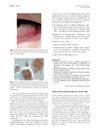
August 2012 in “Journal of the American Academy of Dermatology” This letter details 11 cases of scalp pseudocyst treated primarily with intralesional triamcinolone, resulting in complete hair regrowth in eight patients and self-resolution in some instances.