 December 2025 in “Cureus”
 This study suggests that elevated levels of IL-17A and IL-23 in alopecia areata may play roles in disease severity and activity, providing insights into potential therapeutic targets.
 December 2025 in “Saudi Pharmaceutical Journal”
 This study developed a nanoemulsion containing Minoxidil, which showed effective stability and significantly increased hair growth rates in pretreated mice, suggesting its potential for treating hair loss.
 November 2025 in “Bioscientia Medicina Journal of Biomedicine and Translational Research”
 In this case report, researchers describe a 44-year-old woman with refractory patch alopecia areata achieving complete hair regrowth using a multi-modal approach of systemic and topical cholecalciferol with microneedling, although systemic vitamin D repletion remains a significant confounder.
 August 2025 in “Bioscientia Medicina Journal of Biomedicine and Translational Research”
 In this case study, a 3-year-old with tinea capitis achieved complete resolution following treatment, highlighting hair salons as potential indirect transmission sites for infection and emphasizing trichoscopy's diagnostic value when traditional signs like Wood’s lamp fluorescence are missing.
 July 2025 in “International Journal of Dermatology Venereology and Leprosy Sciences”
 In this review, researchers examined the concentration of cortisol in scalp hair of individuals with alopecia areata to explore its relationship with disease variables, as cortisol in hair can indicate chronic stress, which may impact alopecia areata pathogenesis.
 July 2025 in “Journal of Pharmacognosy and Phytochemistry”
 This review explores the potential benefits of plant-based diets, herbal remedies, and phytochemicals for managing PCOS, suggesting they may help regulate menstrual cycles, improve metabolic parameters, and reduce androgen levels, offering a promising, holistic approach to treatment.
 January 2025 in “SKIN The Journal of Cutaneous Medicine”
 This study suggests that while vitamin D3 deficiency is linked to alopecia areata severity, evidence for the effectiveness of supplementation or topical calcipotriol treatment remains inconsistent and low quality.
 January 2025 in “Annals of Thoracic and Cardiovascular Surgery”
 This case report describes a 55-year-old woman with alopecia areata whose condition improved rapidly and did not recur after the surgical resection of a thymoma, suggesting a potential immunological link between alopecia areata and thymoma that warrants further investigation.
 December 2024 in “International Ayurvedic Medical Journal”
 This study observed that Ayurvedic treatments using Gandmala Kandan Rasa, Kanchanar Guggulu, and Varunadi Kwath provided symptomatic relief and reduced thyroid-stimulating hormone levels in a 35-year-old female patient with hypothyroidism over a 90-day period.
 December 2024 in “International Journal of Health Sciences and Research”
 This study describes the case of a 22-year-old female with alopecia areata linked to vitamin D deficiency, highlighting the importance of early diagnosis and management of deficiency to prevent broader health issues.
 December 2024 in “Clinical Cosmetic and Investigational Dermatology”
 This study found that AA may have a protective role in the progression of both HBDC and CRC, suggesting potential new research avenues for treatments of these conditions.
 September 2024 in “African Journal of Biomedical Research”
 This study found that individuals with alopecia areata had significantly lower blood levels of vitamin D and slightly lower serum copper levels compared to healthy controls, suggesting the potential importance of assessing these factors in the chemical evaluation of patients with this condition.
 August 2024 in “New Zealand Medical Student Journal”
 The authors highlighted promising developments in JAK inhibitors as targeted treatments for skin diseases such as atopic dermatitis, psoriasis, and alopecia areata, noting their effectiveness and safety profiles. Recent advances also suggest potential for treating melanoma with these inhibitors.
This study identified four genes related to alopecia areata: GIMAP6 and ALOX15 as risk factors, and GALNT6 and HEG1 as protective factors, noting significant validation differences in GALNT6 and HEG1.
This literature review reports that mesenchymal stem cell-derived secretome, including conditioned medium and extracellular vesicles, shows promise as an effective treatment for various diseases in animal and human in-vivo models, with ongoing clinical trials and recommendations for future research discussed.
 April 2024 in “Indian Scientific Journal Of Research In Engineering And Management”
 This review discusses the prevalence and contributory factors of polycystic ovarian syndrome and reports no new clinical findings; the authors emphasize the importance of early detection through screening.

In this case study, a patient experienced darkening of hair color after taking acitretin, an oral retinoid known for potentially causing alopecia, marking a rare and undocumented phenomenon.
 March 2024 in “Buletin de psihiatrie integrativă (Print)”
 This review identifies a significant link between telogen effluvium and increased psychological distress, including anxiety, depression, and social phobia, stressing the need for both medical and psychological care to improve affected individuals' quality of life.
 January 2024 in “International journal of homoeopathic sciences”
 This abstract discusses alopecia areata, highlighting its complex autoimmune pathogenesis involving immune cells and signaling molecules, and underscores the importance of accurate diagnosis and tailored management strategies, noting the need for further research to improve treatments.
 December 2023 in “Curēus”
 This study in a California safety net hospital found no apparent increase in alopecia areata incidence among individuals who received COVID-19 vaccination compared to those unvaccinated, with odds ratios indicating a lower risk in the vaccinated group.
 September 2023 in “Small animal advances”
 This case report from Veterinary Clinical Complex, Kurumbapet, India, described a kitten with superficial dermatophytosis caused by Microsporum spp., which was successfully treated using itraconazole syrup, cetirizine, and a liver-supportive syrup, achieving complete recovery by the third week without adverse effects.
 September 2023 in “International Journal of Applied Pharmaceutics”
 This study found that a topical gel containing Minoxidil and Tofacitinib citrate showed promise for treating alopecia areata, with formulation F5 demonstrating effective drug release and stability in evaluations.
 August 2023 in “Research Square (Research Square)”
 In this study, researchers observed that Melan A, a melanocytic marker, was significantly expressed in hair follicles of alopecia areata patients and correlated with immune infiltrates, suggesting melanocytes might contribute to the autoimmune response in this condition.
 April 2023 in “International journal of research in Ayurveda and pharmacy”
 This study reported significant symptom improvement in a 30-year-old female with hypothyroidism after Ayurvedic treatment with Kanchnar twak kwath, Shunthi churna, and Nimb tail nasya, noting a reduction in TSH levels from 18.65 to 6.92 post-treatment.
 March 2023 in “PARIPEX INDIAN JOURNAL OF RESEARCH”
 This study found that prolonged tofacitinib treatment in adult Indian patients with moderate-to-severe alopecia areata was associated with a high regrowth rate, which varied with factors like age at disease onset and treatment duration.
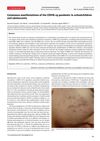 January 2023 in “Acta dermatovenerologica Alpina, Pannonica et Adriatica (Tiskana izd.)”
 This review details skin conditions in children and adolescents related to the SARS-CoV-2 pandemic, emphasizing mask-related acne and various cutaneous manifestations linked to infection and vaccination, with most being mild or nonspecific.
 January 2023 in “Discovery immunology”
 T cells and bacteria in the gut and skin help maintain health and protect against disease.
 December 2022 in “Curēus”
 This case report describes a 5-year-old girl with atrichia with papular lesions, whose diagnosis was confirmed through genetic testing identifying mutations in the hairless gene.
 December 2022 in “Revista Medicina Cutánea Ibero-Latino-Americana”
 This review summarizes current knowledge on the role of the JAK/STAT signaling pathway in alopecia areata and suggests moderate efficacy of systemic inhibitors, with low adverse events but high recurrence rates.
 July 2022 in “International journal of medical science and clinical invention”
 In this case report, a 17-year-old girl with secondary amenorrhea was evaluated for PCOS, highlighting the importance of assessing abnormal menstrual patterns for underlying conditions, and suggesting that hormonal birth control and lifestyle changes can help manage symptoms.