 16 citations
,
January 2010 in “American Journal of Neuroradiology”
16 citations
,
January 2010 in “American Journal of Neuroradiology” This case report describes a 3-year-old boy with trichothiodystrophy, highlighting specific MRI findings of diffuse dysmyelination and osteosclerosis that may be unique to the disorder.
21 citations
,
January 1997 in “Nephron” In this study, two dialysis patients with high plasma silicon levels exhibited symptoms like painful skin eruptions and unusual hair growth, suggesting silicon may influence calcium metabolism similarly to aluminum.
 October 2024 in “Journal of the Endocrine Society”
 This case study reports on a rare form of vitamin D resistant rickets in a 37-year-old male, highlighting the condition's clinical features and the necessity for a thorough understanding of calcium and vitamin D metabolism in the diagnosis and management of metabolic bone diseases.
11 citations
,
May 2008 in “British journal of dermatology/British journal of dermatology, Supplement” This case report describes a 32-year-old man who developed SCC of the common bile duct a year after receiving treatment for a malignant proliferating trichilemmal tumour on the scalp.
43 citations
,
March 2010 in “Endocrine” November 2025 in “OPAL (Open@LaTrobe) (La Trobe University)” In this study, researchers conducted additional IHC staining on equine skin sections and found that collagen type III primarily labels the extracellular matrix, while anti-PDGFR-antibody staining highlights cells with long-shaped processes mainly arranged around hair follicles.
 February 2024 in “Journal of medical science and clinical research”
 This case study reports a near-complete response of a proliferating trichilemmal tumor to neoadjuvant radiotherapy in a 79-year-old woman, highlighting radiotherapy's role in managing this condition when patients are unsuitable for surgery.
 24 citations
,
September 2014 in “Journal of the European Academy of Dermatology and Venereology”
24 citations
,
September 2014 in “Journal of the European Academy of Dermatology and Venereology” This study suggests that trichoscopy with a handheld dermatoscope may help differentiate temporal triangular alopecia from other localized alopecia by identifying specific hair features.
 January 2026 in “International Journal of Research and Innovation in Applied Science”
 This case report details a rare instance of malignant proliferating trichilemmal tumour in a 60-year-old male, emphasizing the significance of histochemical and immunohistochemical markers for accurate diagnosis and differentiation from squamous cell carcinoma.
7 citations
,
April 2008 in “Progrès en Urologie” 2 citations
,
September 2021 in “JAAD case reports” This report describes a case of trichodysplasia spinulosa in a renal transplant patient, characterized by unique dermatoscopic features and highlighting the need for timely diagnosis.
14 citations
,
January 2022 in “Evidence-based Complementary and Alternative Medicine” This study found that cryptotanshinone improved bone mass, inhibited osteoclast differentiation, and protected against kidney damage in ovariectomized rats, suggesting potential benefits for clinical use.
 February 2026 in “Oncology Reviews”
 This review highlights the promising clinical outcomes of sacituzumab tirumotecan (sac-TMT), an antibody-drug conjugate for breast cancer that targets TROP2, demonstrating improved response rates and progression-free survival, with manageable safety concerns including primarily mild-to-moderate nausea and alopecia.
 8 citations
,
March 2010 in “Gynecological Endocrinology”
8 citations
,
March 2010 in “Gynecological Endocrinology” This study assessed various androgens' diagnostic effectiveness for hyperandrogenaemia in PCOS using ROC curve analysis, but it reports no specific new results.
 October 2020 in “Our Dermatology Online”
 This report presents two cases where dermatologists identified internal malignancies—small cell lung cancer and stage IIB cervical cancer—through paraneoplastic skin manifestations.
December 1951 in “Journal of the American Medical Association” This article reports a case of hair loss and pigmentation changes in a man after using propylthiouracil alongside iodine solution for thyroid and diabetic conditions, providing clinical observations without broader conclusions.
 June 2022 in “IP Indian journal of clinical and experimental dermatology”
 In this study, among patients with clinically suspected appendageal tumours, histopathology confirmed their presence in 42 cases, with benign types found more frequently than malignant ones.
4 citations
,
April 2001 in “Experimental Dermatology” This study used a novel HPLC-radiomatic flow scintillation system to measure 5α-reductase activity in dermal papillae from miniaturized hair follicles of the human occipital scalp, revealing significant variability in enzyme activity across samples.
 October 2024 in “Dermatology Practical & Conceptual”
 The researchers recommend considering porokeratosis as a possible diagnosis for scalp lesions since accurate identification is crucial for management and new treatments like topical cholesterol/lovastatin show promising potential for treating porokeratosis.
 January 2015 in “Hair therapy & transplantation”
 This review updates on various methods for hair and scalp examination, encompassing non-invasive, semi-invasive, and invasive techniques, and reports no new results.
 13 citations
,
September 2008 in “Experimental and Clinical Endocrinology & Diabetes”
13 citations
,
September 2008 in “Experimental and Clinical Endocrinology & Diabetes” This study compared the echocardiographic profiles of patients with polycystic ovary syndrome to those of healthy subjects using conventional methods and tissue Doppler imaging, but it reports no specific findings here.
 March 2024 in “Research Square (Research Square)”
 In this study, scalp cooling therapy was found to be well tolerated and effective at improving hair preservation for Asian women with breast or gynecological cancers undergoing certain chemotherapy regimens, particularly weekly paclitaxel, compared to historical controls.
 July 2018 in “International Journal of Research in Dermatology”
 This case report describes a 46-year-old female diagnosed with hypothyroidism, presenting with symptoms including severe hair loss, and treated with levothyroxine and supplements.
 3 citations
,
February 2025 in “Endocrine”
3 citations
,
February 2025 in “Endocrine” This study emphasizes the necessity of confirming elevated testosterone levels detected by immunoassay with liquid chromatography-tandem mass spectroscopy before pursuing more complex diagnostic evaluations.
7 citations
,
March 2004 in “Journal of the American Academy of Dermatology” Tiger tail banding and hair abnormalities are reliable indicators for diagnosing trichothiodystrophy.
1 citations
,
February 2025 in “Journal of the Neurological Sciences” This study suggests that BTP levels in cerebrospinal fluid might help diagnose CIDP and predict therapy response but require validation in larger cohorts.
23 citations
,
September 1957 in “Archives of Dermatology” This study investigated alkaline phosphatase activity in scalp biopsies from patients with alopecia areata and totalis, but provides no new conclusive clinical results.
 October 2024 in “The Journal of Dermatology”
 In this study, intravenous corticosteroid pulse therapy for rapidly progressive alopecia areata showed that 74.5% of patients achieved a good response in the long-term, and a revised scoring system predicted relapse risk effectively in cases with preceding infectious symptoms.
108 citations
,
October 2005 in “Journal of Ultrasound in Medicine” This study found that ultrasonography improved preoperative diagnosis rates of pilomatricoma to 76% by identifying specific features such as inner echogenic foci and a peripheral hypoechoic rim.
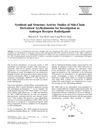 18 citations
,
April 2001 in “Bioorganic & Medicinal Chemistry Letters”
18 citations
,
April 2001 in “Bioorganic & Medicinal Chemistry Letters” This study identified the N-(iodopropenyl) derivative 13 as a promising candidate for development as a radioiodinated androgen receptor ligand due to its binding affinity.