24 citations
,
June 2012 in “Journal of Feline Medicine and Surgery” This case report describes three Devon Rex cats with papular dermatitis due to dermatophytosis, which resolved with antifungal treatment.
 June 2017 in “Çocuk Enfeksiyon Dergisi/Journal of Pediatric Infection”
 This report describes two cases of urticarial id reaction linked to tinea capitis profunda, highlighting a potential new etiology for this rare condition.
 August 2024 in “Journal of Research in Clinical Medicine”
 In this study, researchers observed that patients with COVID-19 can develop a variety of skin lesions, with maculopapular rash, telogen effluvium, and urticaria showing significant associations with both the timing of symptom onset and the severity of the disease.
September 2017 in “Journal of Evidence Based Medicine and Healthcare” Among pediatric patients in this study, eczema was identified as the most prevalent noninfectious skin condition across all age groups, but more research is needed for comprehensive understanding.
 May 2024 in “International Journal of Advanced Multidisciplinary Research and Studies”
 In this cross-sectional study of COVID-19 positive patients in Bangladesh, researchers found that maculo-papular eruptions were the most common dermatological manifestation, with other prevalent conditions including chilblain-like eruptions, urticarial lesions, and petechiae/purpura.
 5 citations
,
January 2022 in “Journal of the European Academy of Dermatology and Venereology”
5 citations
,
January 2022 in “Journal of the European Academy of Dermatology and Venereology” In this study, Covishield vaccination was associated with cutaneous adverse effects, notably telogen effluvium and urticaria, among recipients at a hospital in northern India.
 11 citations
,
December 2020 in “Journal of Drugs in Dermatology”
11 citations
,
December 2020 in “Journal of Drugs in Dermatology” This study reported that COVID-19 skin manifestations, such as exanthema and chilblains, varied in timing but resolved positively with proper treatment.
 6 citations
,
September 1990 in “International Journal of Gynecology & Obstetrics”
6 citations
,
September 1990 in “International Journal of Gynecology & Obstetrics” This case report describes a rare instance of pruritic urticarial papules and plaques of pregnancy in a 25-year-old caucasian primigravida during the third trimester, discussing management recommendations.
 4 citations
,
January 2012 in “Elsevier eBooks”
4 citations
,
January 2012 in “Elsevier eBooks” The document concludes that various skin conditions have specific treatments, ranging from antihistamines for urticaria to surgery and medication for tumors and chronic skin diseases.
 15 citations
,
July 1997 in “Clinics in Dermatology”
15 citations
,
July 1997 in “Clinics in Dermatology” Traditional Chinese medications can cause skin reactions, and better testing and reporting are needed to identify allergens.
2 citations
,
October 2013 in “Journal of Veterinary Internal Medicine” This study reports the first documented case of sweat hypersensitivity and progressive sebaceous adenitis in a horse, highlighting the potential for sweat-induced urticaria when exercising or under sedation.
 9 citations
,
July 2002 in “Journal of the European Academy of Dermatology and Venereology”
9 citations
,
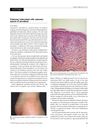
July 2002 in “Journal of the European Academy of Dermatology and Venereology” This article discusses multiple minute digitate hyperkeratosis in a dermatological context and reports no new clinical findings; the authors focus on a descriptive review.
 8 citations
,
February 2012 in “International Journal of Dermatology”
8 citations
,
February 2012 in “International Journal of Dermatology” This review discusses skin problems common among long-distance runners and outlines helpful treatments, without presenting new clinical results.
 24 citations
,
June 2011 in “International Journal of Dermatology”
24 citations
,
June 2011 in “International Journal of Dermatology” This review summarizes physiologic skin changes during pregnancy and specific pregnancy-related dermatoses but reports no new clinical results.
 15 citations
,
November 2002 in “Cardiology in Review”
15 citations
,
November 2002 in “Cardiology in Review” This review discusses various adverse skin reactions linked to cardiovascular medications and reports no new clinical results, highlighting the need for vigilance when prescribing these drugs.
 208 citations
,
July 2001 in “Journal of The American Academy of Dermatology”
208 citations
,
July 2001 in “Journal of The American Academy of Dermatology” This review discusses the classification and diagnosis of pregnancy-related skin conditions and reports no new clinical findings.
 195 citations
,
January 2008 in “Photochemistry and Photobiology”
195 citations
,
January 2008 in “Photochemistry and Photobiology” This review discusses the effects of visible light on human skin, highlighting its role in pigmentation, thermal damage, and the treatment of several skin conditions, while noting limited sunscreen protection against it; no new clinical results are reported.
 101 citations
,
July 2020 in “Dermatologic therapy”
101 citations
,
July 2020 in “Dermatologic therapy” This systematic review reports that "COVID toes" and other skin manifestations can be initial signs of COVID-19, and advises immunosuppressive therapy adjustments only for infected or at-risk patients.
 48 citations
,
October 2011 in “Sports Medicine”
48 citations
,
October 2011 in “Sports Medicine” This review covers dermatological conditions experienced by ice-skating athletes due to cold exposure, infections, and inflammation, providing no new clinical findings and emphasizing diagnosis and treatment strategies.
 38 citations
,
December 2012 in “Journal of Cutaneous Pathology”
38 citations
,
December 2012 in “Journal of Cutaneous Pathology” This review discusses the significance of elastic tissue staining in dermatopathology, particularly for diagnosing primary elastic tissue disorders and other skin conditions, but reports no new clinical results.
 36 citations
,
April 1990 in “Dermatologic Clinics”
36 citations
,
April 1990 in “Dermatologic Clinics” This review discusses skin changes and dermatoses during pregnancy and reports no clinical findings, emphasizing a need for better understanding of their causes.
 8 citations
,
April 2015 in “Advances in Psychosomatic Medicine”
8 citations
,
April 2015 in “Advances in Psychosomatic Medicine” This review discusses the complex relationship between psychotropic medications and the skin, focusing on cutaneous side effects, dermatologic uses, and psychiatric disorders with skin manifestations, but reports no new findings.
 1 citations
,
January 2000 in “Springer eBooks”
1 citations
,
January 2000 in “Springer eBooks” This review discusses the evaluation of skin conditions during pregnancy and emphasizes the importance of testing for syphilis, but it reports no new clinical results.
 December 2021 in “The Sri Lanka Journal of Dermatology”
 This study found that the prevalence of dermatological manifestations in COVID-19 patients was 1.7% in Sri Lanka, with various types of skin lesions reported.
 July 2014 in “Elsevier eBooks”
 The document concludes that various hypersensitivity diseases in horses can be diagnosed and treated with methods like immunotherapy and medication, and early aggressive treatment is crucial for severe diseases like equine cutaneous pythiosis.
 56 citations
,
June 1970 in “The BMJ”
56 citations
,
June 1970 in “The BMJ” Drug addicts often have scars, skin color changes, blocked veins, and bruising, with severe ulcers from barbiturate injections.
 127 citations
,
September 1996 in “British Journal of Dermatology”
127 citations
,
September 1996 in “British Journal of Dermatology” This study found that cutaneous signs such as chilblains and urticaria were notably common in British patients with systemic lupus erythematosus, while subacute cutaneous lesions were less frequent.
 82 citations
,
June 2020 in “Inflammation Research”
82 citations
,
June 2020 in “Inflammation Research” This review discusses the complex pathophysiological and clinical aspects of COVID-19, including dermatological findings and their association with SARS-CoV-2 infection but reports no new clinical results.
 25 citations
,
July 2014 in “Hong Kong medical journal”
25 citations
,
July 2014 in “Hong Kong medical journal” This review discusses potential associations between Helicobacter pylori infection and various skin diseases but reports no new clinical findings; more research is needed to clarify these links.
 16 citations
,
January 2010 in “Indian Journal of Dermatology, Venereology and Leprology”
16 citations
,
January 2010 in “Indian Journal of Dermatology, Venereology and Leprology” This review discusses the role of skin manifestations as early markers and prognostic indicators of HIV infection in children but reports no new clinical results.