 6 citations
,
April 2013 in “International Journal of Dermatology”
6 citations
,
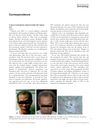
April 2013 in “International Journal of Dermatology” This correspondence article discusses a case of androgenetic alopecia treated with valproic acid but does not present new clinical findings.
 November 2025 in “SKIN The Journal of Cutaneous Medicine”
 In this phase 3 trial, baricitinib showed effectiveness and safety in both adolescents and adults with severe alopecia areata, with adolescents achieving higher response rates despite more severe baseline conditions, suggesting the advantages of early treatment.
July 2023 in “International Journal of Molecular Sciences” In this study, Trapa bispinosa Roxb. pericarp extract demonstrated inhibitory effects on 5α-reductase activity both in vitro using LNCaP cells and in vivo in a mouse model of benign prostatic hyperplasia, suggesting its potential role in managing the condition.
May 2010 in “Europe PMC (PubMed Central)” This chapter discusses the synthesis and analysis of near-infrared fluorescent activity-based probes for imaging cysteine protease activity, reporting potential benefits for disease diagnosis but noting challenges in imaging specific locations with high cathepsin activity.
36 citations
,
July 2017 in “Journal of controlled release” In this study, a new formulation of all-trans retinoic acid bound to polyvinyl alcohol showed reduced skin inflammation and sustained drug release for up to six days compared to free ATRA in vitro and in vivo.
 70 citations
,
January 2000 in “Drug Development Research”
70 citations
,
January 2000 in “Drug Development Research” The researchers reported that a novel family of butyric acid prodrugs, including AN-9 and AN-10, showed potential for anticancer activity, hemoglobin expression induction, and hair follicle protection, with AN-9 in phase II trials.
20 citations
,
August 2020 in “Scientific Reports” In this study, low-dose BPA was associated with induced prostatic hyperplasia in rats, potentially mediated by COX-2 and L-PGDS through pathways involving cell proliferation and apoptosis.
 March 2026 in “Indian Dermatology Online Journal”
 This report details a case study where a 40-year-old woman experienced allergic contact dermatitis and angioedema-like symptoms after using PPD-containing hair dye. Patch testing confirmed a positive reaction to PPD, highlighting the substance's potential to cause both T-cell and IgE-mediated hypersensitivity reactions.
September 2019 in “Journal of Investigative Dermatology” This study observed that PCE-DP may improve skin pigmentation by increasing epidermal turnover and inhibiting melanin uptake and inflammation in human epidermal keratinocytes.
 7 citations
,
March 2022 in “Molecules”
7 citations
,
March 2022 in “Molecules” This study found that 5-bromo-3,4-dihydroxybenzaldehyde (BDB) promoted hair growth in rat vibrissa follicles by activating Wnt/β-catenin and autophagy pathways and inhibiting the TGF-β pathway in dermal papilla cells.
 September 2016 in “Journal of the Society of Cosmetic Scientists of Korea”
 This study found that Resina Pini and its main component, abietic acid, significantly promoted hair growth in a mouse model of androgenic alopecia by inhibiting 5α-reductase activity.
January 1990 in “대한피부과학회지” This study found that peanut agglutinin binding patterns after neuraminidase pretreatment can help differentiate malignant melanoma from nevocellular nevus in skin specimens.
5 citations
,
April 2019 in “DOAJ (DOAJ: Directory of Open Access Journals)” This article discusses the characteristics and pathogenesis of pseudofolliculitis barbae, particularly its prevalence in men of African and Asian descent, but presents no new research findings.
36 citations
,
October 2008 in “European journal of paediatric neurology” This study found that pediatric patients on valproic acid may experience hair loss due to reduced zinc and biotinidase levels within the first 3 months, with zinc depletion continuing to contribute by the 6th month.
2 citations
,
January 2023 in “Skin Appendage Disorders” This review discusses the evaluation, diagnosis, and management of beard alopecia areata and reports no new clinical results, though it highlights recent treatment advances with janus kinase inhibitors.
 11 citations
,
April 2020 in “Life sciences”
11 citations
,
April 2020 in “Life sciences” In this study, pantothenic acid at 20 μg/ml was observed to promote dermal papilla cell proliferation and migration, likely through up-regulation of ID3 and inhibition of Notch signaling.
 April 2016 in “Journal of Investigative Dermatology”
 This study found that the peptide derivative beta-Ala-Pro-Dab-NHbenzyl may reduce wrinkles and sebum production in human skin by inhibiting dipeptidyl peptidase 4, suggesting potential for acne and skin inflammation treatment.
29 citations
,
March 1987 in “Therapeutic Drug Monitoring” This study found that venous blood ammonia levels, particularly in patients taking valproate combined with other antiepileptic drugs, were significantly elevated compared to those on valproate alone.
March 2026 in “Drug Testing and Analysis” This study observed that the degradation product PTeCA significantly increased in hair treated with oxidative cosmetics, suggesting it could be a reliable marker for detecting such treatments, with a proposed PTCA cut-off value using PTeCA as the gold standard.
30 citations
,
July 2009 in “Experimental and clinical endocrinology & diabetes” This article reviews the use of cyproterone acetate for conditions like prostate cancer and sexual disorders, highlighting its effects on libido but reporting no new specific trial results.
151 citations
,
August 2011 in “The EMBO Journal” The enzyme PA-PLA1α is important for proper hair follicle development.
January 2026 in “Dermatologic Therapy” In this study, photobiomodulation therapy applied twice weekly for 12 weeks significantly improved hair regrowth and quality of life in alopecia areata patients, with no noted side effects.

This study found that CPA-loaded nanoparticles, particularly SLN formulations, increased CPA epidermal penetration compared to a conventional cream and may reduce side effects in treating androgen-dependent conditions.
3 citations
,
May 2025 in “Carbohydrate Polymers” In this study, researchers developed a dissolvable microneedle patch containing baricitinib for alopecia areata treatment, reporting significantly higher hair growth in mouse models compared to controls, suggesting its potential as an effective, pain-free topical therapy.
 87 citations
,
July 2018 in “Biochimica et Biophysica Acta (BBA) - Molecular Cell Research”
87 citations
,
July 2018 in “Biochimica et Biophysica Acta (BBA) - Molecular Cell Research” This review discusses the essential roles and complex regulation of PP2A in various physiological processes and reports no clinical results; the authors highlight the need for further mouse model research to explore PP2A's therapeutic potential.
 4 citations
,
October 2000 in “Contraception”
4 citations
,
October 2000 in “Contraception” This study found that a regimen combining cyproterone acetate and testosterone buciclate induced reversible azoospermia in bonnet monkeys, highlighting its potential as an effective male contraceptive.
 37 citations
,
February 2014 in “Journal of Dermatology”
37 citations
,
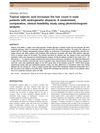
February 2014 in “Journal of Dermatology” This study found that topical valproic acid significantly increased hair count in male patients with moderate androgenetic alopecia compared to placebo over 24 weeks.
 1 citations
,
July 2022 in “British Journal of Dermatology”
1 citations
,
July 2022 in “British Journal of Dermatology” Baricitinib was effective in treating hair loss in adults with alopecia areata according to patient feedback.
 July 2023 in “Developmental medicine and child neurology/Developmental medicine & child neurology”
 This study found that patients with Bachmann-Bupp syndrome treated with DFMO showed improvements in hair growth, muscle tone, and development.
In this study, Paljeong-san pharmacopuncture reduced dihydrotestosterone levels and inhibited prostate tissue proliferation in a rat model of benign prostatic hyperplasia.