August 2025 in “Obstetrics and gynecology.” This article reviews the management of polycystic ovarian syndrome, highlighting lifestyle modification and individualized pharmacological treatment strategies, and reports no new clinical results.

This review discusses how nanotechnology can potentially enhance the treatment and delivery of clomiphene citrate for ovulatory disorders, with a focus on improving solubility and minimizing side effects in women experiencing anovulatory infertility, highlighting its 80% efficacy in triggering ovulation in treated cases.
 352 citations
,
January 2006 in “The Journal of Clinical Endocrinology and Metabolism”
352 citations
,
January 2006 in “The Journal of Clinical Endocrinology and Metabolism” This study reported that classic anovulatory PCOS was the most common androgen excess disorder, followed by mild ovulatory PCOS and idiopathic hyperandrogenism, among patients evaluated for clinical hyperandrogenism.
 December 2022 in “International Journal of Health Science”
 This review discusses the pathophysiological impacts of hyperandrogenism in women with PCOS and reports no new clinical results; the authors highlight lifestyle changes as a primary management strategy.
 January 2025 in “Directory of Open access Books (OAPEN Foundation)”
 This book reviews the symptoms, diagnosis, and treatments for Polycystic Ovary Syndrome, providing a comprehensive exploration but reports no new clinical results.
 20 citations
,
January 1999 in “Current Pharmaceutical Design”
20 citations
,
January 1999 in “Current Pharmaceutical Design” This study reports that various antiandrogen therapies, including spironolactone and finasteride, effectively address hirsutism, acne, androgenic alopecia, and ovulatory dysfunction in hyperandrogenic women and are generally well tolerated.
 January 2022 in “IntechOpen eBooks”
 This review examines lesser-known factors contributing to polycystic ovarian syndrome and reports no new clinical results, emphasizing the need for further research into individualized treatment and prevention strategies.
March 2022 in “IntechOpen eBooks” This review discusses the complexities and co-morbidities associated with polycystic ovary syndrome, including its impact on metabolic and psychological health, and reports no new clinical results.
 2 citations
,
April 2021 in “Reproductive health of woman”
2 citations
,
April 2021 in “Reproductive health of woman” This study found that among women with PCOS, the most common clinical symptoms were menstrual dysfunction, infertility, acne, and hirsutism, with the non-androgenic phenotype being the most frequently identified.
 10 citations
,
March 2016 in “The Journal of Obstetrics and Gynecology of India”
10 citations
,
March 2016 in “The Journal of Obstetrics and Gynecology of India” This review proposes renaming polycystic ovarian syndrome to "Hyperandrogenic Persistent Ovulatory Dysfunction Syndrome" to better reflect its diagnostic criteria and promote consistency in research, but reports no new clinical findings.
 21 citations
,
December 2007 in “Primary Care”
21 citations
,
December 2007 in “Primary Care” This article reviews the challenges in treating PCOS, noting the potential benefits of insulin sensitizers on ovulatory function and pregnancy outcomes, and calls for more long-term studies on metabolic interventions.
 34 citations
,
January 2008 in “International Review of Neurobiology”
34 citations
,
January 2008 in “International Review of Neurobiology” This review discusses the interplay between epilepsy and reproductive endocrine disorders, examining the factors involved and emphasizing the importance of monitoring but reports no new research findings.
 2 citations
,
May 2006 in “Women's Health Medicine”
2 citations
,
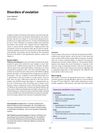
May 2006 in “Women's Health Medicine” This article provides an overview of ovulation disorders, discussing ovarian, hypothalamic, and endocrine defects but reports no new clinical findings.
 65 citations
,
May 2010 in “Current Women's Health Reviews”
65 citations
,
May 2010 in “Current Women's Health Reviews” This review discusses oxidative stress's role in polycystic ovary syndrome and examines various biomarkers to understand its impact on the disorder's pathogenesis, but reports no new clinical results.
 2 citations
,
September 2004 in “Fertility and sterility”
2 citations
,
September 2004 in “Fertility and sterility” This review discusses the cosmetic and health implications of hirsutism and highlights its potential link to serious underlying disorders, but it presents no new clinical findings.
 97 citations
,
February 2007 in “Clinical Obstetrics and Gynecology”
97 citations
,
February 2007 in “Clinical Obstetrics and Gynecology” This article reviews the diagnostic criteria and prevalence of PCOS, emphasizing its status as the most common endocrine disorder among women of reproductive age, with no new clinical results reported.

This review discusses polycystic ovary syndrome, highlighting its associations with hyperandrogenism, chronic anovulation, polycystic ovaries, and increased risks of infertility and metabolic disorders, and reports no new clinical results.
8 citations
,
January 2025 in “Cureus” In this review, the authors examined the diagnosis and management of reproductive endocrine disorders, such as infertility, PCOS, and endometriosis, emphasizing individualized treatment plans that include medical, surgical, and lifestyle approaches to enhance fertility and quality of life for affected women.
 54 citations
,
August 2017 in “Gynecological Endocrinology”
54 citations
,
August 2017 in “Gynecological Endocrinology” This review discusses treatments for polycystic ovary syndrome, including lifestyle changes, oral contraceptives, and various medications, and reports no new clinical findings; the authors highlight the potential of statins and inositol for managing symptoms.
 October 2023 in “IntechOpen eBooks”
 This book chapter reviews the genetic and epigenetic factors influencing PCOS, particularly in a global context and specific to India, and reports no new clinical findings.
 7 citations
,
January 2024 in “Medicinska istrazivanja”
7 citations
,
January 2024 in “Medicinska istrazivanja” This review outlines the complexities and varied manifestations of polycystic ovary syndrome, highlighting challenges in diagnosis and management but reports no new clinical findings.
 December 2021 in “THE THERAPIST (Journal of Therapies & Rehabilitation Sciences)”
 This review highlights the increased need for awareness about Polycystic Ovarian Syndrome (PCOS) and suggests that more research is necessary to understand its management through lifestyle modifications.
January 2023 in “European journal of biology and medical science research” This review discusses the diverse prevalence, symptoms, and diagnostic criteria of Polycystic Ovary Syndrome in women and highlights that treatment varies based on symptom presentation and long-term management.
January 2026 in “International Journal for Research in Applied Science and Engineering Technology” This source reviews PCOS, emphasizing its complex etiology involving genetic and metabolic factors and highlighting reproductive and long-term health risks. It notes evolving diagnostic criteria and stresses the importance of early diagnosis and personalized management to improve outcomes.
 December 2022 in “BioScientific review”
 This review discusses the complex pathophysiology, diagnosis, and management of Polycystic Ovary Syndrome and reports no new results, underscoring the need for comprehensive treatment plans.
 March 2026 in “Cleveland Clinic Journal of Medicine”
 This review discusses polycystic ovary syndrome and incorporates updates from a 2023 guideline, but reports no new research findings on diagnosis or management.
 September 2022 in “Women's healthcare”
 This review discusses various aspects of polycystic ovary syndrome, including its prevalence, diagnosis, and treatment options, and reports no new empirical results.
 1744 citations
,
August 2006 in “The Journal of Clinical Endocrinology and Metabolism”
1744 citations
,
August 2006 in “The Journal of Clinical Endocrinology and Metabolism” This review discusses definitions of polycystic ovary syndrome and reports no new clinical results; the authors support using modified 1990 NIH criteria and acknowledge ongoing evolution as research advances.
11 citations
,
January 2023 in “World Journal of Clinical Cases” This study suggests that idiopathic hirsutism may involve higher local androgen synthesis despite normal serum androgen levels, challenging its categorization as idiopathic.
 1265 citations
,
October 2013 in “The Journal of Clinical Endocrinology and Metabolism”
1265 citations
,
October 2013 in “The Journal of Clinical Endocrinology and Metabolism” This guideline from the Endocrine Society recommends using the Rotterdam criteria for diagnosing polycystic ovary syndrome and outlines first-line treatments, emphasizing hormonal contraceptives and lifestyle intervention.