 23 citations
,
September 2017 in “The journal of investigative dermatology/Journal of investigative dermatology”
23 citations
,
September 2017 in “The journal of investigative dermatology/Journal of investigative dermatology” In this mouse study, NF-κB was shown to play a role in hair follicle cycling and morphogenesis, with specific activity patterns differing by hair type and involving noncanonical signaling for zigzag hair bending.
 2 citations
,
March 2019 in “Journal of Histochemistry and Cytochemistry”
2 citations
,
March 2019 in “Journal of Histochemistry and Cytochemistry” This study found that NNAT is localized in both undifferentiated and differentiated cells across various rat tissues and has cell-specific intracellular localization, suggesting distinct functional roles.
 June 2020 in “The journal of investigative dermatology/Journal of investigative dermatology”
 This study found that genetic ablation of Tet genes in mice led to changes in hair structure and keratin gene expression, indicating a role for Tet-mediated 5hmC DNA oxidation in hair follicle development and cycling.
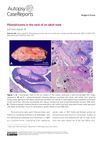 January 2022 in “Autopsy and Case Reports”
 This article describes a case of pilomatricoma in a 22-year-old male with successful surgical excision and no recurrence, highlighting its histopathological features and typical clinical presentation.
 25 citations
,
October 1996 in “Dermatologic Clinics”
25 citations
,
October 1996 in “Dermatologic Clinics” This article discusses loose anagen syndrome, highlighting its characteristics, diagnostic methods, and spontaneous improvement over time, but provides no new clinical results.
 22 citations
,
December 2013 in “Molecular biology of the cell”
22 citations
,
December 2013 in “Molecular biology of the cell” This study found that ILK deficiency disrupts hair follicle development by impairing cell polarity and laminin-511 assembly, but these defects can be partially reversed with exogenous laminin-511.
 20 citations
,
February 2016 in “American Journal of Pathology”
20 citations
,
February 2016 in “American Journal of Pathology” This study indicates that the OVOL1-OVOL2 axis may play a significant role in hair follicle differentiation and growth, potentially serving as therapeutic targets for hair disorders like alopecia and in the tumorigenesis of pilomatricoma.
 17 citations
,
June 2012 in “Journal of experimental zoology. Part B, Molecular and developmental evolution”
17 citations
,
June 2012 in “Journal of experimental zoology. Part B, Molecular and developmental evolution” This review explores theories on the evolution of hair from synapsid scales and glands, proposing mechanisms supported by comparative studies, but reports no new experimental findings.
 9 citations
,
August 2007 in “Journal of animal science/Journal of animal science ... and ASAS reference compendium”
9 citations
,
August 2007 in “Journal of animal science/Journal of animal science ... and ASAS reference compendium” This study observed that amino acid uptake into wool follicles varies significantly, with cysteine showing the highest uptake rate, suggesting specialized transport systems that may influence wool growth.
 4 citations
,
January 2018 in “Advances in Experimental Medicine and Biology”
4 citations
,
January 2018 in “Advances in Experimental Medicine and Biology” This article discusses the structures surrounding hair follicles and introduces aspects like follicle groups and the dermal sheath, but it reports no new research findings.
 2 citations
,
January 2001 in “Biomedical Research”
2 citations
,
January 2001 in “Biomedical Research” This study found that peptidylarginine deiminase type III and trichohyalin are coincidentally expressed in the infant rat hair follicle, but trichohyalin deimination occurs after their expression during development.
 146 citations
,
May 2002 in “The American journal of pathology”
146 citations
,
May 2002 in “The American journal of pathology” This study found that cathepsin L deficiency in mice led to significant abnormalities in hair follicle development and cycling, including disrupted hair shaft outgrowth and premature hair growth phase entry.
 29 citations
,
September 2014 in “American Journal of Dermatopathology”
29 citations
,
September 2014 in “American Journal of Dermatopathology” This study found that horizontal sections of scalp biopsies in patients with Central Centrifugal Cicatricial Alopecia often reveal follicular miniaturization, inflammation, and scarring, which can guide personalized treatment.
 14 citations
,
October 2020 in “Scientific reports”
14 citations
,
October 2020 in “Scientific reports” This study found that ATM protein plays a crucial role in protecting human hair follicle melanocytes from oxidative stress, which is linked to the greying of hair.
1 citations
,
January 1996 This study found that cysteine and arginine are crucial for hair growth in hair follicles, with cysteine affecting hair fibre diameter and arginine involved in protein incorporation and energy metabolism.
2 citations
,
April 2019 in “Experimental Dermatology” This study observed that applying a pulling force to hair follicles led to significant compression of nuclei in certain cell layers and distinct collagen changes at different follicle depths.
79 citations
,
October 1998 in “Genomics” This study found that the mK6alpha and mK6beta genes in mice are regulated differently at the mRNA level, with implications for understanding K6 gene evolution and function in mammals.
 January 2008 in “Journal of Clinical Dermatology”
 This study found that integrin alpha-6 and p63 may play a role in hair loss, with variable expression patterns in different types of alopecia observed in scalp biopsy samples.
September 2019 in “Journal of Investigative Dermatology” Sox13 is a new marker for early hair follicle development and differentiation.
June 2017 in “Journal of the American Academy of Dermatology” Plucked hair can help diagnose pemphigus vulgaris early.
276 citations
,
January 2005 in “International review of cytology” More research is needed to understand how hair keratins work and their role in hair disorders.
149 citations
,
July 2000 in “Molecular and Cellular Biology” This study found that MK6a-deficient mice showed delayed reepithelialization after superficial wounding but not after full-thickness skin wounds, suggesting MK6a plays a role in activating follicular keratinocytes post-wounding.
57 citations
,
August 1999 in “Archives of dermatology” Hair follicles grow hair and release it through the skin.
32 citations
,
May 1999 in “Biochemical and Biophysical Research Communications” This study found that the gene BSSP, a serine protease, is predominantly expressed in sebaceous glands and is overexpressed in nude mouse skin.
1 citations
,
January 2004 in “Adelaide Research & Scholarship (AR&S) (University of Adelaide)” This study concludes that SPARC is likely a secondary response during the hair cycle's transitional phases, indicating tissue-remodeling processes similar to those in wound repair, rather than initiating these transitions.
23 citations
,
January 2018 in “BMC genomics” This study found that vimentin expression in the hair follicles of Inner Mongolian Cashmere goats is highest during the growth stage and localized to the outer root sheath, suggesting a role in hair cycle regulation.
14 citations
,
July 1994 in “Journal of Dermatological Science” In this study, transgenic mice expressing a mutant K6 gene developed progressive scarring alopecia and keratosis, suggesting they may model a new keratin disorder.
5 citations
,
August 2012 in “Experimental Dermatology” In this study, Ser516 phosphorylation of Artemis was found predominantly in the outer root sheath keratinocytes of hair follicles, suggesting a role in regulating human epidermal appendages.
149 citations
,
June 2010 in “The FASEB journal” In this study, miR-31 was found to play a significant role in hair cycle regulation in mice by controlling key gene expressions involved in hair growth and differentiation.
35 citations
,
January 2011 in “Journal of Biological Chemistry” This study found that overexpression of sPLA2-X in mice was associated with alopecia and hair follicle abnormalities, highlighting its potential role in hair follicle homeostasis.