 September 2017 in “Journal of Investigative Dermatology”
 This study found that Bone morphogenetic proteins (BMPs) play a crucial role in dermal papilla cells' ability to induce hair follicle stem cell differentiation, and that androgens may impair this process by downregulating BMPs.
 36 citations
,
April 2016 in “Experimental Dermatology”
36 citations
,
April 2016 in “Experimental Dermatology” This review discusses the challenges in selecting optical parameters for photobiomodulation studies on hair regrowth and wound healing, reporting no new clinical results and recommending more rigorous, standardized research approaches.
 22 citations
,
January 2017 in “Skin appendage disorders”
22 citations
,
January 2017 in “Skin appendage disorders” This research analyzed 72 primary scarring alopecia cases in a Barcelona hospital, finding that the majority involved women, with a lymphocytic infiltrate and subacute onset in many cases, leading to stable disease, while neutrophilic cases had more acute episodes.

This study suggests that a combination of blue light photobiomodulation and biomimetic peptide infiltrations may effectively increase hair density in patients with androgenetic alopecia.
 April 2018 in “The journal of investigative dermatology/Journal of investigative dermatology”
 This study suggests that miR-486 may protect against alopecia areata by maintaining hair follicle immune privilege and modulating expression of immune-related genes.
 April 2018 in “The journal of investigative dermatology/Journal of investigative dermatology”
 This study observed that Ginseng and Albizia extracts, when used together, protected human dermal papilla cells from oxidative stress-induced senescence, and inhibited genes that suppress hair growth, indicating their potential in preventing age-related hair density reduction.
 April 2018 in “The journal of investigative dermatology/Journal of investigative dermatology”
 This study suggests that mitochondrial dysfunction might contribute to the pathogenesis of Lichen planopilaris by triggering a metabolic shift that leads to chronic inflammation and hair follicle damage.
 9 citations
,
August 2017 in “Photochemistry and Photobiology”
9 citations
,
August 2017 in “Photochemistry and Photobiology” This study found that isolated red light may serve as an alternative for photo-immunotherapy without additional photosensitizers, as it did not reduce keratinocyte differentiation markers or increase photo-oxidative damage, unlike treatment with IL-4 or UVA1/blue light.
 January 2009 in “Egyptian Journal of Medical Human Genetics”
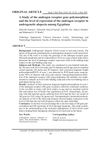
 This study, conducted among Egyptians, found a borderline significant association between the Stul polymorphism of the androgen receptor gene and androgenetic alopecia in males, with higher androgen receptor expression in balding scalp areas.
 155 citations
,
August 1991 in “Journal of The American Academy of Dermatology”
155 citations
,
August 1991 in “Journal of The American Academy of Dermatology” This article reviews methotrexate's pharmacokinetics and toxicity, emphasizing the role of urinary excretion and leucovorin in avoiding most toxic reactions; it provides no new clinical results.
 53 citations
,
October 1993 in “Drug Safety”
53 citations
,
October 1993 in “Drug Safety” Oral retinoids can cause side effects ranging from mild to severe, including birth defects, and require careful monitoring and contraception.
 5 citations
,
November 2017 in “Dermatologica Sinica”
5 citations
,
November 2017 in “Dermatologica Sinica” In this study, transverse sectioning of scalp biopsy samples showed higher diagnostic accuracy than vertical sectioning for noncicatricial alopecia, although both techniques are important for accurate diagnosis.
 2 citations
,
January 2020 in “American Journal of Clinical Research and Reviews”
2 citations
,
January 2020 in “American Journal of Clinical Research and Reviews” This study suggests that hair follicles may be the primary target in the onset of various skin diseases, potentially spreading to affect the surrounding epidermis.
 1 citations
,
February 1976 in “JAMA”
1 citations
,
February 1976 in “JAMA” In this article, the author reports a case where hemiballismus was almost completely suppressed within 48 hours of starting haloperidol therapy, suggesting a therapeutic response to the drug.
 1 citations
,
July 2020 in “Dermatology”
1 citations
,
July 2020 in “Dermatology” This review discusses the mechanisms, applications, and research evidence of photobiomodulation, highlighting its efficacy, safety, and potential for standardized evaluation methods, but reports no new clinical results.
 April 2021 in “Journal of Investigative Dermatology”
 This study suggests that edelweiss extract may promote hair growth and reduce shedding in ex vivo experiments by affecting hair follicle anagen phase duration and keratinocyte proliferation.
 466 citations
,
August 2004 in “Journal of the American Academy of Dermatology”
466 citations
,
August 2004 in “Journal of the American Academy of Dermatology” This article reviews the current literature on rosacea, focusing on the new subtype classification system and the main theories of its pathogenesis, but reports no new clinical results.
 309 citations
,
May 1993 in “Journal of The American Academy of Dermatology”
309 citations
,
May 1993 in “Journal of The American Academy of Dermatology” This study concluded that horizontal sections of scalp biopsy specimens provide more diagnostic information for male pattern androgenetic alopecia than vertical sections and can predict hair regrowth potential following topical minoxidil therapy.
 152 citations
,
October 2010 in “Archives of Dermatology”
152 citations
,
October 2010 in “Archives of Dermatology” This study found that daily oral finasteride may increase hair count and improve hair appearance assessments in men with androgenetic alopecia, but it also appears to raise the risk of sexual dysfunction.
 143 citations
,
August 1991 in “Endocrinology”
143 citations
,
August 1991 in “Endocrinology” This study found that blocking androgen receptors inhibits testicular descent in rats more effectively during the early stages of gubernacular outgrowth than inhibiting 5a-reductase.
 86 citations
,
July 1993 in “Drugs”
86 citations
,
July 1993 in “Drugs” Finasteride treats enlarged prostate, shrinks it, improves urination, but may cause sexual dysfunction and isn't for women or children.
 20 citations
,
September 1978 in “International Journal of Dermatology”
20 citations
,
September 1978 in “International Journal of Dermatology” Hair growth is influenced by factors like genetics and nutrition, and more research is needed to understand hair loss and growth mechanisms.
 16 citations
,
July 2012 in “The New England Journal of Medicine”
16 citations
,
July 2012 in “The New England Journal of Medicine” This case report describes a 27-year-old man hospitalized with fatigue, myalgias, weakness, profound weight loss, and abnormal liver function, leading to a diagnosis after chest imaging revealed pneumomediastinum.
 August 2023 in “International Ayurvedic medical journal”
 This case study describes the successful treatment of a 7-year-old girl with alopecia areata using Ayurvedic approaches targeting skin and autoimmune issues, suggesting a potential alternative to long-term oral corticosteroids, which can cause undesirable side effects.

This letter challenges Dr. Dubois' statement that nearly all patients with Raynaud phenomenon will develop a systemic disorder, arguing that many experience it without progressing to serious disease.
 61 citations
,
June 2018 in “Proceedings of the National Academy of Sciences of the United States of America”
61 citations
,
June 2018 in “Proceedings of the National Academy of Sciences of the United States of America” This study found that light stimulation of intrinsically photosensitive retinal ganglion cells in the eyes can activate hair follicle stem cells through a neural circuit involving the sympathetic nervous system.
 June 2026 in “Dermatology and Therapy”
 This review provides an analysis of topical treatments with clinically proven efficacy for managing hyperpigmentation and concludes that the most effective approach is using combined therapies that target multiple aspects of skin pigmentation physiology.
 August 2025 in “Aesthetic Cosmetology and Medicine”
 In this article, researchers explored how blue light exposure affects the scalp and hair follicles, highlighting oxidative stress and hair growth disruptions, while emphasizing the importance of protective strategies like antioxidants and limiting light exposure.
 June 2025 in “Veterinární Medicína”
 In this veterinary study, uveodermatological syndrome in dogs was reported to cause skin depigmentation, alopecia, and eye issues such as granulomatous panuveitis, which leads to complications like cataracts and glaucoma; while immunosuppressive therapy often helps, recurrence and treatment side effects challenging therapeutic management.
144 citations
,
December 2017 in “Pigment cell & melanoma research” This review suggests that melasma may be a photoaging skin disorder affecting genetically predisposed individuals, which could significantly influence its treatment and prevention strategies.