 38 citations
,
May 2006 in “Archives of Gynecology and Obstetrics”
38 citations
,
May 2006 in “Archives of Gynecology and Obstetrics” This study reported that women with PCOS had higher levels of certain hormones and lower SHBG levels compared to non-PCOS women with similar symptoms, highlighting a less favorable endocrine profile in PCOS cases.
 July 2025 in “JOURNAL OF CLINICAL AND BIOMEDICAL SCIENCES”
 This study describes a case in which a 24-year-old woman with PCOS symptoms, including irregular menstruation and excessive hair growth, showed significant improvement in androgen levels, menstrual regularity, and hair reduction after undergoing a nine-month Ayurvedic treatment plan with dietary and lifestyle modifications.
 633 citations
,
September 1998 in “The Journal of Clinical Endocrinology and Metabolism”
633 citations
,
September 1998 in “The Journal of Clinical Endocrinology and Metabolism” This study observed that among a cohort of reproductive-aged women in the U.S., the prevalence of PCOS was about 4.0%, with no significant racial differences between White and Black women.
 378 citations
,
September 1998 in “The Journal of Clinical Endocrinology and Metabolism”
378 citations
,
September 1998 in “The Journal of Clinical Endocrinology and Metabolism” This study found that the prevalence of PCOS in a population of unselected U.S. women was 4.0%, with no significant racial differences between White and Black women.
4 citations
,
February 2011 in “Annals of internal medicine” This article discusses polycystic ovary syndrome, outlining its prevalence, diagnostic criteria, and the progress made in understanding this underdiagnosed condition, but reports no new clinical findings.
 July 2015 in “NEJM Journal Watch”
 This article discusses the characteristics and complications of polycystic ovary syndrome but reports no new research findings.
 991 citations
,
January 2011 in “Nature Reviews Endocrinology”
991 citations
,
January 2011 in “Nature Reviews Endocrinology” This paper reviews the diagnostic criteria, associated morbidities, and possible evolutionary advantages of polycystic ovary syndrome, but does not report any new findings.
 257 citations
,
July 2018 in “Obstetrics & Gynecology”
257 citations
,
July 2018 in “Obstetrics & Gynecology” This review discusses the various phenotypes and diagnostic challenges of polycystic ovary syndrome, highlighting its complex pathophysiology and associated health risks, and reports no new clinical results.
 9 citations
,
January 2015 in “Springer eBooks”
9 citations
,
January 2015 in “Springer eBooks” This article reviews the diagnostic criteria and management strategies for polycystic ovary syndrome but reports no new clinical findings; it highlights associated health risks and recommended treatments.
 5 citations
,
April 2014 in “European Journal of Obstetrics & Gynecology and Reproductive Biology”
5 citations
,
April 2014 in “European Journal of Obstetrics & Gynecology and Reproductive Biology” This study concluded that antimullerian hormone levels are not generally effective for distinguishing late onset congenital adrenal hyperplasia from all hyperandrogenic polycystic ovary syndrome subtypes, except one specific subtype.
 2 citations
,
January 2017 in “Cambridge University Press eBooks”
2 citations
,
January 2017 in “Cambridge University Press eBooks” Manage PCOS in primary care with weight loss, psychological support, medication, and monitoring for health risks.
 2 citations
,
May 2006 in “Women's Health Medicine”
2 citations
,
May 2006 in “Women's Health Medicine” This article discusses polycystic ovary syndrome, describing its diagnostic criteria and noting that it is a common cause of anovulatory infertility and hirsutism, without reporting new research findings.
 December 2022 in “OBG Management”
 The conclusion is to diagnose PCOS with just hyperandrogenism and irregular periods, and treat with lifestyle changes and basic medications.

This paper addresses diagnostic criteria and treatment options for polycystic ovary syndrome, emphasizing lifestyle changes and combination oral contraceptives as primary management strategies, but it reports no new clinical results.
 October 2021 in “Journal of Advanced Biomedical and Pharmaceutical Sciences”
 This study reviews polycystic ovary syndrome and vitamin D, reporting no new results, and notes the involvement of vitamin D receptors and insulin in ovarian function.
 May 2010 in “Current Women's Health Reviews”
 This article reviews the challenges and importance of diagnosing and managing PCOS, especially in adolescent girls, and reports no new clinical findings; the authors emphasize early intervention.
 September 2023 in “Reproductive health of woman”
 This review examines the prevalence and symptoms of polycystic ovary syndrome (PCOS) across different ages, highlighting its varied dermatological and reproductive implications, but reports no new research findings.
This study found that among women with polycystic ovary syndrome, higher age, obesity, hirsutism, and having children were independently associated with increased metabolic risk.
 31 citations
,
September 2006 in “International journal of gynaecology and obstetrics”
31 citations
,
September 2006 in “International journal of gynaecology and obstetrics” This article reviews diagnostic criteria and treatment options for polycystic ovary syndrome, focusing on hormonal and metabolic management strategies, and presents no new clinical data.
 1540 citations
,
October 2008 in “Fertility and Sterility”
1540 citations
,
October 2008 in “Fertility and Sterility” This review discusses the definition of polycystic ovary syndrome proposed by the AE-PCOS Society Task Force, emphasizing hyperandrogenism, ovarian dysfunction, and excluding related disorders, while noting potential variations needing more research.
138 citations
,
August 2020 in “Frontiers in Endocrinology” This review discusses expert consensus on PCOS, emphasizing its impacts and supporting evidence-based treatments, while recommending further research into nutraceutical benefits for managing the condition; it reports no new clinical results.
 June 2025 in “IntechOpen eBooks”
 This review discusses the complex nature, diagnostic approach, and management strategies of polycystic ovary syndrome, emphasizing the importance of individualized care without presenting new clinical findings.
 2 citations
,
May 2006 in “Women's Health Medicine”
2 citations
,
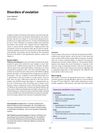
May 2006 in “Women's Health Medicine” This article provides an overview of ovulation disorders, discussing ovarian, hypothalamic, and endocrine defects but reports no new clinical findings.
1 citations
,
December 1971 in “PubMed”  July 2020 in “International Journal of Research”
 This review examines the development of cardiovascular risk factors related to testosterone levels in PCOS women and reports no new clinical results.
January 2011 in “Yearbook of Endocrinology”  41 citations
,
September 2014 in “Journal of Pharmacy and Pharmacology”
41 citations
,
September 2014 in “Journal of Pharmacy and Pharmacology” This study found that melatonin significantly improved metabolic and reproductive parameters in PCOS-induced rats, with effects similar to metformin.
 24 citations
,
July 2012 in “Current Opinion in Obstetrics & Gynecology”
24 citations
,
July 2012 in “Current Opinion in Obstetrics & Gynecology” This review discusses the diagnostic criteria and treatment options for adolescent polycystic ovary syndrome, highlighting ongoing debates and the need for further research, without presenting new clinical results.
 2 citations
,
December 2021 in “International journal of Ayurveda and pharma research”
2 citations
,
December 2021 in “International journal of Ayurveda and pharma research” This case report describes a 19-year-old girl with PCOS who experienced symptom improvement, including normalized menstruation, after two months of Ayurvedic treatment.
 2 citations
,
March 2011 in “Infertility”
2 citations
,
March 2011 in “Infertility” This review highlights that while lifestyle changes may help with many ovulatory disorders, oocyte donation is considered a viable option for patients who cannot undergo ovulation induction; it reports no new results.