December 2021 in “Figshare” This study found that BBS7 expression is crucial for maintaining Sonic hedgehog signaling activity and periodontal ligament homeostasis, suggesting its downregulation in occlusal hypofunction affects cell migration and angiogenesis.
17 citations
,
February 2020 in “Cell and Tissue Banking”  June 2022 in “Research Square (Research Square)”
 This study revealed that nestin-expressing progenitor cells capable of becoming ORS keratinocytes are present during both hair follicle development and in adult hair follicles.
 30 citations
,
November 2018 in “EMBO Reports”
30 citations
,
November 2018 in “EMBO Reports” This study found that the Ovol2-Zeb1 regulatory circuit is crucial for controlling directional migration and proliferation in epithelial cells, facilitating skin regeneration and repair in mice.
10 citations
,
December 2021 in “Frontiers in Cell and Developmental Biology” This study suggests that BBS7 is crucial for maintaining Sonic hedgehog signaling activity, which is essential for periodontal ligament homeostasis under occlusal hypofunction conditions.
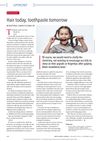
Keratin could help create enamel-regenerating toothpaste in a few years.
 20 citations
,
February 2016 in “American Journal of Pathology”
20 citations
,
February 2016 in “American Journal of Pathology” This study indicates that the OVOL1-OVOL2 axis may play a significant role in hair follicle differentiation and growth, potentially serving as therapeutic targets for hair disorders like alopecia and in the tumorigenesis of pilomatricoma.
December 2021 in “Figshare” This study found that BBS7 is crucial for maintaining Shh signaling and periodontal ligament homeostasis, with occlusal hypofunction leading to its downregulation and impacting cell migration and angiogenesis.
 10 citations
,
July 2022 in “The journal of investigative dermatology/Journal of investigative dermatology”
10 citations
,
July 2022 in “The journal of investigative dermatology/Journal of investigative dermatology” This study revealed that BMP5 in onychofibroblasts may play a key role in the differentiation of nail matrix keratinocytes, highlighting transcriptional similarities between nail and hair structures.
1 citations
,
October 2017 in “Frontiers in Physiology” This article proposes a hypothesis that KRT75, a protein found in hair follicles, was evolutionarily co-opted by ameloblasts during the development of prismatic enamel in synapsids, but reports no new results.
December 2021 in “Figshare” This study suggests that BBS7 is crucial for maintaining PDL homeostasis by supporting Sonic hedgehog signaling activity, with occlusal hypofunction leading to its downregulation and associated tissue changes.
 January 2020 in “Journal of oral medicine and oral surgery”
 This report describes a rare case of recurrent hair growth in the floor of the mouth, suggesting heterotopia as the possible cause in an adult male.
34 citations
,
January 1998 in “Archiv für Pathologische Anatomie und Physiologie und für Klinische Medicin” This report describes four trichoblastoma cases rich in Merkel cells, suggesting these tumors may mimic fetal skin development where Merkel cells are numerous.
5 citations
,
August 2011 in “Journal of Dermatological Science” In this study, researchers found that dentin sialoprotein and phosphophoryn are present in rat and mouse hair follicles, suggesting these proteins may play a role in hair follicle development, similar to their role in dentin mineralization.
28 citations
,
December 2016 in “Journal of Biomedical Materials Research Part A” This study found that mesenchymal progenitor cells from human hair roots seeded onto polymer scaffolds stimulated the production of mineralized proteins, enhancing bone-like structures, with optimal results at a pore size of 35 µm.
8 citations
,
April 1997 in “Experimental Dermatology” This study found that hHbl gene expression is localized in the cortical cells of the human hair shaft and is notably high in pilomatricoma cells transitioning to hair shaft keratinocytes.
 June 2026 in “Cell Regeneration”
 This review highlights the roles of key transcription factors and signaling pathways in regulating olfactory epithelium regeneration, discussing recent advances in single-cell and spatial transcriptomics as well as organoid models to enhance understanding of olfactory regeneration mechanisms.
1 citations
,
August 2016 in “Dermatology - Open Journal” In this study, the researchers found that optic atrophy 1 (OPA1) is involved in the transition between filamentous and rounded mitochondria in hair follicle dermal papilla cells, potentially influencing cellular energy dynamics.
November 2013 in “Faculty Opinions – Post-Publication Peer Review of the Biomedical Literature” Keratin 79 cells help form and regenerate hair canals.
October 2023 in “Clinical Dentistry” This report describes two cases where alopecia areata occurred in conjunction with odontogenic infections, highlighting a mysterious association between dental infections and alopecia areata despite the known etiologies of the latter.
This study found that onychomatricoma can fully mimic the nail unit and differentiate toward the nail bed and isthmus, distinguishing it from other pilar tumors.
 May 2025 in “Journal of Developmental Biology”
 This study reports that KRTAP-like proteins, which resemble keratin-associated proteins found in mammals, are also present in the cornified teeth of various lamprey species, suggesting these proteins may serve similar functions in skin appendages across different vertebrates despite independent evolutionary origins.
 May 2026 in “Signal Transduction and Targeted Therapy”
 This study found that rete ridge morphogenesis in mammalian skin is directed by a BMP-dependent developmental program, which is evolutionarily distinct from other known pathways controlling the development of hair follicles, sweat glands, and fingerprint ridges.
This study found that an injectable calcium alginate-amelogenin hydrogel is biocompatible, degradable, anti-inflammatory, and promotes osteogenesis, which may enhance the bone healing process in jaw and facial bone defect areas by mediating the bone immune microenvironment.
 July 2026 in “Biomimetics”
 This review discusses recent advancements in bone tissue engineering, emphasizing a shift from passive to smart responsive antibacterial strategies to prevent implant-associated infections, and highlights AI's role in optimizing bone scaffold design for personalized, infection-free implants.
January 2006 in “Elsevier eBooks” This review discusses the regeneration capabilities of various vertebrate tissues, focusing on the unique ability of certain species to regenerate teeth and lens, and reports no new results.
94 citations
,
December 2018 in “Dentistry Journal” This review article explores the potential of various mesenchymal stem cell populations derived from oral tissues, such as DPSCs and hPCy-MSCs, in bone tissue engineering and regeneration, detailing their high plasticity and clinical applications in dental procedures.
 1 citations
,
October 2022 in “Scientific reports”
1 citations
,
October 2022 in “Scientific reports” This study found that nestin-expressing progenitor cells, capable of becoming ORS keratinocytes, are present in both developing and adult mouse hair follicles.
6 citations
,
November 2022 in “Antioxidants” In this study, sandalore was found to activate OR2AT4, which inhibits senescent cell traits and restores proliferation in human keratinocytes, suggesting potential anti-aging applications.
December 2021 in “Figshare” This study found that BBS7 is downregulated in occlusal hypofunctional periodontal ligament, suggesting it plays a crucial role in maintaining Shh signaling for PDL homeostasis.