 39 citations
,
January 2012 in “Reproductive Biology and Endocrinology”
39 citations
,
January 2012 in “Reproductive Biology and Endocrinology” In this study, the prevalence of polycystic ovary syndrome among women seeking primary healthcare in Salvador, Brazil, was found to be 8.5% using the Rotterdam criteria.
8 citations
,
April 2022 in “Revista Brasileira Ginecologia e Obstetrícia” This review explores contraceptive options for women with polycystic ovary syndrome, emphasizing the need for tailored choices based on individual clinical, hormonal, and metabolic profiles, but reports no new clinical findings.

The conclusion is that a more comprehensive and precise approach is needed for diagnosing PCOS to address its broader health risks.
20 citations
,
September 2015 in “Pediatric Annals” This article discusses the importance of recognizing polycystic ovary syndrome in adolescent girls during initial evaluations of menstrual irregularity and outlines current treatment strategies, reporting no new clinical results.
 16 citations
,
November 2018 in “Singapore Medical Journal”
16 citations
,
November 2018 in “Singapore Medical Journal” This article reviews the clinical presentation, contributing factors, and prevalence of polycystic ovary syndrome but provides no original research findings.
 1 citations
,
January 2017 in “Spectrum Research Repository (Concordia University)”
1 citations
,
January 2017 in “Spectrum Research Repository (Concordia University)” This study found that young women with PCOS exhibited altered white matter microstructure and reduced cognitive performance compared to matched controls.
 11 citations
,
August 2018 in “Endokrynologia Polska”
11 citations
,
August 2018 in “Endokrynologia Polska” This consensus paper reviews current challenges and recommendations for diagnosing and treating polycystic ovary syndrome, highlighting the utility of the Rotterdam criteria for adults and different criteria for teenagers without requiring polycystic ovaries.
 4 citations
,
September 2018 in “International journal of research - granthaalayah”
4 citations
,
September 2018 in “International journal of research - granthaalayah” This study reported that 12% of female Qassim University students had been diagnosed with PCOS, with misconceptions about the condition and treatments observed despite high awareness.
 September 2015 in “University of Southern Denmark Research Portal (University of Southern Denmark)”
 This guideline provides a concise evidence-based overview of various aspects of polycystic ovary syndrome, including diagnosis and follow-up of secondary effects, but reports no new clinical results.

This article discusses the challenges of diagnosing and managing polycystic ovarian syndrome and reports no new research findings, emphasizing the need for improved diagnostic criteria and lifestyle intervention to prevent complications.
November 2025 in “IntechOpen eBooks” This chapter reviews the complex relationship between PCOS and sexual dysfunction, highlighting its fundamental role as a biopsychosocial manifestation rather than a secondary complication, and calls for comprehensive, patient-centered care; it reports no new clinical results.
 2 citations
,
May 2010 in “Journal of Obstetrics and Gynaecology Canada”
2 citations
,
May 2010 in “Journal of Obstetrics and Gynaecology Canada” This review summarizes best practices for diagnosing and managing PCOS, emphasizing accurate biochemical assessments and individualized treatment approaches, but reports no new clinical results.
 September 2022 in “Women's healthcare”
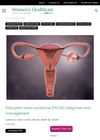
 This review discusses various aspects of polycystic ovary syndrome, including its prevalence, diagnosis, and treatment options, and reports no new empirical results.

This article discusses the challenges in diagnosing and treating polycystic ovary syndrome in adolescents, emphasizing the importance of lifestyle changes and a systematic therapeutic approach but reports no new clinical findings.
 43 citations
,
October 2019 in “Pediatric Research”
43 citations
,
October 2019 in “Pediatric Research” This review discusses the International Evidence-Based PCOS Guidelines, which aim to improve diagnosis and management of PCOS and its associated comorbidities, noting the importance of early intervention and healthy lifestyle changes; it reports no new results.
4 citations
,
August 2021 in “Pediatrics in review” This review explores disorders of sex development, emphasizing the need for a systematic, multidisciplinary approach and the benefits of genetic testing for better diagnosis and gender assignment planning, but it reports no new clinical findings.
 5 citations
,
April 2013 in “Current Problems in Pediatric and Adolescent Health Care”
5 citations
,
April 2013 in “Current Problems in Pediatric and Adolescent Health Care” This review discusses the prevalence and management of polycystic ovary syndrome in women, particularly noting gaps in understanding its presence in adolescents, and reports no new clinical findings.
 April 2021 in “Interciencia médica”
 This article reviews the complex nature and diagnostic criteria of polycystic ovary syndrome, and discusses its treatment options without reporting any new clinical results.
 January 2025 in “International Journal of Dermatology Sciences”
 This study found that among women with PCOS, common skin conditions like hirsutism and acne significantly affect quality of life, particularly impacting social and physical domains as measured by the WHOQOL-BREF.
June 1996 in “Journal of Dermatological Science” November 2025 in “Gynecological Endocrinology” This review discusses coordinated management strategies for polycystic ovary syndrome across various levels of care but reports no new clinical results.
 2 citations
,
June 2024 in “Anti-Aging Eastern Europe”
2 citations
,
June 2024 in “Anti-Aging Eastern Europe” This review discusses the varied clinical presentations and management challenges of Polycystic Ovary Syndrome across different life stages, reporting no new clinical findings.
 38 citations
,
April 2017 in “Journal of The American Academy of Dermatology”
38 citations
,
April 2017 in “Journal of The American Academy of Dermatology” This review discusses psychocutaneous syndromes, detailing their classifications and management strategies, but reports no new clinical findings; it underscores dermatologists' role in these cases.
 October 2023 in “Journal of the Endocrine Society”
 This observational study in Bogotá found that skin issues like acne and androgenetic alopecia are common among adults with gender dysphoria on hormone therapy, emphasizing the need for dermatological care as part of comprehensive treatment.
 May 2023 in “Reproductive Biology and Endocrinology”
 This study analyzed online information about PCOS and found that while the accuracy of the information was generally high, the readability was poor, suggesting a need for more accessible resources for patients.
 2 citations
,
June 2017 in “Journal of The American Academy of Dermatology”
2 citations
,
June 2017 in “Journal of The American Academy of Dermatology” This article discusses the uncertainty regarding distinct skin findings and cardiometabolic profiles among PCOS subtypes and reports no new clinical data.
 1 citations
,
March 2024 in “Türk Kadın Sağlığı ve Neonatoloji Dergisi”
1 citations
,
March 2024 in “Türk Kadın Sağlığı ve Neonatoloji Dergisi” This study concluded that among patients with polycystic ovary syndrome at their clinic, the most common phenotype was group A, with lifestyle modification and oral contraceptives being frequently used treatments.
 March 2022 in “medRxiv (Cold Spring Harbor Laboratory)”
 This study found that individuals with blood type O had a higher risk of developing post-COVID-19 syndrome compared to non-O blood types.
2 citations
,
January 2016 in “Knowledge Commons (Lakehead University)” This study investigates the experiences of women with PCOS to increase understanding, reduce stigma, and enhance education about the syndrome for all women.
 32 citations
,
June 2021 in “bioRxiv (Cold Spring Harbor Laboratory)”
32 citations
,
June 2021 in “bioRxiv (Cold Spring Harbor Laboratory)” This systematic review found that long COVID symptoms, particularly fatigue, sleep disorder, and dyspnoea, were similarly prevalent in ongoing symptomatic COVID-19 and post-COVID-19 syndrome, but psychological issues and poor quality of life were more common in the latter.