12 citations
,
November 2012 in “BioMolecular Concepts” This review discusses the diverse roles of PPARβ/δ in skin health and disease, including its involvement in skin wound healing and inflammatory skin conditions, without presenting new experimental results.
8 citations
,
March 2015 in “Molecular Medicine Reports” This study found that para-phenylenediamine induces cytotoxic effects in normal human hair dermal papilla cells by altering microRNA expression and causing cell death, cell cycle arrest, and oxidative stress.
December 2025 in “Current Issues in Molecular Biology” This study evaluated novel steroids' potential as future hormonal therapies for neuroprotection in glucose disorders, but emphasized that further research is needed to optimize androgen antagonist use in the context of COVID-19 progression.
March 2023 in “Anais Brasileiros De Dermatologia” This article reviews treatment options for female-pattern hair loss, noting the limited evidence for most therapies and emphasizing that topical minoxidil remains the only well-supported option despite a significant non-response rate.
59 citations
,
October 2017 in “Proceedings of the National Academy of Sciences” This study found that the zinc transporter ZIP10 is crucial for epidermal development, as it influences the activity of p63, promoting epidermal morphogenesis.
5 citations
,
May 2024 in “Molecules” This study found that glycyrrhetinic acid, derived from licorice, may help alleviate acne symptoms by regulating lipid synthesis and inflammatory responses through multiple pathways, as observed in both in vitro and in vivo settings.
 August 2025 in “Drug Design Development and Therapy”
 This review article examines current drugs for androgenetic alopecia, focusing on their mechanisms and clinical efficacy, noting that while finasteride and minoxidil are commonly approved treatments, new drugs targeting different pathogenic pathways have emerged, offering a broader understanding and reference for AGA treatment options.
76 citations
,
January 1998 in “Mammalian Genome” August 2009 in “Mechanisms of Development” This study suggests that the ANE syndrome mutation in yeast Nop4, analogous to human RBM28, disrupts protein folding and protein-protein interactions, contributing to ribosomal dysfunction.
17 citations
,
July 2018 in “Environmental and Experimental Botany” The researchers reported that silencing the NtNCED3-2 gene in tobacco reduced ABA content and drought tolerance, inhibited root and leaf development, and decreased photosynthetic ability due to altered isoprenoid metabolism.
January 2026 in “American Journal of Medical Genetics Part A” The researchers reported two brothers with a new variant of X-linked trichothiodystrophy associated with an RNF113A gene mutation, highlighting features such as intellectual disability and growth failure, but without previously reported endocrinological or genital abnormalities, underlining the importance of genetic counseling for such variants.
14 citations
,
March 2022 in “Plant Cell & Environment” In this study, the authors reported that AtRXR3, a phosphorus-inducible DUF506 protein, modulates root hair growth under phosphorus stress by interacting with calmodulin and influencing calcium oscillations.
39 citations
,
September 2007 in “BMC developmental biology” This study found that Neuregulin3 can influence the development and differentiation of mammary glands and epidermal features in mice, potentially by inducing c-Myc and altering cell proliferation and adhesion.
Defective protein folding due to a mutation is key in ANE syndrome.
477 citations
,
March 2004 in “Proceedings of the National Academy of Sciences” This study reports that the DMI3 gene, essential for nodule formation in legume-rhizobial symbiosis, encodes a calcium/calmodulin-dependent protein kinase, highlighting its role in multiple plant symbioses.
13 citations
,
February 2012 in “International Journal of Dermatology” This case report identifies a novel nonsense mutation in the CDH3 gene associated with hypotrichosis and juvenile macular dystrophy.
 January 2018 in “bioRxiv (Cold Spring Harbor Laboratory)”
 This study identified a new cis-regulatory element in the mouse Hr gene that influences its expression in skin and brain cells, highlighting a complex molecular network involved in hair follicle formation.
3 citations
,
October 2019 in “EMBO molecular medicine” This study reports that the nuclear receptor co-repressor 1 (NCoR1) inhibits cardiac hypertrophy by stabilizing the MEF2 and class II HDACs complex, potentially offering a target for new therapies.
January 2022 in “Mammalian Genome” This study found that the wavy coat trait in Nakano cataract mice is polygenic, involving major and minor genes, and resembles human curly scalp hair associated with the PRSS53 gene alteration.
55 citations
,
November 2010 in “Journal of Allergy and Clinical Immunology” This study found that the TLR3 L412F genetic variant is associated with severe viral infections, especially CMV, and immune dysfunction in a subgroup of chronic mucocutaneous candidiasis patients.
 1 citations
,
April 2021 in “bioRxiv (Cold Spring Harbor Laboratory)”
1 citations
,
April 2021 in “bioRxiv (Cold Spring Harbor Laboratory)” This study identified the NAC transcription factor RD26 as a critical regulator of drought-induced root hair growth restriction in Arabidopsis thaliana, with a similar mechanism observed in tomatoes, indicating evolutionary conservation.
 10 citations
,
January 2010 in “Veterinary pathology”
10 citations
,
January 2010 in “Veterinary pathology” This study found that a newly identified mutation in the hairless gene in mice led to decreased Hr mRNA levels and changes in gene expression related to hair follicle development.
10 citations
,
October 2018 in “Journal of molecular and cellular cardiology/Journal of Molecular and Cellular Cardiology” This study identified NM_026333 as a potential anti-aging gene that, when induced, may alleviate proton-induced aging symptoms in CF6-overexpressing and high salt-fed mice.
This study identified a 14,883 bp genomic deletion affecting the Plcd1 and Vill genes as likely responsible for the abnormal phenotype observed in snthr-1Bao mice.
6 citations
,
March 1996 in “Journal of Investigative Dermatology”  4 citations
,
February 2012 in “Chinese Science Bulletin”
4 citations
,
February 2012 in “Chinese Science Bulletin” In this study, overexpression of the MtAnn3 gene in Medicago truncatula roots was associated with altered root hair growth polarity in a calcium-free environment.
 6 citations
,
October 2012 in “Journal of Heredity”
6 citations
,
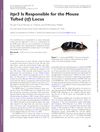
October 2012 in “Journal of Heredity” This study identified the Itpr3 gene as responsible for the tufted hair loss phenotype in the BTBR mouse strain.
56 citations
,
April 2019 in “The Plant Journal” This study found that CNGC 6, CNGC 9, and CNGC 14 are crucial for maintaining calcium oscillations necessary for normal root hair growth in plants, with mutations leading to defects like swelling and bursting.
 260 citations
,
July 2010 in “Cell”
260 citations
,
July 2010 in “Cell” This study identifies mutations in the SRD5A3 gene as a cause of a new type of congenital disorder of glycosylation, impacting mental, ophthalmologic, and cerebellar functions.