 5 citations
,
May 2023 in “European Journal of Human Genetics”
5 citations
,
May 2023 in “European Journal of Human Genetics” This study found that mutations in the TULP3 gene are associated with progressive degeneration of the liver, kidney, and heart in adults, highlighting the importance of early detection and management.
3 citations
,
June 2025 in “Gyemyeong uidae haksulji” This review suggests that PDRN shows promise as a safe and versatile regenerative agent for wound healing and other dermatological applications, based on its dual mechanisms and clinical evidence of efficacy.
10 citations
,
July 2023 in “Pharmaceuticals” This study explored the wound healing potential of a natural marine soft coral-derived nanoparticle-based gel in a diabetic excision wound model, finding it effectively regulates proinflammatory cytokines and inhibits enzymes related to wound healing.
 February 2024 in “Journal of Cellular and Molecular Medicine”
 In this study using rat models, researchers developed a Pluronic@F-127 hydrogel to deliver the flavonoid pectolinarin, finding it accelerates wound healing and reduces scar formation by enhancing cell migration, proliferation, and antioxidant activity.
January 2006 in “Dianzi xianwei xuebao” This study observed that ultrastructural changes like lamellar bodies and electron-dense granules in the stratum corneum may aid in the early diagnosis of Netherton syndrome.
In this case report, a 7-month-old boy with Netherton syndrome experienced significant improvement in symptoms, including reduced pruritus and increased hair growth, through a combination of intravenous immunoglobulin and dupilumab treatment, which also decreased high serum IgE levels and food-specific IgE antibodies.
 17 citations
,
August 2007 in “Bioorganic & Medicinal Chemistry Letters”
17 citations
,
August 2007 in “Bioorganic & Medicinal Chemistry Letters” This study found that a specific amino-pyridine compound showed potent androgen receptor antagonist activity, stimulating hair growth in mice and reducing sebum production in a hamster model.
7 citations
,
April 2008 in “Progrès en Urologie”  February 2024 in “Journal of Investigative Dermatology”
 In this study, the deletion of NIPP1 in keratinocytes led to chronic skin inflammation and epidermal changes in mice, with early cell-cycle arrest and premature senescence observed, potentially contributing to reduced mutagen sensitivity.
November 2010 in “International Journal of Developmental Neuroscience”  January 2025 in “RSC Advances”
 This study reported that a new formulation of finasteride solid lipid nanoparticles, combined with LPC and NTC, enhanced hair growth in mice without visible skin reactions, suggesting it could effectively manage androgenetic alopecia.

This study found that CPA-loaded nanoparticles, particularly SLN formulations, increased CPA epidermal penetration compared to a conventional cream and may reduce side effects in treating androgen-dependent conditions.
May 2010 in “Europe PMC (PubMed Central)” This chapter discusses the synthesis and analysis of near-infrared fluorescent activity-based probes for imaging cysteine protease activity, reporting potential benefits for disease diagnosis but noting challenges in imaging specific locations with high cathepsin activity.
41 citations
,
April 2009 in “Journal of comparative neurology” In this study, researchers observed that P2X3-immunoreactive fibers extensively innervate the epidermis of rats, suggesting a primary role in detecting noxious stimuli in cutaneous tissue.
 June 2023 in “medRxiv (Cold Spring Harbor Laboratory)”
 This study found that nociplastic type pain is a complex and heritable trait, with significant genetic overlap with multisite chronic pain and some connection to rheumatoid arthritis and a neuropathic pain phenotype.
 March 2023 in “Chemical biology & drug design”
 This study found that 8% Panax notoginseng saponins may promote hair follicle growth in C57BL/6J mice, potentially through the Wnt/β-catenin signaling pathway.
 April 2023 in “IntechOpen eBooks”
 This review discusses neuropathic pruritus, detailing its clinical presentations and management strategies, but reports no new clinical results.
 18 citations
,
January 2011 in “International journal of trichology”
18 citations
,
January 2011 in “International journal of trichology” This case report describes a 9-year-old girl with pseudonits and highlights frequent challenges in correctly diagnosing this condition.
 3 citations
,
June 2022 in “European journal of human genetics”
3 citations
,
June 2022 in “European journal of human genetics” This study reports the first cases of recessive KRT17-related pachyonychia congenita involving all ectodermal derivatives in seven members of two consanguineous Pakistani families.
This study found that activating BMP signaling in rodent and primate models significantly promotes nail and digit regeneration after amputation by enhancing the role of specific nail stem cells, though extreme proximal amputation only permitted partial regeneration without bone reconstruction.
 14 citations
,
December 1998 in “The Journal of Clinical Endocrinology and Metabolism”
14 citations
,
December 1998 in “The Journal of Clinical Endocrinology and Metabolism” This study found that MENT is 10 times more potent than testosterone in suppressing gonadotropins and contributing to anabolism in monkeys, with a potentially wider therapeutic index for human androgen replacement and male contraception.
A new mutation in the TRPS1 gene caused Trichorhinophalangeal syndrome in a 17-year-old, highlighting the need for genetic testing.
1 citations
,
October 2019 in “PubMed” This study successfully created a mouse model with conditional knockout of the p75 neurotrophin receptor gene in epidermis cells, with no significant changes in skin histomorphology observed.
 12 citations
,
September 2018 in “International Journal of Cosmetic Science”
12 citations
,
September 2018 in “International Journal of Cosmetic Science” This study demonstrated that the biomimetic peptide PTP20 may help preserve hair pigmentation and reduce greying by enhancing melanocyte function and increasing melanin production in human hair follicles.
1 citations
,
October 2025 in “Micromachines” This review highlights the potential of integrating point-of-care testing with allele-specific amplification techniques like AS-PCR, AS-LAMP, and AS-RPA to improve the efficiency, accuracy, and affordability of genotyping single nucleotide polymorphisms associated with human diseases.
 3 citations
,
August 2020 in “Journal of Cosmetic Dermatology”
3 citations
,
August 2020 in “Journal of Cosmetic Dermatology” In this study, topical nitroglycerine spray successfully prevented impending necrosis in 94% of hair transplant cases showing signs of vascular distress.
 7 citations
,
July 2018 in “Journal of Functional Biomaterials”
7 citations
,
July 2018 in “Journal of Functional Biomaterials” This study evaluated a new anti-baldness product, IPSTiC patch hair, designed to treat androgenetic alopecia, and reported that it effectively inhibits NO radical and 5α-reductase activity while maintaining safety and stability, suggesting its potential for topical use.
May 2026 in “Journal on musculoskeletal ultrasound in pain medicine.” In this case study, a 29-year-old male experienced chronic pelvic pain and erectile dysfunction after finasteride use, with no effective relief from pharmacological and procedural interventions, prompting a shift towards pain education and behavioral strategies due to a possible nociplastic pain mechanism.
 6 citations
,
October 2012 in “Journal of Heredity”
6 citations
,
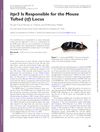
October 2012 in “Journal of Heredity” This study identified the Itpr3 gene as responsible for the tufted hair loss phenotype in the BTBR mouse strain.
 April 2017 in “IOSR journal of dental and medical sciences”
 This abstract discusses Netherton Syndrome, a genetic disorder with a characteristic triad of symptoms caused by SPINK5 gene mutation, and reports no new clinical findings or treatment advances.