28 citations
,
November 2018 in “American Journal of Medical Genetics Part A” This report describes a neurometabolic disorder linked to gain-of-function variants in the ODC1 gene, characterized by developmental delay, ectodermal abnormalities, and notable facial and neuroimaging features.
 1 citations
,
January 2014 in “Progress in Neurology and Psychiatry”
1 citations
,
January 2014 in “Progress in Neurology and Psychiatry” This report discusses the complex interplay between dermatological and psychiatric conditions and presents insights shared at the 22nd EADV Congress, but it reports no new research results.
7 citations
,
January 2020 in “Dermatology online journal” In this case report, adult-onset porokeratotic eccrine ostial and dermal duct nevus improved with topical tazarotene treatment, as evidenced by dermatoscopic images.
 81 citations
,
July 2012 in “Translational Psychiatry”
81 citations
,
July 2012 in “Translational Psychiatry” In this pilot study, no significant differences were observed between memantine and placebo groups in young adults with Down syndrome on the primary memory outcomes, but some improvement was noted in a secondary measure.
 December 2025 in “Molecules”
 This study found that the 15-PGDH inhibitor DPP improved endothelial function in hair-related cells exposed to DHT by reducing oxidative stress and enhancing angiogenic capacity.
8 citations
,
January 2019 in “JAAD Case Reports” This article describes erosive pustular dermatosis of the scalp, emphasizing its chronic nature, potential complications, and the lack of specific diagnostic findings, but reports no new clinical results.
 5 citations
,
September 2015 in “Nepalese journal of ophthalmology”
5 citations
,
September 2015 in “Nepalese journal of ophthalmology” This case report highlights an 11-year-old girl with dermatopathia pigmentosa reticularis, identifying associated Salzmann's nodular degeneration of the cornea and emphasizing the need for a multidisciplinary management approach.

This paper introduces a framework attributing Post-SSRI, Post-Finasteride, Post-Retinoid, and an unnamed sexual dysfunction syndrome to downregulated estrogen receptor activity, potentially guiding future treatments in sexual medicine.
 12 citations
,
November 2003 in “Journal of the American Academy of Dermatology”
12 citations
,
November 2003 in “Journal of the American Academy of Dermatology” This study found hair regrowth in the majority of AA-affected mice and rats treated with diphencyprone, suggesting its potential utility for understanding human alopecia areata and the drug's therapeutic action.
 25 citations
,
October 2018 in “Journal of The American Academy of Dermatology”
25 citations
,
October 2018 in “Journal of The American Academy of Dermatology” This study concluded that erosive pustular dermatosis of the scalp may be a type of spongiotic, pustular superficial folliculitis, sharing similarities with other neutrophilic dermatoses.
 8 citations
,
September 2004 in “Contact dermatitis”
8 citations
,
September 2004 in “Contact dermatitis” Avoiding dyed wigs and clothing improved severe allergic reactions in a woman treated with diphencyprone.
This review found an increased prevalence of common skin disorders, such as infectious and inflammatory conditions, in patients with Down syndrome and highlighted the need for improved screening and management guidelines.
 3 citations
,
March 2021 in “Journal of Pediatric and Adolescent Gynecology”
3 citations
,
March 2021 in “Journal of Pediatric and Adolescent Gynecology” This study observed a higher prevalence of PCOS among adolescent girls with pilonidal disease and suggested that treating PCOS may reduce the need for PD intervention.
December 2024 in “Journal of Investigative Dermatology” The conference highlighted new treatments and research in pediatric skin conditions, emphasizing collaboration and innovation.
 February 2025 in “Intisari Sains Medis”
 This article explores the potential mechanisms by which polydeoxyribonucleotide (PDRN) could improve skin quality, slow aging, and enhance skin regeneration, but reports no new clinical findings.
 20 citations
,
June 2011 in “ISRN Dermatology (Print)”
20 citations
,
June 2011 in “ISRN Dermatology (Print)” This case report describes a woman experiencing severe hair loss due to allergic contact dermatitis from a hair dye containing PPD.
 18 citations
,
September 2016 in “International Journal of Molecular Sciences”
18 citations
,
September 2016 in “International Journal of Molecular Sciences” This study reports that PDRN, commonly used for wound healing, may also have anti-melanogenesis and potential skin whitening effects in both experimental models and clinical settings.
64 citations
,
October 2018 in “Thérapie” This report describes the enhancement of the French SNIIRAM/SNDS healthcare database through external data linkages, highlighting its potential use in medical research despite complexities in the integration process.
12 citations
,
January 2013 in “Indian dermatology online journal” This case report details a 21-year-old woman with dermatopathia pigmentosa reticularis, presenting with generalized reticulate hyperpigmentation, diffuse noncicatricial alopecia, onychodystrophy, palmoplantar keratoderma, and poorly developed dermatoglyphics.
 10 citations
,
February 2022 in “JMIR Dermatology”
10 citations
,
February 2022 in “JMIR Dermatology” This systematic review indicates that patients with Down syndrome have an increased prevalence of various dermatologic disorders, especially infectious, inflammatory, autoimmune, and connective tissue conditions.
10 citations
,
November 2017 in “Skin Appendage Disorders” This series of eight North American patients with erosive pustular dermatosis of the scalp suggests that factors like immunosenescence and ultraviolet damage may contribute to the condition's development.
15 citations
,
June 2019 in “Biochemical Journal” This study identified a heterozygous de novo mutation in the ODC1 gene causing a new disorder characterized by overgrowth and developmental delay, and suggests that DFMO treatment may help manage elevated ODC activity and putrescine levels.
 3 citations
,
July 2018 in “Elsevier eBooks”
3 citations
,
July 2018 in “Elsevier eBooks” This case report describes an elderly man with erosive pustular dermatosis of the scalp, who improved with potent topical corticosteroids followed by maintenance with topical tacrolimus.
 September 2023 in “International journal of biological macromolecules”
 This study found that a chitosan/PDRN nanopolyplex significantly improved diabetic wound healing in rats by enhancing cell proliferation, migration, and antimicrobial activities, suggesting its potential as a therapeutic product.
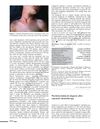
This abstract discusses pellagra as a nutritional disorder characterized by a known set of symptoms but reports no new clinical findings; the authors review existing knowledge and suggest further research.
 November 2023 in “Frontiers in Neuroendocrinology”
 This study suggests that post-finasteride syndrome and post-SSRI sexual dysfunction share potential etiopathogenetic mechanisms involving brain modulators, neurotransmitters, and gut microbiota, although more research is needed to understand these conditions fully.
 August 2008 in “European Neuropsychopharmacology”
 This study identified significant correlations between self-esteem, psychiatric symptoms, and health-related quality of life in peritoneal dialysis patients.
 4 citations
,
June 2021 in “Wounds-a Compendium of Clinical Research and Practice”
4 citations
,
June 2021 in “Wounds-a Compendium of Clinical Research and Practice” This study observed that erosive pustular dermatosis of the scalp in elderly patients was effectively treated with high-potency topical steroids, with plasma and lymphocyte dermal infiltrates helping to confirm diagnosis.
August 2025 in “Indian Dermatology Online Journal” This article reports a case of erosive pustular dermatosis on the scalp of an elderly male, highlighting its complex diagnosis and successful treatment with high-potency topical corticosteroids.
3 citations
,
December 2023 in “Pain Medicine” This case report described how peripheral nerve stimulation provided significant pain relief and reversal of dermatological symptoms for a female patient with complex regional pain syndrome after conventional treatments failed.