October 2025 in “Preprints.org” In this study, chronic unpredictable stress affected male and female wild-derived house mice differently; stressed females gained less weight, had long grooming times, and lower immobility in tests, while stressed males showed increased hair corticosterone levels and shorter immobility times.
3 citations
,
October 2023 in “Journal of Pain” In this exploratory study of trigeminal neuralgia patients undergoing microvascular decompression surgery, differential protein expression in plasma and cerebrospinal fluid was observed between responders and non-responders, suggesting potential biomarkers to predict surgical success and providing insights into the mechanisms of pain relief.
2 citations
,
May 2023 in “Veterinary Pathology” This article outlines methods to study the skin and its molecular traits, focusing on interpretation and techniques applicable to mouse models, including diverse assays and approaches like electron microscopy and large-scale lipid analyses.
 February 2010 in “Journal of The American Academy of Dermatology”
 The document concludes that using gadolinium-based contrast agents during MRI can be linked to Nephrogenic Systemic Fibrosis in patients with severe kidney disease.
January 2023 in “Toxicological Research” January 2007 in “Chinese Journal of Pharmaceuticals” This study used NMR spectroscopy and other techniques to fully assign the proton and 13C spectra of the 5α-reductase inhibitor finasteride.
14 citations
,
May 2008 in “Journal of Visualized Experiments” This article details a protocol for isolating and culturing embryonic neural crest stem cells from the whisker follicles of adult mice.
 36 citations
,
October 1996 in “Dermatologic Clinics”
36 citations
,
October 1996 in “Dermatologic Clinics” In this study, a methanol extract of Eclipta alba was found to have dose-dependent hair growth-promoting activity in C57BL6 mice.
 27 citations
,
August 1984 in “Experimental and Molecular Pathology” 6 citations
,
March 2007 in “BioTechniques”
27 citations
,
August 1984 in “Experimental and Molecular Pathology” 6 citations
,
March 2007 in “BioTechniques” This study observed that PCR-based genotyping for cre-loxP mice can lead to errors due to cre-mediated recombination in non-target tissues like tails, affecting the detection of lox alleles.
1 citations
,
June 2023 in “Journal of Visualized Experiments” This study describes a new intravital microscopy method for observing intestinal regeneration by tracking crypt dynamics in living mice after laser-induced tissue damage, revealing events like crypt fission, fusion, and disappearance over multiple weeks.
September 2017 in “Journal of Investigative Dermatology” QMSI effectively maps and quantifies drug distribution in skin tissues.
December 2022 in “Biochemical and Biophysical Research Communications” This study found that HtrA2 inactivation in mnd2 mice is associated with delayed hair cycle phases and growth retardation of adipocytes, suggesting HtrA2's role in regulating adipogenesis-related hair growth.
33 citations
,
May 2018 in “Stem Cell Reports” This study demonstrates that Krt15 marks long-lived, multipotent, and injury-resistant crypt cells in the small intestine, which may serve as the cell of origin in intestinal cancer.
9 citations
,
January 2022 in “Biology” This study concluded that male mice are more susceptible to valproic acid-induced autism spectrum disorder than female mice, with noticeable differences in brain histoarchitecture and receptor protein levels.
This study found that combining Ganoderma lucidum extract with microneedle therapy promoted hair growth in a mouse model of alopecia more effectively than microneedle therapy alone.
 April 1974 in “Pediatric Research”
 This study found that hair from mice with the Naked trait mutation has significantly lower levels of glycine and tyrosine, suggesting a deficiency in a specific protein fraction.
 September 2016 in “Journal of dermatological science”
 In this study, transplanted whisker follicles from ND-GFP mice aided spinal cord repair in injured mice, and surprisingly, also grew long hair shafts at the site of transplantation.
3 citations
,
November 2023 in “Frontiers in Neurology” This study performed a bibliometric analysis on Alzheimer's disease and white matter research from 1981 to 2023, finding the majority of publications from the US, China, and the UK, with key themes like mild cognitive impairment and MRI appearing frequently.
August 2018 in “Illinois Digital Environment for Access to Learning and Scholarship (University of Illinois at Urbana-Champaign)” This research observed that chronological age, rather than hearing loss, primarily affects the auditory cortex in aging, and found that brain aging in PolG mice mirrored that of wild-type counterparts, suggesting differential tissue sensitivity to mitochondrial dysfunction.
May 2024 in “International Journal of Molecular Sciences” This study found that injecting mouse hair follicle-derived mesenchymal stem cells (moMSCORS) into C57BL/6 mice reduced the incidence and severity of type 1 diabetes by modulating immune responses, suggesting potential for therapeutic use due to their immunosuppressive effects.
September 1990 in “Journal of Dermatological Science” 70 citations
,
February 2016 in “EMBO reports” This study identified a subtype of itch-sensing neurons in mice, which express Ret and somatostatin, and found that their ablation reduces scratching induced by certain pruritogens.
 November 2022 in “bioRxiv (Cold Spring Harbor Laboratory)”
 In this study, deep learning models accurately predicted gene expression in whole slide images of colorectal cancer, with convolutional neural networks outperforming transformer and graph-based approaches in spatial RNA pattern prediction.
 3 citations
,
July 2024 in “Annals of Biomedical Engineering”
3 citations
,
July 2024 in “Annals of Biomedical Engineering” This study found that multiphoton microscopy imaging allows for detailed observation and quantitative analysis of collagen alterations in the progression of endometrial cancer, potentially offering a faster, more accurate method for early diagnosis compared to current protocols.
January 2025 in “Indian Journal of Experimental Biology” In this study, mice orally exposed to carbon-based nanoparticles for 30 days showed significant liver and kidney changes, behavioral alterations, and physiological disturbances, suggesting potential severe health risks due to the nanoparticles' slow clearance and formation of reactive oxygen species.
49 citations
,
January 2006 in “Developmental Dynamics” This research observed that the skeletal abnormalities in Noggin null mice varied based on genetic background, and identified haploinsufficiency leading to joint fusions, similar to human conditions associated with NOGGIN deficiency.
 January 2024 in “Wiadomości Lekarskie”
 This source reports that clinical trials using advanced Deep Brain Stimulation systems, augmented with AI to integrate kinematic data, eye tracking, and cognitive assessments, show promise in improving diagnostic accuracy and monitoring symptoms for patients with Parkinson's disease.
 6 citations
,
October 2012 in “Journal of Heredity”
6 citations
,
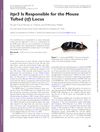
October 2012 in “Journal of Heredity” This study identified the Itpr3 gene as responsible for the tufted hair loss phenotype in the BTBR mouse strain.
 76 citations
,
March 2005 in “Journal of Molecular Medicine”
76 citations
,
March 2005 in “Journal of Molecular Medicine” This study found that premature hair loss due to stress does not occur in NK-1 receptor knockout or mast cell deficient mice, suggesting a key role for neurokinin substance P and mast cell interaction in stress-related hair follicle changes.