September 2017 in “The journal of investigative dermatology/Journal of investigative dermatology” This study found that while 450nm blue light can inhibit collagen and induce oxidative stress in dermal fibroblasts, 850nm near-infrared light may enhance metabolic activity without causing oxidative damage, suggesting potential for tailored light therapies in skin treatments.
 January 2026 in “Forum Dermatologicum”
 This review concluded that LED-based photobiomodulation is generally safe and effective for certain dermatologic conditions, though consumer devices often show less efficacy compared to professional systems.
February 2025 in “International Journal of Biological Macromolecules” This study developed a NIR light-triggered NO-releasing hydrogel that promotes angiogenesis, repairs damaged dermal papilla cells, reduces inflammation, and improves the nutrient supply and follicular environment in animal models, offering a promising treatment strategy for androgenic alopecia.
 January 2024 in “Materials chemistry frontiers (Online)”
 This study reviews recent advancements in near-infrared organic light-emitting diode (NIR OLED) technologies, focusing on their applications and the diverse luminescent materials used in their emissive layers.
 November 2023 in “Research Square (Research Square)”
 In this study, researchers used NIR-II fluorescence imaging to track the survival and migration of EPI-NCSCs in rat models, finding that these stem cells aided in repairing facial nerve defects when applied via acellular nerve allografts.
 January 2025 in “Journal of Pharmacognosy and Phytochemistry”
 In this study, the researchers investigated the plant Vitex negundo and its active ingredients, noting that both natural and synthetic derivatives exhibit concentrated biological activity, which may explain the plant's traditional use in treating various ailments such as depression, malaria, and skin diseases.
 33 citations
,
May 2013 in “Andrologia”
33 citations
,
May 2013 in “Andrologia” This study identified several herbs, including Ganoderma lucidum and Urtica dioica, that showed promising 5α-reductase inhibitory activity suggesting potential use in managing androgenic disorders.
16 citations
,
July 2020 in “Advances in Traditional Medicine” This study found that the combined ethanolic extract ethosome formulation of Phyllanthus niruri, Zingiber officianale, and Croton tiglium Linné showed better safety and less cytotoxicity for hair growth promotion compared to the petroleum ether formulations.
 1 citations
,
May 2017 in “InTech eBooks”
1 citations
,
May 2017 in “InTech eBooks” This study suggests that while complementary and alternative treatments for hair loss are becoming more popular, their effectiveness and mechanisms remain largely unverified.
 February 2024 in “Journal of ayurveda and integrated medical sciences”
 This case study reports that a patient with PCOD showed health improvements after treatment with Ayurvedic medicines and therapies, including Yoga Basti and specific herbal formulations.
This study found that adding menthol to Phyllanthus niruri ethanol extract gel enhanced hair growth and thickness in rats compared to the gel without menthol.
 January 2023 in “International Journal of Research in Medical Sciences & Technology”
 This article discusses the similarities between symptoms of systemic lupus erythematosus and the Ayurvedic condition pittaadhkiya vatarakta, and reports no new clinical results; the authors propose treating SLE with specific Panchkarma procedures.
May 2010 in “Europe PMC (PubMed Central)” This chapter discusses the synthesis and analysis of near-infrared fluorescent activity-based probes for imaging cysteine protease activity, reporting potential benefits for disease diagnosis but noting challenges in imaging specific locations with high cathepsin activity.
January 2016 in “Munich Personal RePEc Archive (Ludwig Maximilian University of Munich)” This study demonstrated that a light-activated RNAi approach using hollow gold nanoshells effectively targets human prostate cancer cells with reduced off-target toxicity and material use compared to standard methods.
8 citations
,
January 2024 in “Regenerative Biomaterials” This study found that a novel bioceramic/alginate hydrogel with photothermal properties and multiple ion release effectively reduces infection and inflammation, and enhances osseointegration in early-stage peri-implant lesions, potentially improving dental implant survival rates.
November 2025 in “Bioactive Materials” In this study, researchers developed a DNA/GelMA-based cryogel platform that uses phototherapy to combat MRSA infection and promote scarless wound healing, showing enhanced bactericidal activity, tissue regeneration, and anti-inflammatory effects in vivo, suggesting a promising approach for treating infected skin wounds.
513 citations
,
February 2022 in “Advanced Science” This study demonstrated that incorporating PDA@Ag nanoparticles into a cationic guar gum hydrogel significantly enhanced photothermal conversion efficiency, achieving superior antibacterial efficacy both in vitro and in vivo, advancing the potential of PDA as a photothermal antibacterial agent.
 50 citations
,
May 2011 in “Journal of Ethnopharmacology”
50 citations
,
May 2011 in “Journal of Ethnopharmacology” In this cell study, Eclipta alba extract inhibited cancer cell proliferation and induced apoptosis, showing potential antiproliferative and anti-metastasis effects on liver and related cancer cell lines.
8 citations
,
August 2022 in “Microorganisms” This study reports that drug repurposing for COVID-19 has had mixed results, with success for some drugs but a lack of clinical efficacy for others, highlighting the need for improved preclinical profiling and a standardized drug development platform for future antiviral treatments.
 4 citations
,
November 2016 in “Archives of Endocrinology and Metabolism”
4 citations
,
November 2016 in “Archives of Endocrinology and Metabolism” This study found that thyroid volume was increased in PCOS patients with insulin resistance, with potential influences from TSH and LH levels on these changes.
475 citations
,
October 2006 in “Proceedings of the National Academy of Sciences” This study suggests that folliculin, mutated in Birt–Hogg–Dubé syndrome, and its partner FNIP1 may play a role in energy and nutrient sensing through the AMPK and mTOR pathways.
 125 citations
,
August 2020 in “Frontiers in Immunology”
125 citations
,
August 2020 in “Frontiers in Immunology” This review discusses sex-based differences in immune responses, focusing on genetic, hormonal, and microbiome factors influencing infections like COVID-19, and reports no clinical results.
 118 citations
,
October 2013 in “Trends in Genetics”
118 citations
,
October 2013 in “Trends in Genetics” The AUTS2 gene is linked to neurological disorders and may affect human brain development and cognition.
 47 citations
,
September 2023 in “Pharmacological Reports”
47 citations
,
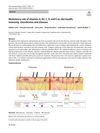
September 2023 in “Pharmacological Reports” In this review, researchers explored the roles of vitamins A, B3, C, D, and E in skin immunity, highlighting their potential as therapeutics for skin diseases due to their antioxidant, anti-inflammatory, and antimicrobial properties.
37 citations
,
October 2024 in “JAMA Network Open” This study found that among reproductive-age women across India, there was a high prevalence of PCOS, with phenotype C being predominant and most women exhibiting metabolic abnormalities, highlighting the importance of integrating PCOS management into national health strategies.
 36 citations
,
March 2019 in “European Journal of Human Genetics”
36 citations
,
March 2019 in “European Journal of Human Genetics” This study found genetic variations, including de novo variants and copy number variations, that may be associated with phenotypic discordance in monozygotic twins with various clinical conditions.
33 citations
,
April 2003 in “Oncogene”  28 citations
,
January 2012 in “Case Reports in Medicine”
28 citations
,
January 2012 in “Case Reports in Medicine” This article discusses Hair-thread Tourniquet Syndrome in children, emphasizing the need for prompt examination and intervention to prevent severe complications, but reports no new clinical results.
23 citations
,
July 2023 in “Proceedings of the National Academy of Sciences” In this study using a mouse model and human data, researchers found that CD8+ T cells are central to driving alopecia areata, while regulatory T cells offer some protection, highlighting CD8+ T cells as key targets for future therapy development.
20 citations
,
June 2020 in “Journal of Advanced Research” This study found that high-dose vitamin A and E supplementation with zinc may improve glycemic control and beta-cell function in patients with type 2 diabetes, compared to no supplements.