 March 2012 in “Journal of Pediatric and Adolescent Gynecology”
 This study found that while most adolescents with PCOS do not show overt diabetes, over half have insulin resistance, and ethnicity is a significant predictor of type 2 diabetes.
 6 citations
,
October 2018 in “Lasers in Medical Science”
6 citations
,
October 2018 in “Lasers in Medical Science” This article explores the potential of photobiomodulation for coronary health, suggesting protective effects after heart attacks and in inaccessible ischemic heart conditions, but presents no new clinical results.
 June 2026 in “Ophthalmology and Therapy”
 This review concluded that near-infrared and red light photobiomodulation shows potential for certain ocular conditions like age-related macular degeneration and dry eye disease, but clinical evidence is still mixed and insufficient to establish it as a standard therapy.
 1057 citations
,
November 2011 in “Annals of Biomedical Engineering”
1057 citations
,
November 2011 in “Annals of Biomedical Engineering” This review discusses the applications of low level laser therapy (LLLT) in wound healing, pain reduction, and treating various conditions, but reports no new clinical results; the authors highlight the need for randomized controlled trials for serious diseases.
 36 citations
,
April 2016 in “Experimental Dermatology”
36 citations
,
April 2016 in “Experimental Dermatology” This review discusses the challenges in selecting optical parameters for photobiomodulation studies on hair regrowth and wound healing, reporting no new clinical results and recommending more rigorous, standardized research approaches.
 8 citations
,
January 2018 in “PubMed”
8 citations
,
January 2018 in “PubMed” The study reported that reducing finasteride particle size significantly improved its cellular permeation through prostate epithelial cells, though it had a lesser impact on systemic pharmacokinetics and tissue distribution in rats.
 1 citations
,
July 2020 in “Dermatology”
1 citations
,
July 2020 in “Dermatology” This review discusses the mechanisms, applications, and research evidence of photobiomodulation, highlighting its efficacy, safety, and potential for standardized evaluation methods, but reports no new clinical results.
 December 2025 in “Aesthetic Plastic Surgery”
 This study reported that the new near-infrared LED device showed significant improvements in skin rejuvenation and a slight increase in hair growth, with further research recommended for broader validation.
 August 2025 in “Scientific Reports”
 This study found that the protein C4BPA may link insulin resistance and acne vulgaris by influencing lipid metabolism and inflammatory pathways, suggesting it as a potential mediator in the pathogenesis of both conditions.
 January 2025 in “Journal of Materials Chemistry B” June 2024 in “Cermin Dunia Kedokteran”
 This review discusses the benefits and applications of low level laser therapy in cosmetic dermatology, particularly for skin conditions and pigmentation disorders, but reports no new clinical results.
 December 2022 in “Medical lasers”
 This study reviews the mechanism and potential treatment roles of low-level laser therapy for immune-mediated skin diseases, reporting no new clinical results.
 October 2022 in “Journal of Pharmaceutical Negative Results”
 This review examines the therapeutic effects of photobiomodulation on severe medical illnesses but reports no new clinical results; it emphasizes its potential in neurology, pulmonology, inflammation, dermatology, wound healing, and oncology.
 May 2014 in “La Revue de médecine interne”
 This article reviews the specific cosmetology needs and practices related to black skin, identifying associated complications, and emphasizes the need for a robust cosmetovigilance policy but reports no new clinical findings.
 February 2006 in “Journal of The American Academy of Dermatology”
 This study found that Malassezia globosa, a scalp-associated fungus linked to dandruff, grows with saturated but not unsaturated fatty acids, potentially causing unsaturated fatty acid accumulation on the scalp and triggering dandruff-like flaking in susceptible individuals.
 520 citations
,
January 2017 in “AIMS biophysics”
520 citations
,
January 2017 in “AIMS biophysics” This review discusses the effects of photobiomodulation, particularly its potential to reduce inflammation in various conditions, but it does not report new clinical findings.
 202 citations
,
June 2005 in “Aaps Pharmscitech”
202 citations
,
June 2005 in “Aaps Pharmscitech” This review discusses the potential of lecithin organogels for improving topical drug delivery and presents no new experimental results; the authors highlight their stability and low skin irritancy as advantages.
 113 citations
,
August 2016 in “Mycopathologia”
113 citations
,
August 2016 in “Mycopathologia” This review discusses the developments in antifungal treatments for dermatophyte infections since 2008, reporting no new oral agents but introducing newer topical options like efinaconazole and tavaborole.
 112 citations
,
November 2023 in “Nano-Micro Letters”
112 citations
,
November 2023 in “Nano-Micro Letters” This review discusses the developments over the past five years in nanozyme-based theranostics for tumor therapy, including their classification, design, and synergistic strategies. It also outlines the challenges and prospects of using nanozymes to enhance selectivity, biosafety, repeatability, and stability in therapeutic applications.
 85 citations
,
July 2025 in “Nature Communications”
85 citations
,
July 2025 in “Nature Communications” This review examines the evolving field of nanozymes, highlighting their unique properties and biocatalytic capabilities that challenge traditional concepts of biocatalysis, with implications for sustainable applications and potential roles in physiological processes and disease pathogenesis.
 82 citations
,
December 2015 in “Nanomedicine”
82 citations
,
December 2015 in “Nanomedicine” This review discusses nanoparticle systems for cancer treatment and reports no new clinical results; the authors emphasize their potential to reduce systemic toxicity and call for further development.
 70 citations
,
April 2017 in “Lasers in surgery and medicine”
70 citations
,
April 2017 in “Lasers in surgery and medicine” This study found that blue light at a wavelength of 453 nm promoted hair growth ex vivo, potentially through interacting with OPN3 receptors in human hair follicles.
 67 citations
,
January 2022 in “Theranostics”
67 citations
,
January 2022 in “Theranostics” This review highlights how advanced nanocarrier and microneedle-based transdermal drug delivery strategies can potentially improve the treatment of skin diseases by enhancing site-specific drug delivery, increasing skin penetration, and reducing systemic toxicity compared to conventional methods.
 66 citations
,
January 2000 in “Dermatology”
66 citations
,
January 2000 in “Dermatology” This review discusses the nature, origin, and treatments of dandruff, with a focus on the role of *Malassezia* spp. and other triggering factors, but reports no new research findings.
 65 citations
,
March 2016 in “Lasers in Medical Science”
65 citations
,
March 2016 in “Lasers in Medical Science” This review found that many low-level light therapy studies report beneficial effects but often fail to provide adequate measurement details, affecting the reliability and repeatability of the research.
 65 citations
,
January 2013 in “Cochrane library”
65 citations
,
January 2013 in “Cochrane library” This review found that infliximab, golimumab, and some forms of radiotherapy significantly improved nail psoriasis compared to controls, although they could have serious adverse effects and are not commonly used specifically for nail issues.
 60 citations
,
July 2020 in “ACS Nano”
60 citations
,
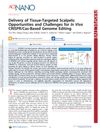
July 2020 in “ACS Nano” This review discusses the progress and challenges in delivering CRISPR/Cas9 systems for in vivo genome editing, highlighting current methods and opportunities for future therapeutic applications.
 59 citations
,
February 2021 in “Advanced Functional Materials”
59 citations
,
February 2021 in “Advanced Functional Materials” In this study, a silk-inspired hydrogel system was developed that combines photodynamic therapy and wound healing, which may significantly reduce melanoma recurrence and enhance healing of infected wounds.
 58 citations
,
November 2013 in “Journal of Innovative Optical Health Sciences”
58 citations
,
November 2013 in “Journal of Innovative Optical Health Sciences” This review discusses the development and application of multiphoton microscopy in dermatology, highlighting its advantages and potential future research directions without reporting new clinical results.
 57 citations
,
March 2024 in “Nano-Micro Letters”
57 citations
,
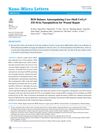
March 2024 in “Nano-Micro Letters” In this study, researchers created a core-shell nanozyme, CeO2@ZIF-8/Au, which autonomously regulates ROS levels to efficiently eliminate bacteria, reduce inflammation, and promote wound healing by balancing ROS generation and scavenging in response to environmental conditions.