November 2014 in “The Journal of Korean Medicine Ophthalmology and Otolaryngology and Dermatology” This study found that dry skin, dandruff, and scalp issues were common among healthy Korean subjects, indicating a need for more research on their skin characteristics.
6 citations
,
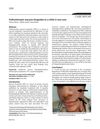
September 2014 in “Journal of the American Academy of Dermatology” In this report, researchers described a potential new variant of mucinous nevus, characterized by dilation of hair follicle pores and fibromucinous stroma in both the papillary and perifollicular dermis.
 1 citations
,
October 2023 in “Journal of the Pakistan Medical Association”
1 citations
,
October 2023 in “Journal of the Pakistan Medical Association” This source describes a case of a 12-year-old male diagnosed with folliculotropic mycosis fungoides, presenting with an asymptomatic, erythematous plaque. Histology and immunohistochemistry confirmed FMF, which is typically rare in children and marked by follicular infiltration by CD4+ lymphocytes.
 October 2025 in “Pharmaceutics”
 This study highlights the clinical potential of microneedles as an innovative transdermal drug delivery system for treating various skin diseases with minimal pain and high patient compliance.
 July 2026 in “bioRxiv (Cold Spring Harbor Laboratory)”
 This study identified a new FAK isoform, FAKΔe4, which is regulated by ECM stiffness and affects cell migration, invasion, and mechanosensing in human-derived data and engineered models.
22 citations
,
February 2023 in “European Journal of Neurology” This study found that fremanezumab was effective in reducing migraine headache days by at least 50% for the majority of patients with high-frequency episodic or chronic migraine who had failed previous treatments.
 24 citations
,
June 2018 in “Expert Review of Pharmacoeconomics & Outcomes Research”
24 citations
,
June 2018 in “Expert Review of Pharmacoeconomics & Outcomes Research” This review discusses the potential of microneedle arrays for drug delivery and in the cosmetic market, but reports no new clinical results; factors for commercial therapeutic use are explored.
 7 citations
,
March 2024 in “Scientific Reports”
7 citations
,
March 2024 in “Scientific Reports” This study reports that the new neighborhood face index (NFI) demonstrates a remarkably high correlation with the physiochemical properties of benzenoid hydrocarbons, highlighting its potential as a predictive tool.
4 citations
,
February 2023 in “Frontiers in Oncology” In this study, Nano-Pulse Stimulation Therapy successfully cleared up to 91% of melanoma tumors in mice with less skin damage compared to cryoablation, which cleared up to 66% of tumors.
3 citations
,
November 2024 in “Electrochimica Acta” A new, quick method accurately detects minoxidil in drugs and cosmetics.
28 citations
,
December 2001 in “European Journal of Pharmacology” This study found that the compound M50054 inhibits apoptosis by blocking caspase-3 activation and may improve chemotherapy-induced alopecia and hepatitis symptoms.
30 citations
,
January 2016 in “BioMed Research International” This study identified corilagin as a major antitumor component in Phyllanthus niruri, with broad-spectrum activity against cancer cells and high content in Dimocarpus longan.
 20 citations
,
May 2013 in “International Journal of Molecular Medicine”
20 citations
,
May 2013 in “International Journal of Molecular Medicine” This study identified a novel missense MAFB variant in a family with some unaffected members, suggesting incomplete penetrance and the potential influence of modifier genes, epigenetic mechanisms, or environmental factors on MCTO phenotype.
 26 citations
,
June 2020 in “Polymers”
26 citations
,
June 2020 in “Polymers” This study reported that a magneto-responsive transdermal microneedle system delivered Minoxidil effectively and significantly increased hair density by 800% in mice with androgenetic alopecia after 10 days.
 March 2026 in “Zenodo (CERN European Organization for Nuclear Research)”
 This study reports a novel geometric medicine solution, N‑K GM SERIES, claiming to eliminate aflatoxin, offer a universal cancer cure, and provide numerous health benefits, including increased life expectancy, with deployment focused on the "Aflatoxin Belt" regions like Sudan.
May 2025 in “Drug Delivery and Translational Research” 2 citations
,
May 2022 in “Advanced therapeutics” This study reported that a novel vasodilator drug called TOP-M119, when delivered using a specially designed dissolving microneedle system, showed enhanced targeting of hair follicles and effectiveness in treating alopecia, demonstrated through in vitro, ex vivo, and in vivo studies involving mouse skin.
 August 2021 in “Pelviperineology”
 This article discusses the complexity of vulvodynia and highlights the potential effectiveness of Fascial Manipulation therapy in addressing this condition, but it reports no new clinical results.
6 citations
,
January 2018 in “Advances in experimental medicine and biology” September 2023 in “bioRxiv (Cold Spring Harbor Laboratory)” This study found that dissolving microneedle array patches containing mesoporous silica nanoparticles can deliver antigen-loaded nanoparticles into mice effectively, inducing strong immune responses similar to traditional subcutaneous injection.
2 citations
,
September 2018 in “JAAD case reports” This report describes a rare case of folliculotropic and syringotropic CD8 mycosis fungoides with unusual widespread mucosal involvement.
Nanofat injection is safe and effective for improving skin texture and patient satisfaction.
 October 2025 in “Transplantation”
 This study found that finasteride delivered through dissolving microneedles enhanced skin drug permeation compared to films, suggesting potential for improved androgenetic alopecia treatment with fewer side effects.
47 citations
,
April 2012 in “Analytical and Bioanalytical Chemistry”  August 2025 in “International Journal of Nanomedicine”
 This review discusses metal-organic frameworks for treating diabetic infected wounds and related applications, reporting no new clinical results but highlighting challenges like biosafety and production for future research.
September 2023 in “Journal of the American Academy of Dermatology” This study found that in participants with notalgia paresthetica, 8 weeks of treatment with difelikefalin significantly improved itch intensity and increased the rate of strict complete response compared to placebo, starting as early as week 3.
81 citations
,
February 2014 in “EMBO molecular medicine” This study found that prolonged Nrf2 activation in mouse keratinocytes led to enlarged sebaceous glands, hair loss, and cysts, suggesting a role for Nrf2 in conditions like MADISH.
November 2025 in “ACS Nano” This study reported the development of a pH-responsive microreactor that effectively targets infections by eradicating over 99.9% of MRSA and reprogramming the immune response to promote healing, achieving complete infection clearance and tissue regeneration in a 7-day period.
13 citations
,
November 2024 in “EClinicalMedicine” This study demonstrated that current facial recognition software can accurately identify individuals from MRI head scans within minutes, highlighting significant privacy concerns for clinical trial participants and the need for enhanced data protection measures.
 April 2026 in “Biosensors”
 In this study, red-light irradiation significantly increased hair follicle numbers and ATP levels in a mouse model, highlighting low-level laser therapy's potential to enhance hair regeneration and alter the skin metabolic microenvironment.