2 citations
,
January 2007 in “edoc (University of Basel)” This study identified Aquilaria sinensis and Piper cubeba as tropical plants with potential anti-androgenic and anti-estrogenic properties that could help prevent or alleviate benign prostatic hyperplasia and prostate cancer.
October 2018 in “Elsevier eBooks” This source reports that Serenoa repens may be an effective and safe natural remedy for treating benign prostatic hyperplasia, possibly working through mechanisms like apoptosis stimulation, 5-alpha-reductase inhibition, and blocking DHT receptor interactions, with minimal side effects.
 July 2024 in “International Journal of Pharmaceutical Sciences and Medicine”
 This review highlights that Nyctanthes arbor-tristis contains numerous phytochemicals and has traditional uses for various conditions. It also reports pharmacological activities, suggesting potential benefits for diabetes, cancer, inflammation, and more.
 December 2023 in “Natural product research”
 This study found that compound 4 from Urtica triangularis subsp. pinnatifida exhibited stronger anti-BPH activity against BPH-1 cells with an IC50 of 79.75 μM compared to finasteride's IC50 of 91.8 μM, while compounds 1, 2, and 5 showed moderate activity.
 3 citations
,
January 2019 in “Therapeutic advances in urology”
3 citations
,
January 2019 in “Therapeutic advances in urology” This review concluded that WS PRO 160 I 120 mg, a herbal preparation, may be an effective and safer alternative to standard drugs for treating lower urinary tract symptoms in men with benign prostatic hyperplasia.
 46 citations
,
August 2019 in “Journal of Ethnopharmacology”
46 citations
,
August 2019 in “Journal of Ethnopharmacology” This review compiles current information about Eclipta prostrata, traditional uses, and its promising pharmacological properties, like hepatoprotective and anti-inflammatory effects, but emphasizes that more research is needed to fully understand its mechanisms and ensure safety for clinical application.
 5 citations
,
November 2017 in “Asian journal of pharmaceutical and clinical research”
5 citations
,
November 2017 in “Asian journal of pharmaceutical and clinical research” This study found that water fractions of Angiopteris evecta stimulated hair growth in male rabbits, suggesting potential alopecia treatment benefits pending further research in humans.
 January 2024 in “International Journal For Multidisciplinary Research”
 This review examines existing studies on Eclipta prostrata, highlighting its diverse bioactive compounds and potential therapeutic benefits in traditional medicine, and underscores the need for further research to fully develop its medicinal promise.
 October 2024 in “Asian Pacific Journal of Cancer Prevention”
 This study found that methanolic extract from Cnicus Benedictus leaves inhibits the growth of human cervical cancer cells in vitro and selectively targets cancer cells over normal cells, suggesting potential safety in its efficacy.
1 citations
,
November 2021 in “British Journal of Clinical Pharmacology” This case report suggests a potential link between the intake of Serenoa repens, commonly known as Saw palmetto, and the onset of erectile dysfunction.
 8 citations
,
May 2017 in “Current traditional medicine”
8 citations
,
May 2017 in “Current traditional medicine” This review explores the phytochemistry and phytopharmacology of Urtica dioica but reports no new experimental findings, focusing on its traditional uses and range of bioactive constituents.
 5 citations
,
October 2022 in “Journal of Ethnopharmacology”
5 citations
,
October 2022 in “Journal of Ethnopharmacology” This review of Anemarrhena asphodeloides highlights its extensive historical use in Eastern traditional medicine and identifies diverse chemical compounds with numerous pharmacological activities, noting the need for further research to understand its mechanisms and ensure safe use.
January 2026 in “British Journal of Clinical Pharmacology” In this study, reports from individuals using Serenoa repens indicated a possible post-Serenoa syndrome characterized by persistent sexual and neuropsychiatric symptoms, with causality assessed as 'probable' in 54% of cases, highlighting an underrecognized safety concern that warrants further investigation.
 3 citations
,
December 2021 in “Journal of medicinal plants”
3 citations
,
December 2021 in “Journal of medicinal plants” This review discusses the diverse bioactivities and potential applications of Halocnemum strobilaceum but reports no new experimental findings.
 118 citations
,
July 2005 in “Journal of Ethnopharmacology”
118 citations
,
July 2005 in “Journal of Ethnopharmacology” In this study, the aqueous extract of Eclipta alba and its hydrolyzed fraction showed nootropic activity and reduced stress-induced alterations in rats.
August 2019 in “Pharmacoscript” This study found that a combination of pandanus and sansevieria leaf extracts at a 3:2 ratio showed improved hair growth activity compared to individual extracts and controls.
 8 citations
,
November 2015 in “Saudi Journal of Biological Sciences”
8 citations
,
November 2015 in “Saudi Journal of Biological Sciences” This study found that KH053, combining Panax ginseng and bee-pollen, significantly reduced prostate weight and DHT levels, inhibiting BPH development in a rat model.
 March 2024 in “Journal of Pharmaceutical and Sciences”
 This study investigated the phytochemical composition and antibacterial and antioxidant activities of Zaleya pentandra extracts, finding high total polyphenol and flavonoid content and significant antibacterial effects, particularly in acetone extract, which may be suitable for developing antibacterial agents.
1 citations
,
January 2000 in “Indian Journal of Dermatology” This case report documents a middle-aged female with black piedra on her scalp hair, confirmed through potassium hydroxide examination and fungal culture.
 2 citations
,
October 2024 in “Tropical Journal of Pharmaceutical and Life Sciences”
2 citations
,
October 2024 in “Tropical Journal of Pharmaceutical and Life Sciences” This review explores Dracaena trifasciata, known as mother-in-law's tongue, detailing its botanical properties, traditional medicinal uses, and the pharmacological and phytochemical characteristics observed in various studies.
 March 2024 in “Revista Agraria Academica”
 This review reported that the dwarf palm (Chamaerops humilis) is traditionally used in North Africa for treating diabetes and gastrointestinal diseases, and identified a need for more research on its pharmacological and ethnobotanical properties, particularly in relation to its potential cancer-fighting uses.
 22 citations
,
January 2021 in “Pharmacognosy Journal”
22 citations
,
January 2021 in “Pharmacognosy Journal” This review discusses the traditional uses, phytochemical, and pharmacological studies on Ageratum conyzoides, Tridax procumbens, and Bidens pilosa, emphasizing the need for further clinical research into their medicinal potential, but it does not report new results.
 1 citations
,
May 2023 in “Jurnal Farmasi Galenika (Galenika Journal of Pharmacy) (e-Journal)”
1 citations
,
May 2023 in “Jurnal Farmasi Galenika (Galenika Journal of Pharmacy) (e-Journal)” This study explored the traditional use of 18 plant-based remedies by the Amarasi people in Indonesia for treating dandruff and hair loss, detailing plant types, parts used, and processing methods, highlighting their potential as anti-dandruff and anti-baldness treatments.
This review summarizes the potential of single traditional Chinese medicines and extracts in preventing and treating renal fibrosis, emphasizing their capacity to inhibit transforming growth factor β and reduce extracellular matrix formation, but it reports no new clinical results.
 5 citations
,
January 2010 in “Medicinal Plants - International Journal of Phytomedicines and Related Industries”
5 citations
,
January 2010 in “Medicinal Plants - International Journal of Phytomedicines and Related Industries” This review discusses the diverse pharmacological activities of T. procumbens, such as hypotensive and hair growth-promoting effects, but reports no new clinical findings.
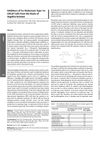 22 citations
,
February 2002 in “Planta Medica”
22 citations
,
February 2002 in “Planta Medica” In this study, osthenol was identified as a highly potent inhibitor of 5alpha-reductase type I in LNCaP cells, significantly outperforming finasteride.
 September 2021 in “Elsevier eBooks”
 This source does not provide specific results but reviews scientific research on saw palmetto, highlighting its potential efficacy for benign prostatic hyperplasia and other men's genitourinary disorders, while noting caution for use in women with childbearing potential.
 1 citations
,
January 2020 in “International journal of research in pharmacy and chemistry”
1 citations
,
January 2020 in “International journal of research in pharmacy and chemistry” This review provides an overview of the ethnomedicinal uses, chemical composition, and pharmacological profile of Eclipta alba Hassk and presents no new clinical findings.
 May 2019 in “Asian Journal of Pharmaceutical and Clinical Research”
 This study found that the ethyl acetate and chloroform fractions of Eclipta prostrata Linn. exhibited significant anti-inflammatory activity in a carrageenan-induced paw edema model and showed notable anti-arthritic potential in a formaldehyde-induced arthritis model.
1 citations
,
August 2020 This study found that Croton membranaceus root extract induced CYP1A2 and GSTM1 enzymes but inhibited CYP3A4 and CYP2D6 in rat livers, suggesting caution in its use with other drugs.