 August 2025 in “Journal of the Pakistan Medical Association”
 This systematic review found significant associations between skin disorders like polycystic ovarian syndrome, dermatomyositis, atopic dermatitis, and leprosy with infertility, noting a lack of significant findings for systemic sclerosis.
 August 2025 in “International Journal of Agriculture Extension and Social Development”
 This review discusses the cultivation techniques of Amla (Phyllanthus Emblica), highlighting its high vitamin C content and various health benefits, and emphasizes the importance of sustainable cultivation practices to meet increasing commercial demand.
 July 2025 in “JOURNAL OF CLINICAL AND BIOMEDICAL SCIENCES”
 This study describes a case in which a 24-year-old woman with PCOS symptoms, including irregular menstruation and excessive hair growth, showed significant improvement in androgen levels, menstrual regularity, and hair reduction after undergoing a nine-month Ayurvedic treatment plan with dietary and lifestyle modifications.
 May 2025 in “Cellular Oncology”
 This study suggests that dual inhibition of P-cadherin and c-Met could be an effective treatment strategy for head and neck squamous cell carcinoma by targeting resistant tumor cells.
 May 2025 in “International Journal of Clinical Obstetrics and Gynaecology”
 This article reviewed literature from 2013-2023 and found that while varied treatment options for PCOS exist, managing the condition holistically, including lifestyle changes and gastric bypass surgery, can significantly improve symptoms and quality of life without worsening side effects.
 January 2025 in “Directory of Open access Books (OAPEN Foundation)”
 This book reviews the symptoms, diagnosis, and treatments for Polycystic Ovary Syndrome, providing a comprehensive exploration but reports no new clinical results.
 January 2025 in “Journal of Veterinary Medical Science”
 In this study, researchers observed that genetically identical cloned dogs, when exposed to different environments like an airport and a police station for two years, exhibited significant differences in toxic mineral concentrations and intestinal microbiota composition, suggesting that environment influences physiological traits even among clones.
 January 2025 in “Epsilon Archive for Student Projects (University of Southampton)”
 In this study investigating goat herds in Zambia, both mange and orf were detected, but with low occurrence linked to diagnostic challenges and mild clinical signs; further research, especially in conditions favoring mange mites, is recommended to better understand and manage these diseases.
 December 2024 in “Era s journal of medical research”
 This source reports that PCOS, a complex endocrinal condition, is characterized by hyperandrogenism, which leads to symptoms like hirsutism, acne, and alopecia; genetic factors and hypothalamic-pituitary-ovarian axis disruption play significant roles in its development, but more research is needed to understand these mechanisms fully.
 November 2024 in “Journal of Young Pharmacists”
 Results are not reported in this abstract. The study's title, purpose, or specific focus is not provided, making it unclear what research question was addressed.
 September 2024 in “Cutis”
 This study reached a consensus among experts on the most important diversity, equity, and inclusion topics for dermatology residency curricula, suggesting integration may enhance patient care for diverse populations.
 August 2024 in “World Journal of Biology Pharmacy and Health Sciences”
 In this case, ayurvedic medicines were reported to effectively manage a patient with alopecia areata, with fewer side effects and reduced relapse rates compared to conventional treatments.
Personalized care and evidence-based treatments are crucial for managing skin and hair conditions.
 April 2024 in “International journal of medical science and clinical research studies”
 In this review, the authors examine current treatments for acne in adult women with polycystic ovarian syndrome, noting that the combination of hyperandrogenism and metabolic issues in PCOS can lead to acne formation on the face, chest, and back.
 April 2024 in “bioRxiv (Cold Spring Harbor Laboratory)”
 In this study, researchers identified a gene regulatory network in Arabidopsis that controls root hair growth under low-temperature conditions, revealing specific transcription factors and downstream targets that contribute to this growth response despite overall plant development being halted.
 April 2024 in “Journal of wildlife diseases”
 This study reported that captive muskoxen in Fairbanks, Alaska have significantly faster and variable guard hair growth rates compared to free-ranging Greenland muskoxen, indicating that a universal hair growth rate cannot be applied across different muskox populations or time periods.
 March 2024 in “International Journal of Drug Delivery Technology”
 This study reviews the potential of electrospun nanofiber mats as innovative drug delivery systems for wound healing, emphasizing their ability to enhance drug release, improve cell adhesion, and promote tissue regeneration by incorporating antibiotics, growth hormones, or stem cells.
 March 2024 in “GSC Advanced Research and Reviews”
 This study observed that exposure to different wavelengths of light affects opsin and clock gene responses in skin cells, suggesting potential therapeutic approaches using photobiomodulation for dermatological conditions like psoriasis and wound healing.
 March 2024 in “Bioimpacts”
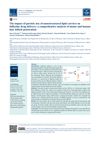
 In this study, curcumin-loaded nanoparticles with a size of 400 nm showed optimal accumulation in human hair follicles after seven days, although mouse models differed significantly in penetration and retention, indicating limitations in their suitability for follicular drug delivery studies.
 February 2024 in “Journal of Health Science and Medical Therapy”
 This review discusses the role of ADAM 17 in gynecological disorders, particularly PCOS, and suggests its potential for therapeutic intervention, but reports no new clinical results.
 January 2024 in “Wiadomości Lekarskie”
 This source reports that clinical trials using advanced Deep Brain Stimulation systems, augmented with AI to integrate kinematic data, eye tracking, and cognitive assessments, show promise in improving diagnostic accuracy and monitoring symptoms for patients with Parkinson's disease.
 January 2024 in “Wiadomości Lekarskie”
 In this retrospective study conducted at Grodno Regional Children's Hospital, researchers found that children in western Belarus showed more severe COVID-19 symptoms in 2021 compared to 2020, with urban children primarily affected, and family contact emerging as the most common source of infection.
 January 2024 in “Wiadomości Lekarskie”
 This study reported the development of fluorescent markers using wide band gap metal oxides with rare earth ions for early tumor detection and treatment. Testing in animals showed high efficiency and selectivity, with potential applications in contrast-enhanced MRI, targeted drug delivery, and photodynamic cancer therapy.
 January 2024 in “Wiadomości Lekarskie”
 This study developed an AI-driven method for classifying cells in Follicular Lymphoma cases, achieving a 63% F1-score, precision, and recall in distinguishing centroblasts from other cell types using whole slide images at x20 resolution.
 January 2024 in “Wiadomości Lekarskie”
 This article reviews the potential applications of Point of Care procedures in radiology, discussing their ability to enhance the speed of diagnosis and treatment but does not report new results.
 January 2024 in “Wiadomości Lekarskie”
 This study found that using a combined LH and FSH stimulation protocol significantly increased clinical pregnancy rates in women with low ovarian reserve compared to the standard protocol.
 January 2024 in “Wiadomości Lekarskie”
 This study highlights the growing role of artificial intelligence in vascular surgery, where AI improves diagnostic accuracy, surgical planning, and patient monitoring, ultimately enhancing clinical outcomes, shortening recovery times, and reducing healthcare costs.
 January 2024 in “Wiadomości Lekarskie”
 AI and advanced technologies are improving medical diagnostics and treatments.
 January 2024 in “Wiadomości Lekarskie”
 In this study, researchers analyzed spermogram data from men with diagnosed infertility in Ukraine, aiming to identify the most common sperm disorders, and they found that the study primarily involved men with primary infertility, compared to a control group of healthy men with confirmed fertility.
 January 2024 in “Wiadomości Lekarskie”
 This review discusses the potential of augmented reality to advance vascular and endovascular surgery by improving 3D anatomical understanding and reducing patient risk, but notes that further research is needed to overcome current technological limitations.