6 citations
,
February 1998 in “PubMed” This study found that patients with MPA had significantly lower zinc and manganese levels and higher copper levels in their hair compared to hair-healthy men.
 1 citations
,
June 2023 in “Chemical engineering journal”
1 citations
,
June 2023 in “Chemical engineering journal” In this laboratory study, a novel minoxidil-loaded microneedle patch demonstrated potential for treating alopecia areata by promoting slow drug release and reducing application frequency, while exhibiting antibacterial properties to prevent infection during use.
February 2026 in “ACS Omega” This study developed a multifunctional hydrogel, QTMP-Gel, which significantly accelerated wound healing in an oral mucositis hamster model by providing antioxidant and antibacterial effects, reducing inflammation, and controlling infection.
 28 citations
,
September 2019 in “International Journal of Nanomedicine”
28 citations
,
September 2019 in “International Journal of Nanomedicine” This study found that minoxidil nanoparticles increased drug delivery to hair follicles and improved hair growth more effectively in mice than conventional minoxidil formulations.
13 citations
,
July 2019 in “Chemical papers/Chemické zvesti” This study developed and optimized a molecularly imprinted polymer-based electrochemical sensor, demonstrating its ability to detect minoxidil with high sensitivity and selectivity at concentrations as low as 0.3 nM, and successfully applied it for minoxidil measurement in various real sample matrices.
 8 citations
,
November 1990 in “Archives of Dermatology”
8 citations
,
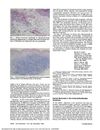
November 1990 in “Archives of Dermatology” This case report details a woman with eosinophilia-myalgia syndrome associated with L-tryptophan ingestion, highlighting skin lesions with abundant dermal mucin.
14 citations
,
June 2016 in “Biomaterials” This study observed that MAA beads improved vascularization in non-diabetic male mice by modulating the Shh signaling pathway in wound granulation tissue, but showed no such effects in females.

This study found that minoxidil nanoliposomes led to faster hair growth and reduced scalp bacteria in mice compared to free minoxidil.
 6 citations
,
July 2005 in “Farmaco”
6 citations
,
July 2005 in “Farmaco” This study developed a micellar electrokinetic capillary chromatography method for determining minoxidil in Rogaine and generic products, offering a simple and efficient alternative to HPLC.
 November 2022 in “CARDIOMETRY”
 This article discusses the potential benefits of GcMAF and oral MAF, developed by "Saisei Mirai", for cancer and other conditions, but reports no new clinical results.
 33 citations
,
January 2009 in “Contraception”
33 citations
,
January 2009 in “Contraception” This review summarizes the use of chlormadinone acetate for hormone replacement therapy and contraception, highlighting its anti-androgenic effects, contraceptive efficacy, and clinical tolerability, without offering new clinical results.
 3 citations
,
January 2009 in “Eclética Química”
3 citations
,
January 2009 in “Eclética Química” This study proposed a simple, rapid permanganometric method for determining minoxidil concentrations in pharmaceutical samples, offering comparable accuracy to chromatographic methods with recovery rates of 94.5 to 95.2%.
25 citations
,
August 2015 in “Molecules” This study found that mimosine dipeptide enantiomers inhibit melanogenesis and cyclooxygenase enzymes in B16F10 melanoma cells, suggesting potential for treating skin hyperpigmentation and inflammation.
July 2025 in “Colloids and Surfaces B Biointerfaces” This study found that the new delivery system HL@Mi enhanced the skin penetration, local bioavailability, and safety of minoxidil, supporting improved hair growth in an androgenetic alopecia animal model.
6 citations
,
March 2022 in “Molecules” This study found that methyl jasmonate can induce tanshinone biosynthesis in S. miltiorrhiza by affecting the expression of the SmMEC gene, as supported by RT-PCR and transcriptomic data.
 1 citations
,
March 2004 in “Journal of the American Academy of Dermatology”
1 citations
,
March 2004 in “Journal of the American Academy of Dermatology” This study reports a strong association between the MICA locus, specifically the MICA∗3-DR∗6-DQ6 haplotype, and Alopecia Areata in families.
3 citations
,
May 2025 in “Lasers in Surgery and Medicine” This study suggested that MRF may support skin regeneration and rejuvenation by promoting collagen synthesis and regulating factors involved in fibroblast activation and ECM remodeling, with preliminary findings indicating ADSCs might aid these processes.
 March 2024 in “Frontiers in endocrinology”
 This study reports the first case of mandibuloacral dysplasia syndrome associated with MTX2 gene mutation in the Chinese population, expanding the known spectrum of MTX2 mutations.

This study found that finite element analysis-guided design improved bubble microneedles' controlled tip separation and insertion strength, supporting effective transdermal and sublingual drug delivery.
 27 citations
,
March 2022 in “Forensic Toxicology”
27 citations
,
March 2022 in “Forensic Toxicology” This review discusses micro-segmental hair analysis for forensic toxicology, emphasizing its potential to provide detailed drug distribution profiles and its application in investigations, while noting the method's limitations and future perspectives.
 1 citations
,
March 2015 in “Oriental Journal of Chemistry/Oriental journal of chemistry”
1 citations
,
March 2015 in “Oriental Journal of Chemistry/Oriental journal of chemistry” This study developed and validated a precise RP-HPLC method for simultaneously estimating minoxidil and aminexil in pharmaceutical formulations with good accuracy and specificity.
1 citations
,
April 2022 in “Crystal Growth & Design” 10 citations
,
November 2009 in “Pigment cell & melanoma research” This study by Pérez-Oliva et al. explored how Mahogunin Ring Finger-1 (MGRN1) affects melanocortin-1 receptor (MC1R) signaling, suggesting that MGRN1 competitively inhibits Gαs binding to MC1R, influencing pigment production.
2 citations
,
January 2024 in “Revista Paulista de Pediatria” In this case report, researchers described a 6-year-old girl with severe mandibuloacral dysplasia type A, noting unique physical deformities and a rare homozygous LMNA gene mutation not commonly associated with the condition.
September 2017 in “Journal of Investigative Dermatology” QMSI effectively maps and quantifies drug distribution in skin tissues.

This review discusses male androgenetic alopecia treatments, noting that topical minoxidil and oral finasteride are FDA-approved and require continuous use to maintain hair retention effects, but reports no new clinical results.
48 citations
,
June 2000 in “Japanese Journal of Cancer Research” This study found that dimethylarsinic acid significantly accelerates skin tumor development in hair follicle-targeted K6/ODC transgenic mice.
 9 citations
,
March 2024 in “Journal of Biomaterials Applications”
9 citations
,
March 2024 in “Journal of Biomaterials Applications” This study developed dissolving microneedles using specific polymers for transdermal delivery of rizatriptan benzoate, demonstrating improved drug skin penetration and significant alleviation of migraine symptoms in vivo compared to passive diffusion, suggesting potential advantages over conventional treatment methods for acute migraine.
 2 citations
,
April 2008 in “Journal of Dispersion Science and Technology”
2 citations
,
April 2008 in “Journal of Dispersion Science and Technology” This study observed that including cationic minoxidil particles in a shampoo facilitated notable hair growth promotion despite a negative surface charge after rinsing, likely due to ionic interactions with the skin.
19 citations
,
February 2001 in “Journal of paediatrics and child health” This report documents a 14-year-old Chinese boy with mitochondrial encephalopathy, lactic acidosis, stroke-like episodes, and a de novo A3243G mitochondrial DNA mutation, highlighting the condition's multisystem involvement without ragged red fibers in muscle biopsy.