
Lupus is a complex disease that requires personalized treatment because it varies greatly between individuals.
 January 2008 in “Springer eBooks”
 Thyroid disease can cause hair loss and treating thyroid problems might help with hair disorders.
 54 citations
,
June 2003 in “The journal of investigative dermatology. Symposium proceedings/The Journal of investigative dermatology symposium proceedings”
54 citations
,
June 2003 in “The journal of investigative dermatology. Symposium proceedings/The Journal of investigative dermatology symposium proceedings” This speculative review discusses hair cycle-dependent fibroblast dynamics and possible impacts on human hair growth, synthesizing current literature without presenting new clinical findings.
 19 citations
,
January 2013 in “International journal of medical sciences”
19 citations
,
January 2013 in “International journal of medical sciences” In this study, overexpression of Wnt5a in mice was associated with the elongation of the telogen stage and inhibition of hair growth initiation, suggesting Wnt5a's role in maintaining hair follicle quiescence.

This research focused on formulating finasteride, dutasteride, and minoxidil with cyclodextrins to enhance their solubility and skin penetration for topical use, potentially reducing scalp irritation from current alcohol-based preparations.
 4 citations
,
January 2011 in “Analytical Letters”
4 citations
,
January 2011 in “Analytical Letters” This study demonstrated that a flow injection method using potassium permanganate for detecting minoxidil provided accurate recoveries and agreed closely with HPLC results, showing potential for effective analysis of commercial samples.
 October 2025 in “Journal of Molecular Structure”
 Hyaluronic acid microneedles help deliver minoxidil derivatives effectively for hair regrowth.
 13 citations
,
February 2020 in “Journal of the American Academy of Dermatology”
13 citations
,
February 2020 in “Journal of the American Academy of Dermatology” This study found that both oral tranexamic acid and microneedling improve melasma treatment outcomes when added to standard therapy, with microneedling showing a more sustained remission.
 December 2024 in “Biological and Pharmaceutical Bulletin”
 In this study, researchers found that minoxidil nanocrystals delivered using MG-MXD@NP, containing methylcellulose and gum arabic, significantly improved hair growth in mice compared to a standard minoxidil lotion, with enhanced delivery to skin tissues and increased markers of hair follicle stem cell activity.
 10 citations
,
September 1997 in “Molecular carcinogenesis”
10 citations
,
September 1997 in “Molecular carcinogenesis” This study found that mirex and TPA promote papilloma formation in CD-1 mouse skin through distinct populations of mutant Ha-ras cells, resulting in additive tumor yields.
3 citations
,
December 2024 in “Iraqi Journal of Pharmaceutical Sciences ( P-ISSN 1683 - 3597 E-ISSN 2521 - 3512)” This study reported that meloxicam-loaded spanlastics, created using the ethanol injection method, demonstrated potential as a drug delivery system with sustained release and effective entrapment efficiency.
 January 2025 in “Biomedical Engineering Letters”
 This study reported that a new polymeric formulation for topical minoxidil delivery in an animal model improved hair growth and hair follicle formation more effectively than minoxidil in PBS, suggesting potential as a future hair loss treatment.
 12 citations
,
February 2010 in “Tetrahedron Letters”
12 citations
,
February 2010 in “Tetrahedron Letters” This article describes the synthesis of novel polyamine-modified minoxidil analogs and conjugates to potentially enhance minoxidil's biological activity, selectivity, and water solubility, but reports no new biological results.
 6 citations
,
January 2016 in “Bioorganic & Medicinal Chemistry Letters”
6 citations
,
January 2016 in “Bioorganic & Medicinal Chemistry Letters” This study reported that certain minoxidil conjugates, specifically those with spermine, methylenedianiline, and diaminofluorene, were able to induce differentiation in HL-60 acute myeloid leukemia cells without toxicity at a concentration of 10 μM.
August 2024 in “International Journal of Cosmetic Science” This study found that acetyl zingerone methyl ether (MAZ) in hair dyes and haircare products may reduce oxidative damage, improve hair condition, and enhance the longevity and quality of dyed hair color.
23 citations
,
March 2021 in “Gels” This study found that minoxidil solubilized in gelatin-containing microemulsions resulted in over 5% of the drug remaining in porcine skin, significantly more than the reference gel.
2 citations
,
August 2004 This study found that early diagnosis using gas chromatography/mass spectrometry and appropriate long-term treatment are crucial for improving outcomes in patients with methylmalonic acidemia.
44 citations
,
January 2021 in “Research” This study explored the use of manganese-doped calcium silicate nanowire-incorporated alginate hydrogels (MCSA hydrogels) for treating melanoma and promoting wound healing, finding that these hydrogels effectively ablate melanoma under near-infrared irradiation and enhance vascular endothelial cell activity for tissue regeneration.
1 citations
,
December 2007 in “Journal of Microbiology and Biotechnology” This study found that Minoxidil included in triamino alpha-cyclodextrin significantly promoted hair growth in mice, potentially due to its enhanced substantivity on skin.
 2 citations
,
January 2009 in “Journal of Drug Delivery Science and Technology”
2 citations
,
January 2009 in “Journal of Drug Delivery Science and Technology” This study found that cationic vesicles enhanced minoxidil skin retention and in vivo hair growth efficacy compared to other formulation types due to electrostatic interactions with the skin.
 April 2016 in “Journal of Investigative Dermatology”
 This study identified mefloquine as a potent inducer of lethal ER stress that effectively eliminated vemurafenib-resistant and sensitive melanoma cells, suggesting its potential for repurposing as a melanoma treatment.
3 citations
,
May 1994 in “Journal of Pharmacology and Experimental Therapeutics” This study found that minoxidil sulfate stimulates Cl channels, potentially depolarization-activated and outwardly rectifying, in eccrine clear cells, while minoxidil itself stimulates Ca-insensitive K currents.
 5 citations
,
January 2018 in “Skin appendage disorders”
5 citations
,
January 2018 in “Skin appendage disorders” Minoxidil base is preferred for hair loss treatment, but minoxidil sulfate may be an alternative for unresponsive patients.
 48 citations
,
June 1988 in “PubMed”
48 citations
,
June 1988 in “PubMed” In this study, minoxidil sulfate was found to relax norepinephrine-induced contractions in rabbit mesenteric arteries, possibly by acting as a K+ channel agonist, but it did not relax K+-induced contractions.
 April 2015 in “Journal of Nutritional Therapeutics”
 This study found that a more liberal intake of restricted amino acids in patients with methylmalonic acidemia resulted in improved growth and fewer illness episodes.
November 2024 in “Tạp chí Y học Cộng đồng” In this study, oral and topical tranexamic acid significantly improved melasma symptoms in 28 female patients, with all showing over 25% improvement and 50% achieving good improvement, while 92.86% experienced no side effects, suggesting it is an effective and safe treatment.
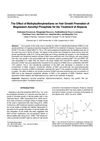 6 citations
,
July 2009 in “Biomolecules & therapeutics”
6 citations
,
July 2009 in “Biomolecules & therapeutics” This study found that combining MSM with MAP significantly enhanced hair growth in mice, comparable to or better than minoxidil, due to increased intradermal retention of MAP.
9 citations
,
December 2023 in “Materials Today Bio” This study found that modified microcrystalline cellulose with citric and ascorbic acid demonstrated enhanced hemostatic properties and biocompatibility in vitro and in animal hemorrhage models.
 January 2024 in “Frontiers in Bioengineering and Biotechnology”
 In this mouse study, researchers found that nanoparticles loaded with umbilical cord-derived stem cell membranes and minoxidil enhanced hair growth by improving drug solubility and transdermal delivery, increasing VEGF, IGF-1, MKI67, and CTNNB protein levels in skin tissue compared to regular minoxidil.
 February 2024 in “Journal of Molecular Structure”
 In this study, researchers developed a supramolecular hydrogel combining minoxidil and salicylic acid, finding that it accelerates hair growth and enhances hair follicle regeneration in vivo, suggesting its potential as an effective treatment for alopecia.