 20 citations
,
May 2013 in “International Journal of Molecular Medicine”
20 citations
,
May 2013 in “International Journal of Molecular Medicine” This study identified a novel missense MAFB variant in a family with some unaffected members, suggesting incomplete penetrance and the potential influence of modifier genes, epigenetic mechanisms, or environmental factors on MCTO phenotype.
December 2025 in “Medical dosimetry”  1 citations
,
July 2023 in “Cytotherapy”
1 citations
,
July 2023 in “Cytotherapy” In this study, MSC-derived magnetic nanovesicles combined with a magnetic field increased skin retention and accelerated hair follicle growth in a mouse model of hair regeneration.
 January 1994 in “Nippon Ronen Igakkai Zasshi Japanese Journal of Geriatrics”
 In this study, both VEPA and ML-Y1 treatment regimens for older patients with non-Hodgkin's lymphoma showed similar response and survival rates, but neither was sufficient, indicating the need for a more effective approach.
 February 2022 in “JID Innovations”
 This pilot study found that the Virtual Magic Wand program successfully educated dermatologists in problem-driven innovation, enhancing their ability to engage in innovative dermatologic practices.
 3 citations
,
October 2010 in “Dermatologic Surgery”
3 citations
,
October 2010 in “Dermatologic Surgery” The new surgical technique for vitiligo is effective, safe, and cost-efficient.
 13 citations
,
February 2020 in “Journal of the American Academy of Dermatology”
13 citations
,
February 2020 in “Journal of the American Academy of Dermatology” This study found that both oral tranexamic acid and microneedling improve melasma treatment outcomes when added to standard therapy, with microneedling showing a more sustained remission.
23 citations
,
February 2025 in “Advanced Materials” This study found that a new autonomous, moisture-driven flexible electrogenerative dressing significantly accelerated chronic wound healing in a diabetic mouse model compared to the control group.
5 citations
,
January 2016 in “Open Journal of Regenerative Medicine” This article describes the potential applications of myoblast implantation for muscle regeneration and its promising social and economic value but reports no new clinical results.
2 citations
,
November 2024 in “Aesthetic Surgery Journal” This study found that vibration anesthesia significantly reduced pain during botulinum toxin injections for masseter reduction without affecting the injection's diffusion or causing adverse effects, and high patient satisfaction was also reported.
17 citations
,
July 2024 in “Frontiers in Oncology” This review discusses recent advances in understanding Merkel cell carcinoma biology, including the development of genetically-engineered mouse models and potential therapeutic targets, but reports no new clinical results.
June 2026 in “British Journal of Dermatology” This study reported that dermatological adverse events are common in patients treated with amivantamab for non-small cell lung cancer, often impacting quality of life and requiring treatment modifications.
2 citations
,
August 2004 This study found that early diagnosis using gas chromatography/mass spectrometry and appropriate long-term treatment are crucial for improving outcomes in patients with methylmalonic acidemia.
3 citations
,
November 2024 in “Electrochimica Acta” A new, quick method accurately detects minoxidil in drugs and cosmetics.
 20 citations
,
December 2011 in “Journal of inherited metabolic disease”
20 citations
,
December 2011 in “Journal of inherited metabolic disease” This study found that valproic acid may interfere with the leucine metabolic pathway by inhibiting 3-methylcrotonyl-CoA carboxylase and biotinidase, which could contribute to side effects like skin rash and hair loss in patients.
 January 2023 in “Burns & Trauma”
 This study introduced a volar skin excisional wound model that closely mirrors human wound healing and supports evaluation of skin regeneration with multiple appendages and innervation.
 133 citations
,
May 2016 in “Cell Host & Microbe”
133 citations
,
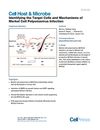
May 2016 in “Cell Host & Microbe” In this study, human dermal fibroblasts were identified as natural host cells that support productive Merkel cell polyomavirus infection, and the MEK antagonist trametinib was introduced as an effective inhibitor to control the virus.
January 2025 in “Repository of Digital Objects for Teaching Research and Culture (University of Valencia)” This research highlights the potential of non-coding RNAs as biomarkers and therapeutic targets in dermatology, while experimental studies on a unique GVM case suggest CCM2L may modulate disease severity, advancing understanding of genetic mechanisms in rare skin disorders.
January 2026 in “Contemporary Clinical Dentistry” This case report describes a rare instance of Vogt-Koyanagi-Harada disease in a 21-year-old Asian woman, highlighting unusual oral manifestations such as tooth discoloration and misalignment, which expand the known clinical spectrum of the disorder.
19 citations
,
September 2022 in “Frontiers in Plant Science” This study found that the AabHLH112 transcription factor positively regulates the biosynthesis of β-caryophyllene, epi-cedrol, and β-farnesene in Artemisia annua.
January 2010 in “Journal of Animal Science” This study demonstrated that transcutaneous vaccination via cyanoacrylate skin surface stripping effectively induced both CD4 and CD8 T cell responses in humans, offering a promising alternative to intramuscular injection.
July 2025 in “Skin Appendage Disorders” In this study, researchers found that microinfusion of dutasteride using the MMP® technique did not show a statistical difference compared to placebo in clinical assessments for male androgenetic alopecia, though patients reported improvements in the vertex area.
 3 citations
,
October 2022 in “Clinical, Cosmetic and Investigational Dermatology”
3 citations
,
October 2022 in “Clinical, Cosmetic and Investigational Dermatology” This study found that repetitive 532 nm laser therapy significantly decreased scores for macules, pigmented, and vascular lesions on the facial area, regardless of skin phototype or age.
9 citations
,
December 2023 in “Materials Today Bio” This study found that modified microcrystalline cellulose with citric and ascorbic acid demonstrated enhanced hemostatic properties and biocompatibility in vitro and in animal hemorrhage models.
 26 citations
,
June 2020 in “Polymers”
26 citations
,
June 2020 in “Polymers” This study reported that a magneto-responsive transdermal microneedle system delivered Minoxidil effectively and significantly increased hair density by 800% in mice with androgenetic alopecia after 10 days.
This article reviews approved treatments for androgenetic alopecia and reports no new research findings, highlighting the need for further studies.
June 2026 in “Materials Today Communications” This study reported that a newly designed multifunctional conductive hydrogel, PrM, combined with electrical stimulation significantly accelerated wound healing, achieving 95.9% healing in a mouse model on day 10, by enhancing regenerative processes and downregulating TNF-α signaling under electrical treatment.
 25 citations
,
March 2008 in “Surgical Neurology”
25 citations
,
March 2008 in “Surgical Neurology” This case study describes successful treatment of a left temporal scalp arteriovenous malformation through a multidisciplinary approach combining endovascular embolization and surgical excision, resulting in high patient satisfaction.
 November 2024 in “Journal of Cosmetic Dermatology”
 This study found that valproic acid-loaded microemulsion formulations enhanced skin penetration pathways in guinea pigs compared to an aqueous solution, with composition elements like oil content and surfactant ratios significantly affecting drug delivery performance.
 March 2025 in “Stem Cell Research & Therapy”
 This study found that microneedles containing magnetic intracellular vesicles and tremella polysaccharide improved the hair microenvironment and accelerated hair regeneration in mice with androgenic alopecia.