 145 citations
,
May 2008 in “Cancer Science”
145 citations
,
May 2008 in “Cancer Science” This review discusses how increased gene copy number for telomerase components may contribute to telomerase up-regulation in cancer cells, although the exact mechanisms are not fully understood.
7 citations
,
December 2006 In this study, oral Tribulus terrestris extract significantly increased MSH expression in mouse hair follicle melanocytes, suggesting enhanced melanocyte activity and migration.
This observational study reviewed thyroid eye disease patients treated with teprotumumab at one center, reporting common side effects like fatigue and dry eye symptoms, with serious adverse events including two cases of blood clots and one pulmonary embolism.
September 2023 in “Journal of the American Academy of Dermatology” Increased Treg cells and IL-10 may help quick recovery in acute diffuse and total alopecia.
 February 2013 in “Journal of The American Academy of Dermatology”
 Most children with skin inflammation taking methotrexate had lab abnormalities, but liver issues often improved without changing the medication dose.
2 citations
,
July 2022 in “bioRxiv (Cold Spring Harbor Laboratory)” This study found that oral administration of Thauera sp. strain GDN1 reduced serum androgen levels in male mice by about 50%, suggesting its potential as a probiotic treatment for hyperandrogenism.
 6 citations
,
July 2015 in “European Journal of Dermatology”
6 citations
,
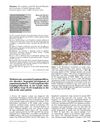
July 2015 in “European Journal of Dermatology” Stopping methotrexate might reverse lymphoma-like conditions in some patients.
2 citations
,
September 2022 in “Annals of Oncology” This study observed that MIRV improved gastrointestinal symptoms and other quality of life measures in patients with platinum-resistant ovarian cancer compared to chemotherapy.
4 citations
,
January 2009 in “International journal of trichology” Minoxidil topical foam is a better, less irritating treatment for hair loss.
October 2020 in “Stem cells” This study highlights a novel connection between the DNMT3B enzyme, metabolic flux, and the self-renewal and differentiation of human embryonic stem cells.
2 citations
,
June 2024 in “Parasites & Vectors” This study provides insights into how chronic T. gondii infection might affect testicular tissue and suggests a potential impact on male fertility.
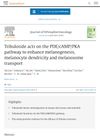 December 2023 in “Journal of ethnopharmacology”
 This study found that tribuloside, a flavonoid from Tribulus terrestris L., enhances melanin production in human melanocytes, zebrafish, and human skin samples without causing toxicity, potentially through inhibiting PDE to increase cAMP levels and promote the melanin biosynthesis pathway.
 June 2016 in “Annals of the rheumatic diseases”
 This study found that methotrexate, when administered according to current recommendations, effectively manages rheumatoid arthritis for many patients in Poland, although regular monitoring is necessary due to possible adverse effects.
 June 2024 in “Research Square (Research Square)”
 This study demonstrated that in mice, the absence of Jagged-1 expression in skin-resident regulatory T cells significantly delays wound healing by reducing the accumulation of neutrophils, highlighting the role of Jagged-1 in coordinating immune cell recruitment during injury.

This study observed that TBX3 mRNA expression levels were region-specific and correlated with pigmentation patterns in dun Mongolian horses, providing insights into the genetic mechanisms behind their distinctive Bider markings.
 January 2023 in “Al-Azhar International Medical Journal /Al-Azhar International Medical Journal”
 This study found that mTOR gene expression was significantly higher in individuals with acne vulgaris compared to healthy controls, suggesting its potential as a biomarker for acne prognosis and treatment response.
33 citations
,
January 2015 in “Journal of Ginseng Research” This study found that ginsenoside Rg3 significantly inhibited melanogenesis in human melanocytes and B16F10 cells by activating the ERK pathway, suggesting potential as a skin-whitening agent.
 January 2026 in “Clinical Chemistry and Laboratory Medicine (CCLM)”
 This study reported high analytical performance of an RMP for DHT quantification, with the ability to differentiate between 5α-DHT and 5β-DHT isomers, making it suitable for routine assay standardization and clinical sample evaluation.
This study found that among Indian rheumatoid arthritis patients, the MTHFR A1298C polymorphism was associated with varying responses to methotrexate, with 1298CC genotypes showing higher toxicity and poorer efficacy compared to 1298AA genotypes.
 December 2025 in “Nature Communications”
 This study demonstrated that skin organoids derived from human stem cells can model cutaneous tuberculosis, revealing that fibrosis development in Mycobacterium tuberculosis-infected organoids is linked to the PI3K-AKT and AP1 pathways in fibroblasts, and suggesting the potential for antifibrotic treatment evaluation.
14 citations
,
April 2015 in “Stem Cell Research & Therapy” This study found that dermal stem cells from granulation tissue promoted wound healing and reduced fibrosis in a combined radiation and skin wound mouse model.
January 2026 in “Animals” This study researched the dun coat color in Mongolian horses, finding that variations in TBX3 expression in different skin areas are linked to Bider markings, suggesting TBX3's role in this specific pigment pattern, while further investigation is needed on its regulation.
143 citations
,
May 2002 in “PubMed” This study found that the retinoid LGD1069 suppressed mammary tumorigenesis in a mouse model without observable toxicity, while TTNPB showed modest effects but was associated with significant toxicity.
10 citations
,
March 2022 in “Frontiers in Oncology” This study found that the overexpression of the lncRNA HOTTIP in glioma cells increased resistance to the chemotherapy drug temozolomide, suggesting a key role for miR-10b and EMT processes in this resistance.
 12 citations
,
June 2017 in “Cell Cycle”
12 citations
,
June 2017 in “Cell Cycle” This study observed that 5% minoxidil topical foam alters gene expression and signaling pathways in the scalp, providing insights into its mechanism of action in men with androgenetic alopecia.

This study identified the TALE homeodomain transcription factor Meis2 as a crucial regulator for the maturation and end-organ innervation of certain mechanoreceptors in mice, with its absence leading to altered sensory neuron structure and impaired touch sensitivity.
6 citations
,
July 1994 in “Journal of Dermatological Science” This study found that introducing the recombinant rat OTC gene into SPF-ASH mice restored normal hair growth and metabolic function, improving symptoms associated with OTC deficiency.
 1 citations
,
September 2025 in “Frontiers in Immunology”
1 citations
,
September 2025 in “Frontiers in Immunology” In this study, researchers using a Treg-specific HuR-deficient mouse model found that the RNA-binding protein HuR is crucial for stabilizing Foxp3 mRNA, affecting Treg function and immune regulation, with HuR disruption leading to impaired Foxp3 expression and potential autoimmune dysfunction.
This study found that TLR2 in hair follicle stem cells is crucial for maintaining hair health and regeneration, and its decrease in aging and obesity may impair hair growth, suggesting that stimulation through its ligand carboxyethylpyrrole could offer new therapeutic avenues.
November 2025 in “International Journal of Innovative Research and Scientific Studies” This study found that Regenera ActivaAMT significantly improved hair growth and patient satisfaction in both men and women with Androgenetic Alopecia, suggesting it may be an effective alternative to hair transplants.