 June 2026 in “International Journal of Molecular Sciences”
 This review synthesizes current evidence on the Warburg effect in anaplastic thyroid carcinoma and discusses potential therapeutic targets, but reports no new clinical results.
 November 2022 in “The Caucasus”
 This article reviews the historical development and challenges of highway construction worldwide, highlighting key milestones from Italy's 1924 autobahn to China's leading pace in the 21st century, and reports no new results.
 June 2026 in “Jurnal Pendidikan Tambusai”
 This study observed that 61.3% of helmets from online motorcycle taxi passengers in the Stasiun Tugu Yogyakarta area were contaminated with dermatophyte fungi, with higher contamination risk in helmets used over five years or infrequently cleaned.
 12 citations
,
May 2023 in “EMBO reports”
12 citations
,
May 2023 in “EMBO reports” In this study with organ-cultured human scalp hair follicles, high mTORC1 activity correlated with gray/white hair and reduced pigmentation, while inhibiting mTORC1 with rapamycin increased hair growth and pigmentation, suggesting mTORC1 inhibition could be a strategy for treating hair depigmentation and loss.
69 citations
,
August 2006 in “Behavior Therapy” This study found that group behavior therapy for trichotillomania led to greater short-term symptom improvement compared to supportive therapy, but did not achieve clinically significant changes or prevent relapse over six months.
November 2025 in “The Journal of Dermatology” This study demonstrated that a mouse model of telogen effluvium induced by lipopolysaccharide was effective for evaluating the therapeutic effects of topical minoxidil, which accelerated hair regrowth in treated mice.
 19 citations
,
October 2009 in “Bioorganic & Medicinal Chemistry Letters”
19 citations
,
October 2009 in “Bioorganic & Medicinal Chemistry Letters” This study found that a thyroid hormone receptor ẞ subtype-selective thyromimetic was effective in promoting hair growth in mouse and monkey models when applied topically.
9 citations
,
January 2021 in “Mediators of Inflammation” In this study, 15d-PGJ2 administered in a topical cream inhibited oxidative and inflammatory skin changes caused by UVB radiation in hairless mice, suggesting it as a promising treatment approach.
1 citations
,
April 2007 in “PubMed” Tacrolimus helps mice grow hair by activating hair follicles.
 11 citations
,
April 2009 in “Pharmacotherapy”
11 citations
,
April 2009 in “Pharmacotherapy” Minoxidil can cause deadly skin reaction; monitor patients closely.
June 2025 in “Journal of Cosmetic Dermatology” This case study reports that reducing scalp massage following minoxidil application and using mesenchymal stem cell exosomes led to significant improvement in hair condition for a patient with trichorrhexis nodosa.
 January 2025 in “Ege Tıp Bilimleri Dergisi”
 This research focused on understanding how radiotherapy affects mitochondrial function and signaling pathways in metastatic breast cancer cells, aiming to clarify its roles in cell survival, apoptosis, and metastatic progression, but the results are not reported in the abstract.
 April 2026 in “Dermatology Practical & Conceptual”
 This study suggests that autologous micrograft technology may be more effective than finasteride in promoting hair growth in patients with androgenetic alopecia.
 2 citations
,
June 2020 in “Research Square (Research Square)”
2 citations
,
June 2020 in “Research Square (Research Square)” This study demonstrated that the antiandrogen drug enzalutamide may reduce TMPRSS2 levels in human lung cells and mouse lungs, supporting its potential as a COVID-19 treatment option.
66 citations
,
March 2016 in “Nucleic Acids Research” This study found that Musashi-2 regulates mRNA targets to restrict epithelial cell migration, revealing a key function of Msi2 beyond its known role in promoting cell growth.
 July 2026 in “International Journal of Molecular Sciences”
 This study found that TSG-enriched Polygonum multiflorum extract, optimized through microwave-assisted and chromatographic methods, promotes hair regrowth in a mouse model of androgenetic alopecia via 5α-reductase inhibition and Wnt/β-catenin pathway activation, suggesting its potential as a natural treatment.
8 citations
,
January 2005 in “SKINmed Dermatology for the Clinician” This case report details three patients with follicular mycosis fungoides, highlighting an impressive response to bexarotene in advanced cases, suggesting potential for further research on this treatment's effectiveness.
3 citations
,
April 2025 in “International Journal of Molecular Sciences” This review evaluates the anti-aging properties of TSG from He shou wu, finding it may protect against age-related diseases through multiple mechanisms, though further research is needed for clinical application.
1 citations
,
December 2007 in “Journal of Microbiology and Biotechnology” This study found that Minoxidil included in triamino alpha-cyclodextrin significantly promoted hair growth in mice, potentially due to its enhanced substantivity on skin.
 133 citations
,
May 2016 in “Cell Host & Microbe”
133 citations
,
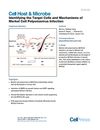
May 2016 in “Cell Host & Microbe” In this study, human dermal fibroblasts were identified as natural host cells that support productive Merkel cell polyomavirus infection, and the MEK antagonist trametinib was introduced as an effective inhibitor to control the virus.
 77 citations
,
January 1980 in “Carcinogenesis”
77 citations
,
January 1980 in “Carcinogenesis” This study found that TPA was significantly more effective than mezerein in inducing dark basal keratinocytes in mouse skin, which may be important in early tumor promotion stages.
This study observed that 2% minoxidil solution stopped hair loss and promoted new hair growth in 85% of female pattern androgenetic alopecia patients, while 2% progesterone solution achieved similar results in 71% of patients.
 March 2019 in “Journal der Deutschen Dermatologischen Gesellschaft”
 This clinical letter identifies Rothmund-Thomson syndrome type 2 as a rare cause of chronic wounds, but provides no new experimental findings.
 March 2026 in “Zenodo (CERN European Organization for Nuclear Research)”
 This publication presents a library of geometric medicines designed to selectively target pathogenic bacteria and fungi with high precision while minimizing ecological harm, available for free on a non-commercial basis.

This study presents a two-photon imaging method to visualize low-threshold mechanoreceptor axon terminals in live mouse forepaw skin, enabling repeated high-resolution imaging to study sensory circuits during development and adulthood.
November 2024 in “Genomics” This study found that exogenous melatonin enhances the development of secondary hair follicles in Cashmere goats by promoting miRNA-mRNA interactions, specifically via the chi-let-7d-5p/WNT2 axis, which suggests a mechanism for melatonin's effects on hair growth involving microRNA regulation.
2 citations
,
May 2011 in “Journal of Clinical Oncology” This study found that paclitaxel poliglumex showed limited effectiveness and was relatively well tolerated in post-menopausal women with advanced NSCLC, suggesting further testing of this treatment may not be justified.
75 citations
,
June 2007 in “Journal of Biological Chemistry” This study found that the combination of MT-DADMe-ImmA and MTA selectively induced apoptosis in head and neck squamous cell carcinoma cell lines FaDu and Cal27, but not in normal fibroblasts or MTAP-deficient breast cancer cells.
18 citations
,
June 2018 in “Journal of Dental Research” This study found that during amelogenesis in Msx2 null mice, a dysfunctional enamel organ developed due to abnormal epithelial transformation and lacked proper enamel formation.
10 citations
,
March 2022 in “Frontiers in Oncology” This study found that the overexpression of the lncRNA HOTTIP in glioma cells increased resistance to the chemotherapy drug temozolomide, suggesting a key role for miR-10b and EMT processes in this resistance.