45 citations
,
July 2025 in “Journal of Medicinal Chemistry” This article discusses the development and clinical progress of PROTAC technology, particularly focusing on the New Drug Application for vepdegestrant, an estrogen receptor-targeting PROTAC, marking significant advancements in targeted protein degradation therapies.
8 citations
,
October 2020 in “Stem cell research & therapy” This study found that DNMT1 promotes adipogenesis in hair follicle stem cells by regulating the miR-214-3p/MAPK1/p-ERK1/2 pathway, suggesting potential applications in stem cell therapy.
50 citations
,
December 2005 in “European Journal of Immunology” This study found that a specific mutation in the mouse RXRalpha gene significantly impacts immune responses and causes hair loss and skin cysts.
109 citations
,
February 2018 in “CB/Current biology” This study concluded that the receptor-like kinase ERULUS, regulated by auxin, is crucial for modulating cell wall composition and pectin dynamics during root hair growth in Arabidopsis.
 4 citations
,
October 2024 in “Aesthetic Plastic Surgery”
4 citations
,
October 2024 in “Aesthetic Plastic Surgery” In this study, combining microneedle and sublative fractional radiofrequency treatments significantly improved skin tightening, texture, collagen organization, and satisfaction in individuals with moderate photoaging, while reducing abnormal elastin after three months.
 January 2017 in “NASA Technical Reports Server (NASA)”
 This study suggests that radiation-induced changes in FGF18 gene expression in the skin may predict later reductions in bone mass, as observed in irradiated mice.
 April 2024 in “Cellular signalling”
 This study on mice found that activating TRPML channels with MLSA1 promoted hair regeneration, accelerated hair cycle transition, and influenced human dermal papilla cells to secrete hair growth promoting factors while reducing hair growth inhibitors and oxidative damage.
1 citations
,
June 2013 in “Annals of the Rheumatic Diseases” This study observed that while all DMARD regimens had similar safety profiles, the leflunomide group experienced the most serious side effects leading to therapy discontinuation.
33 citations
,
May 2018 in “Stem Cell Reports” This study demonstrates that Krt15 marks long-lived, multipotent, and injury-resistant crypt cells in the small intestine, which may serve as the cell of origin in intestinal cancer.
 April 2017 in “Journal of Investigative Dermatology”
 This study demonstrated that mitochondrial function in keratinocytes is crucial for maintaining skin homeostasis and hair follicle development, as its impairment led to disrupted hair morphogenesis and early death in mice.
 32 citations
,
December 2013 in “Biological & Pharmaceutical Bulletin”
32 citations
,
December 2013 in “Biological & Pharmaceutical Bulletin” In this study, rice bran supercritical CO2 extract demonstrated potential to promote hair growth in mice, increasing hair follicles and growth factor expression, similarly to 3% minoxidil.
16 citations
,
December 2022 in “Expert Opinion on Drug Delivery” This study reviewed preclinical and clinical research and found that AFL-assisted topical drug delivery is considered safe and effective, enhancing drug efficacy, reducing treatment time and pain, and improving cosmetic and safety outcomes, but larger clinical trials are needed to confirm these benefits.
3 citations
,
December 2024 in “Journal of Animal Science” In this study, researchers identified the lncRNA MSTRG.14227.1 in cashmere goats and found it inhibits the morphogenesis of secondary hair follicles by interacting with the chi-miR-433/ADAMTS3 signaling axis, affecting cashmere yield and quality.
 35 citations
,
October 2017 in “Signal Transduction and Targeted Therapy”
35 citations
,
October 2017 in “Signal Transduction and Targeted Therapy” This study found that fibromodulin significantly reduces scar formation and boosts scar strength in rodent and porcine models, suggesting potential for FMOD-based therapies in cutaneous wound repair.
38 citations
,
October 2005 in “Expert opinion on therapeutic patents” This review discusses nonsteroidal selective androgen receptor modulators and their potential therapeutic applications but reports no new clinical findings.
9 citations
,
December 2018 in “Cutaneous and Ocular Toxicology” This meta-analysis found that combined BRAF and MEK inhibitor treatment in melanoma patients is linked to increased all-grade rash but reduced risks of several other dermatological toxicities compared to BRAF inhibition alone.
47 citations
,
April 2012 in “Analytical and Bioanalytical Chemistry” 7 citations
,
October 2019 in “Brazilian Journal of Petroleum and Gas” This study evaluated a microemulsion-based flushing fluid made with castor oil that effectively removed 84.85% of mud cake formed by drilling fluid, highlighting its Newtonian fluid behavior and high wettability inversion capability.
 January 2025 in “Ege Tıp Bilimleri Dergisi”
 This research focused on understanding how radiotherapy affects mitochondrial function and signaling pathways in metastatic breast cancer cells, aiming to clarify its roles in cell survival, apoptosis, and metastatic progression, but the results are not reported in the abstract.
 55 citations
,
June 2013 in “Dermatologic Surgery”
55 citations
,
June 2013 in “Dermatologic Surgery” This review discusses the use of ablative and nonablative fractional resurfacing for enhanced topical drug delivery in dermatology and reports no new clinical results; further studies are needed to explore these methods.
21 citations
,
March 2015 in “Neurological Sciences” This study reports that a novel frameshift mutation in the HTRA1 gene in a CARASIL pedigree led to reduced HTRA1 protein and increased TGF-β1 expression, potentially causing severe CARASIL and peripheral small arterial disease.
 16 citations
,
April 2014 in “Expert Opinion on Pharmacotherapy”
16 citations
,
April 2014 in “Expert Opinion on Pharmacotherapy” This review discusses the pharmacological profile of teriflunomide for treating relapsing multiple sclerosis, highlighting its safety and effectiveness in reducing relapses and slowing disability progression, though direct comparisons with other oral medications are lacking.
 1 citations
,
March 2023 in “PloS one”
1 citations
,
March 2023 in “PloS one” In this study, researchers identified key mRNA and microRNA regulatory mechanisms that influence cashmere growth in cashmere goats under different photoperiods, potentially offering new methods to enhance cashmere production.
 1 citations
,
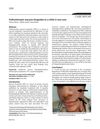
October 2023 in “Journal of the Pakistan Medical Association”
1 citations
,
October 2023 in “Journal of the Pakistan Medical Association” This source describes a case of a 12-year-old male diagnosed with folliculotropic mycosis fungoides, presenting with an asymptomatic, erythematous plaque. Histology and immunohistochemistry confirmed FMF, which is typically rare in children and marked by follicular infiltration by CD4+ lymphocytes.
15 citations
,
July 2000 in “The journal of investigative dermatology/Journal of investigative dermatology” This study found that fluorescence excitation spectroscopy could be a promising noninvasive tool for assessing the effects of comedolytic agents like retinoids on acne-like lesions in rhino mice.
December 2022 in “Biochemical and Biophysical Research Communications” This study found that HtrA2 inactivation in mnd2 mice is associated with delayed hair cycle phases and growth retardation of adipocytes, suggesting HtrA2's role in regulating adipogenesis-related hair growth.
 January 2024 in “Wiadomości Lekarskie”
 This study reported the development of fluorescent markers using wide band gap metal oxides with rare earth ions for early tumor detection and treatment. Testing in animals showed high efficiency and selectivity, with potential applications in contrast-enhanced MRI, targeted drug delivery, and photodynamic cancer therapy.
 January 2023 in “Al-Azhar International Medical Journal /Al-Azhar International Medical Journal”
 This study found that mTOR gene expression was significantly higher in individuals with acne vulgaris compared to healthy controls, suggesting its potential as a biomarker for acne prognosis and treatment response.
1 citations
,
July 2015 in “Microscopy Research and Technique” In this study, researchers found that patients with Friedreich's ataxia exhibited more pronounced ultra-structural hair alterations compared to carriers, likely due to oxidative stress related to deficient frataxin expression.
15 citations
,
April 1997 in “Muscle & Nerve”