April 2015 in “The FASEB Journal” In this study, NM exposure in mouse skin disrupted pilosebaceous units, initially decreasing markers of sebum production and cellular division, but showed signs of healing and marker recovery by day five.
December 2025 in “International Journal of Pharmaceutics” PLGA-based microneedles show promise for painless, long-term drug delivery but need design and safety improvements.
 15 citations
,
December 2016 in “Advanced Pharmaceutical Bulletin”
15 citations
,
December 2016 in “Advanced Pharmaceutical Bulletin” This study found that N-acetyl-glucosamine-loaded nanostructured lipid carriers showed promise for skin lightening in healthy volunteers by reducing melanin distribution.
 48 citations
,
December 2013 in “Drug Delivery and Translational Research”
48 citations
,
December 2013 in “Drug Delivery and Translational Research” This study found that minoxidil-loaded niosomes with a Span 60 and cholesterol ratio of 1:2 significantly increased skin retention of minoxidil compared to control gel.
3 citations
,
January 2016 In this study, NuMA's microtubule-binding domain was found to be crucial for correct spindle orientation and skin differentiation, with its loss leading to neonatal lethality in mice.
 February 2025 in “Journal of Nanobiotechnology”
 This study developed a microneedle system using black phosphorus nanosheets and baicalin for treating androgenetic alopecia, finding it effectively enhanced drug penetration and follicular targeting while showing synergistic efficacy and safety in preclinical tests, including in vivo model efficacy against testosterone-induced hair loss.
 January 2023 in “Nanomedicine & nanotechnology open access”
 This review suggests that microneedling shows promise for improving hair quality, thickness, and density in treating androgenetic alopecia, but standardized treatment protocols are currently lacking.
4 citations
,
November 2024 in “Journal of Advanced Research” In this study, the researchers reported that NMMHC IIA dissociates from PAR1 and activates the CREB3/ARF4 pathway, worsening thrombin-induced blood-brain barrier damage, suggesting it as a potential therapeutic target for blood-brain barrier-related diseases.

This study found that a machine-learning-driven strategy helped develop microneedles with high hardness and rapid dissolution, effectively promoting hair regrowth in androgenetic alopecia mice by activating the Wnt/β-catenin pathway, surpassing minoxidil's effects without biosafety risks.
44 citations
,
January 2021 in “Research” This study explored the use of manganese-doped calcium silicate nanowire-incorporated alginate hydrogels (MCSA hydrogels) for treating melanoma and promoting wound healing, finding that these hydrogels effectively ablate melanoma under near-infrared irradiation and enhance vascular endothelial cell activity for tissue regeneration.
 April 2015 in “Journal of Nutritional Therapeutics”
 This study found that a more liberal intake of restricted amino acids in patients with methylmalonic acidemia resulted in improved growth and fewer illness episodes.
1 citations
,
July 2025 in “Advanced Science” This study developed multifunctional microneedle patches with CTB nanozymes that successfully eradicated MRSA infections in wounds by combining near-infrared laser-induced nitric oxide release and local hyperthermia, while also regulating oxidative stress, inflammation, and angiogenesis through specific signaling pathways.
 January 2025 in “Journal of Materials Chemistry B”
 This abstract discusses androgenetic alopecia treatments like oral finasteride and topical minoxidil, reporting limited treatment efficacy and no new findings, and emphasizes the psychological impact on patients.
January 2026 in “New Journal of Chemistry” This study synthesized calcium citrate nanoparticles to improve the solubility and reduce the irritation of minoxidil solutions for treating androgenetic alopecia.
19 citations
,
February 2001 in “Journal of paediatrics and child health” This report documents a 14-year-old Chinese boy with mitochondrial encephalopathy, lactic acidosis, stroke-like episodes, and a de novo A3243G mitochondrial DNA mutation, highlighting the condition's multisystem involvement without ragged red fibers in muscle biopsy.
 December 2022 in “Small methods”
 This study developed dissolving microneedles incorporating a new AR degrader for treating androgenetic alopecia, showing that a single application leads to superior hair regeneration compared to daily minoxidil, without systemic toxicity or androgen-related issues.
73 citations
,
April 2017 in “Scientific Reports” In this study, nitrogen starvation in Chlorella sp. FC2 IITG led to increased lipid accumulation by altering the expression of enzymes involved in various metabolic pathways, suggesting potential for genetic engineering of microalgae.
 October 2019 in “DOAJ (DOAJ: Directory of Open Access Journals)”
 In this study, N-MXD (minoxidil nanoparticles) was shown to deliver more drug into hair bulbs and enhance IGF-1 and VEGF levels more effectively than commercial formulations, resulting in higher therapeutic efficiency for hair growth in C57BL/6 mice.
 12 citations
,
February 2010 in “Tetrahedron Letters”
12 citations
,
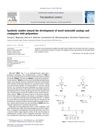
February 2010 in “Tetrahedron Letters” This article describes the synthesis of novel polyamine-modified minoxidil analogs and conjugates to potentially enhance minoxidil's biological activity, selectivity, and water solubility, but reports no new biological results.
6 citations
,
March 1991 in “Journal of Radioanalytical and Nuclear Chemistry” Manganese levels in hair may be linked to multiple sclerosis.

This study found that minoxidil nanoliposomes led to faster hair growth and reduced scalp bacteria in mice compared to free minoxidil.
 46 citations
,
July 2007 in “Journal of comparative neurology”
46 citations
,
July 2007 in “Journal of comparative neurology” This study found that Florida manatees have unique types of specialized nerve endings in their vibrissae, which assist in their sensory and manipulative functions in aquatic environments.
 27 citations
,
August 1984 in “Experimental and Molecular Pathology” 7 citations
,
August 2025 in “Journal of Nanobiotechnology”
27 citations
,
August 1984 in “Experimental and Molecular Pathology” 7 citations
,
August 2025 in “Journal of Nanobiotechnology” This review highlights the potential of microneedles and nanomedicine in advancing tissue regeneration, emphasizing their innovative, localized, and minimally invasive approaches as promising solutions to current challenges in treating chronic wounds and degenerative diseases.
18 citations
,
April 1998 in “MIT Press eBooks” This study found that topical application of N,N-dimethylglycine sodium salt increased dermal blood flow and velocity in human subjects, likely through its effects on endothelial cells and NO-dependent vasodilation.
3 citations
,
July 2023 in “Cells” This study found that topical application of recombinant human MG53 protein mitigated nitrogen mustard-induced skin injuries in mice by preserving epidermal integrity and hair follicle structure.
15 citations
,
May 2009 in “Chemical Physics Letters” This study demonstrated that a metric based on rotational echo intensity in 2H magic-angle spinning NMR can derive kinetic information for conformational exchange without complex modelling, achieving activation barriers consistent with prior findings.
30 citations
,
November 2019 in “Genetics selection evolution” This study found that in Chinese goat breeds, specific genetic variations, particularly in Tibetan Cashmere goats, are associated with traits like hair growth and adaptation to high-altitude environments.
 7 citations
,
September 2022 in “Communications biology”
7 citations
,
September 2022 in “Communications biology” This research found that Leydig cells significantly rely on synthesizing omega-6 HUFAs to support male steroid hormone production, highlighting a new role for these fatty acids in the male reproductive system.
August 2025 in “Animal nutrition” This study found that supplementing with 1.5% α-ketoglutaric acid significantly improved the performance, hair follicle density, and antioxidant capacity in Rex rabbits, potentially by enhancing the Wnt signaling pathway and reducing amino acid catabolism.