 April 2024 in “Nano research”
 This study on androgenetic alopecia in mice introduced a novel therapy combining microneedle patches and cold atmospheric plasma to enhance minoxidil delivery, leading to improved hair regeneration by boosting vascular growth and reshaping the hair follicle microenvironment.
 58 citations
,
November 2013 in “Journal of Innovative Optical Health Sciences”
58 citations
,
November 2013 in “Journal of Innovative Optical Health Sciences” This review discusses the development and application of multiphoton microscopy in dermatology, highlighting its advantages and potential future research directions without reporting new clinical results.
9 citations
,
September 2022 in “Frontiers in Physics” This study found that Mueller Matrix microscopy can accurately identify, detect, and evaluate hair follicles in mouse skin tissue, suggesting its potential for skin structure research and dermatological applications.
45 citations
,
January 2022 in “Lab on a Chip” This study demonstrates that a 3D-printed agarose microwell platform supports the growth of size-uniform, viable NSCLC cancer spheroids, and can effectively evaluate drug responses using limited tumor material from biopsies, particularly with EGFR tyrosine kinase inhibitors gefitinib and osimertinib.
This study developed a digital tool for quantitatively assessing hair in androgenetic alopecia, achieving an average accuracy of 79.45% for counting hairs and 68.19% for measuring hair size compared to human evaluation.
 1 citations
,
October 2022 in “PubMed”
1 citations
,
October 2022 in “PubMed” This abstract describes androgenetic alopecia, a common dermatological condition, and does not provide new clinical findings.
 December 2023 in “Journal of Drugs in Dermatology”
 Media coverage increased public interest in oral minoxidil for hair loss but may also spread misinformation.
 July 2023 in “Biomolecules”
 This study established a novel in vivo "whisker follicle microinjection assay" using mouse whiskers to evaluate hair growth and pigmentation effects of various chemicals and proteins, identifying minoxidil, ruxolitinib, and RSPO1 as growth promoters, while deoxyarbutin inhibited pigmentation and Nbl1 emerged as a growth inhibitor.
17 citations
,
May 2025 in “MedComm” This review highlights how organoid technology is transforming precision medicine by summarizing its development and applications in modeling diseases, testing drug efficacy, and tailoring patient-specific treatments, despite current challenges in standardization and ethical considerations.
January 2026 in “Updates in clinical dermatology” 18 citations
,
November 2003 in “Australasian Journal of Dermatology” This case study speculates on a potential link between angiosarcoma and hair follicle miniaturization-induced alopecia in an elderly woman, suggesting possible directions for new treatment research.
 23 citations
,
January 2016 in “Theranostics”
23 citations
,
January 2016 in “Theranostics” In this animal study, ultrasound combined with a new microbubble formulation of minoxidil increased hair growth rates and improved follicle characteristics more effectively than minoxidil alone.
7 citations
,
August 2025 in “Journal of Nanobiotechnology” This review highlights the potential of microneedles and nanomedicine in advancing tissue regeneration, emphasizing their innovative, localized, and minimally invasive approaches as promising solutions to current challenges in treating chronic wounds and degenerative diseases.
July 2025 in “Nano Research” This review highlights the application of microneedle technology as a promising advancement in psoriasis management, focusing on its roles in enhanced transdermal drug delivery and minimally invasive biomarker monitoring, while also discussing current challenges and future research directions.
3 citations
,
October 2006 in “Journal of dermatology” This study reported that X-ray microscopy provides more intact images of hair's internal structure compared to transmission electron microscopy, particularly for observing fine details like cuticle coarsening and cortex cracks.
2 citations
,
April 2020 in “PubMed”  July 2023 in “Journal of Education, Health and Sport”
 This literature review reports that micro-needle radiofrequency is increasingly recognized in aesthetic medicine as a safe, effective treatment for various skin conditions, but further research is needed to optimize treatment parameters for the best outcomes.
 July 2023 in “International journal of dermatology, venereology and leprosy sciences”
 This review discusses micro needling as a therapeutic option for various dermatological conditions, such as scars and pigmentation, and reports no new clinical results; the authors note potential side effects and contraindications.
9 citations
,
June 2025 in “Frontiers in Pharmacology” This review highlights recent advancements in microneedle technology, noting its ability to enhance transdermal drug delivery, biosensing, cancer treatment, and skin disease repair, while emphasizing its potential for improving patient compliance and reducing side effects.
January 2012 in “Hacettepe University Institutional Repository (hacettepe.edu.tr)” This study found that using a contrast agent in Microbeam Radiation Therapy simulations increased the target dose but concluded that using a linear accelerator as an X-ray source did not preserve MRT advantages.
 January 2026 in “Nano-Micro Letters”
 This review discusses the principles, materials, and applications of melt electrowriting-based 4D printing for creating biomimetic scaffolds, but reports no new clinical results; it highlights recent advancements and remaining challenges in the field.
 December 2025 in “Lasers in Medical Science”
 This study found that combining photobiomodulation therapy with minoxidil significantly improved hair quality and reduced telogen-phase hair counts more effectively than minoxidil alone in women with female pattern hair loss over a shorter 12.5-week period.
August 2023 in “Zenodo (CERN European Organization for Nuclear Research)” This abstract discusses the non-invasive technique of scalp micropigmentation for hair loss, focusing on its cosmetic effects and customization options, and reports no new research findings.
 21 citations
,
September 2008 in “Magnetic Resonance Imaging”
21 citations
,
September 2008 in “Magnetic Resonance Imaging” This study utilized magnetic resonance imaging to noninvasively visualize and differentiate skin structures in rat skin, finding a significant correlation between MRI data and histological areas.
 35 citations
,
July 2009 in “Optics express”
35 citations
,
July 2009 in “Optics express” This study introduces a new intracavity frequency modulation technique for tunable picosecond optical parametric oscillators, enhancing chemical contrast in coherent Raman imaging by allowing real-time subtraction of background signals.
January 2025 in “SSRN Electronic Journal”  May 2025 in “International Society of Hair Restoration Surgery”
 In this small, non-randomized study, researchers reported that injecting hair-follicle-derived stem cells into the scalps of androgenetic alopecia patients improved hair density and caliber compared to a control group, suggesting potential efficacy of this approach; however, larger, randomized studies are needed to confirm these findings.
 August 1998 in “Dermatologic Surgery”
 Dr. George A. Farber recommends using follicular unit transplantation for hair restoration because it gives a more natural look and has fewer problems compared to the older miniflap technique.
 4 citations
,
April 2016 in “Experimental Dermatology”
4 citations
,
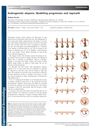
April 2016 in “Experimental Dermatology” This commentary discusses the mechanisms of progression and potential regrowth in androgenetic alopecia, indicating that the initiation of anagen in kenogen follicles is more critical for hair density improvement than reversing follicle miniaturization.
 9 citations
,
March 2007 in “Hair transplant forum international”
9 citations
,
March 2007 in “Hair transplant forum international” This article discusses aspects of evaluating patients with androgenetic alopecia for hair transplantation and reports no clinical results.