 40 citations
,
November 2017 in “International journal of nanomedicine”
40 citations
,
November 2017 in “International journal of nanomedicine” In this study, the researchers reported that chloramphenicol-loaded liposomes, particularly those incorporating deoxycholic acid, enhanced follicular uptake and showed strong antibacterial activity against methicillin-resistant Staphylococcus aureus, offering potential for treating MRSA-infected skin conditions with good skin biocompatibility and minimal toxicity.
 14 citations
,
May 2019 in “Human gene therapy”
14 citations
,
May 2019 in “Human gene therapy” This study found that minicircle-based gene therapy significantly lowered total homocysteine levels and improved liver CBS activity in a mouse model of CBS deficiency.
May 2018 in “Journal of Clinical Oncology” This study observed that a combination of low-dose cyclophosphamide and vinorelbine appears safe and has promising antitumor activity in patients with metastatic breast cancer resistant to anthracyclines and taxanes, achieving a 44% objective response rate at 6 months with manageable toxicity levels.
 September 2025 in “Arthritis Research & Therapy”
 In this study, researchers found that the compound BMS-470539 induced a senescence-like state in fibroblasts from systemic sclerosis patients, reducing fibrosis-associated markers in vitro and decreasing skin thickness in a mouse model of skin fibrosis, suggesting a novel therapeutic strategy for managing fibroblast-driven diseases.
5 citations
,
November 2010 in “Veterinary Record” Treatment with oral terbinafine and topical enilconazole was successful in resolving a Trichophyton dermatophytosis outbreak in L'Hoest's monkeys, with complete mycological cure achieved after eight weeks.
 January 2021 in “Journal of Entomology and Zoology Studies”
 This case report describes the effective treatment of psoroptic mange in Large White Yorkshire piglets using ivermectin, cefpodoxime, chlorpheniramine, povidone iodine, and Ascabiol lotion, resulting in full recovery and absence of mites.
May 2021 in “Veterinarìâ, tehnologìï tvarinnictva ta prirodokoristuvannâ” This study found 100% efficacy in treating psoroptosis in sheep and wild goats using macrolide injections "Iveron-10" and "Dectomax," complemented by "Butox-50" bathing in sheep, though infestation initially affected all animals with varied severity.
 September 2025 in “Research in Agriculture Livestock and Fisheries”
 This study found a high prevalence of parasitic infections in cattle in the Mymensingh district of Bangladesh, with mixed infections being more common and highlighting the need for improved management practices.
1 citations
,
April 2024 in “Pathogens” This study observed mycobacterial infection with M. xenopi in a pet ferret, noting its resistance to doxycycline, and highlighted the potential zoonotic transmission risk associated with such infections.
42 citations
,
September 2012 in “PLoS ONE” In this study, bezafibrate treatment improved certain aging-like features in a mouse model with mitochondrial dysfunction, but did not enhance muscle function or lifespan.
7 citations
,
September 2021 in “Antimicrobial Agents and Chemotherapy” This study found that olorofim demonstrated potent in vitro and in vivo antifungal activity against dermatophytes, resolving skin lesions in a guinea pig model similar to clotrimazole, suggesting it may be a promising treatment for dermatophytosis.
 December 2024 in “Egyptian Poultry Science”
 This study found that topical Ivermectin 0.1% was the most effective treatment for rabbit mange among the tested options, achieving 100% survival, no persistent skin scales, and significant body weight changes, while topical cebacil gel resulted in 100% mortality and should not be used.
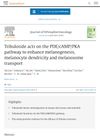 December 2023 in “Journal of ethnopharmacology”
 This study found that tribuloside, a flavonoid from Tribulus terrestris L., enhances melanin production in human melanocytes, zebrafish, and human skin samples without causing toxicity, potentially through inhibiting PDE to increase cAMP levels and promote the melanin biosynthesis pathway.
 5 citations
,
January 1998 in “Journal of Toxicologic Pathology”
5 citations
,
January 1998 in “Journal of Toxicologic Pathology” This study found that topical treatment with Maneb led to delayed epithelial cell degeneration in hair follicles of rats due to apoptosis.
11 citations
,
March 2023 in “Marine Drugs” In this study, researchers isolated five new compounds from Monascus purpureus wmd2424 and found that four exhibited mild antifungal activity against several fungi.
 15 citations
,
June 1964 in “Experimental Biology and Medicine”
15 citations
,
June 1964 in “Experimental Biology and Medicine” This study found that methotrexate treatment for 15 days suppressed tuberculin hypersensitivity in Strain 2 guinea pigs without causing lymphopenic or anti-inflammatory effects.
March 2025 in “JAAD reviews.” This review found that bimatoprost effectively treats chemotherapy-induced eyelash loss, known as milphosis, in cancer patients, as demonstrated in three small trials, but further research is needed due to limitations like small sample sizes and short follow-up periods.
January 2013 in “Hunan Agricultural Sciences” In this study, Lactobacillus reuteri and Bacillus natto were found to potentially replace Aureomycin in alleviating weaning stress in piglets, based on growth, diarrhea rate, immunity, and other health indicators.
3 citations
,
July 2023 in “Cells” This study found that topical application of recombinant human MG53 protein mitigated nitrogen mustard-induced skin injuries in mice by preserving epidermal integrity and hair follicle structure.
 February 2026 in “Molecules”
 This study reported that a novel nanomedicine combining berberine and sinapic acid significantly inhibited the growth of mouse mammary carcinoma cells and demonstrated an anti-tumor effect in vivo, without significant systemic toxicity after 28 days, suggesting a promising, low-toxicity therapeutic strategy for breast cancer.
 4 citations
,
January 2017 in “Ciência Rural”
4 citations
,
January 2017 in “Ciência Rural” This case report highlights that equine multisystemic eosinophilic epitheliotropic disease should be considered in horses presenting with skin lesions and gastrointestinal symptoms, as illustrated by the progression in a 5-year-old horse despite treatment.
 June 2026 in “Digital Commons - PCOM (Philadelphia College of Osteopathic Medicine)”
 This study observed that a 24-hour pre-treatment with MitoQ significantly protected H9c2 myoblasts from doxorubicin-induced damage while enhancing doxorubicin's effectiveness in prostate cancer cells, outperforming dexrazoxane's effects without compromising the anti-cancer efficacy.
3 citations
,
October 2024 in “Veterinary Medicine and Science” This study reported successful treatment of sarcoptic mange in two wild bare-nosed wombats using three topical doses of moxidectin, clearing skin crusting and mites within two weeks.
 44 citations
,
August 1996 in “Drugs & Aging”
44 citations
,
August 1996 in “Drugs & Aging” Mitoxantrone is effective for treating acute leukemia, especially in older patients, with a lower risk of heart damage.
 March 2025 in “Buletin Veteriner Udayana”
 In this case report, a 2.5-year-old cat with scabies and bacterial pneumonia showed significant improvement in symptoms and hair regrowth following a treatment regimen including ivermectin, amoxicillin with clavulanic acid, diphenhydramine, methylprednisolone, and supportive therapies over 100 days.
 60 citations
,
January 2004 in “The journal of investigative dermatology/Journal of investigative dermatology”
60 citations
,
January 2004 in “The journal of investigative dermatology/Journal of investigative dermatology” This study found that inhibiting PKC-β activity with bisindolylmaleimide reduces pigmentation in the skin and hair of guinea pigs and mice by preventing tyrosinase activation.
 June 2024 in “ESMO Gastrointestinal Oncology”
 The BAYONET trial is a phase II study designed to assess the efficacy and safety of combining encorafenib, binimetinib, and cetuximab for patients with BRAF V600E-mutant metastatic colorectal cancer that is resistant to encorafenib plus cetuximab; results are not yet reported.
1 citations
,
January 2020 in “Progressive Agriculture” This study found that three weekly injections of long-acting tetracycline effectively treated generalized bovine dermatophilosis in a buffalo dairy farm.
 8 citations
,
May 2019 in “Journal of dermatological treatment”
8 citations
,
May 2019 in “Journal of dermatological treatment” This study found that vismodegib was effective in treating basal cell carcinoma, achieving complete remission in some patients; however, significant side effects often required careful management to prevent therapy suspension, which can lead to resistance.
 January 2026 in “Buletin Veteriner Udayana”
 This study documented a case of Dipylidium caninum infection in a 4-month-old female dog, effectively treated with a deworming medication, resulting in significant improvement and no worms detected after five days. Routine deworming and maintaining hygienic conditions are recommended to prevent reinfection and transmission.