 April 2024 in “Pharmaceuticals”
 This review highlights the clinical usefulness of bimatoprost in lowering intraocular pressure for glaucoma patients and its promising results in promoting hair growth for conditions like alopecia, with research also exploring potential new applications and delivery systems.
 May 2023 in “Dermatology and therapy”
 This study aims to provide a practical guide for managing common causes of madarosis, highlighting the need to identify underlying causes to ensure effective treatment for eyelash and eyebrow loss.
 6 citations
,
October 2022 in “American journal of clinical dermatology”
6 citations
,
October 2022 in “American journal of clinical dermatology” This review provides an updated overview of the symptomatology, diagnosis, trichoscopy findings, and treatment options for eyebrow and eyelash alopecia, but it reports no new experimental results.
11 citations
,
August 2017 in “Supportive care in cancer” This study highlights the significant impact of eyebrow and eyelash loss during chemotherapy on women's quality of life, noting both emotional and physical challenges.
 10 citations
,
February 2015 in “Clinics in Dermatology”
10 citations
,
February 2015 in “Clinics in Dermatology” This article discusses various periocular conditions like madarosis, milphosis, trichomegaly, and dermatochalasis, and highlights their potential link to underlying local and systemic diseases, but reports no new clinical findings.
 36 citations
,
January 2015 in “Dermatology”
36 citations
,
January 2015 in “Dermatology” In this study, bimatoprost solution showed better results than corticosteroid in terms of rapidity, percentage of hair regrowth, and side effects for treating scalp alopecia areata.
 38 citations
,
October 2014 in “British journal of dermatology/British journal of dermatology, Supplement”
38 citations
,
October 2014 in “British journal of dermatology/British journal of dermatology, Supplement” The study found that daily use of bimatoprost ophthalmic solution 0.03% for one year was effective in improving eyelash growth and patient satisfaction in both idiopathic and chemotherapy-induced hypotrichosis, with no serious drug-related adverse events reported.
 64 citations
,
July 2011 in “Dermatologic Therapy”
64 citations
,
July 2011 in “Dermatologic Therapy” This review discusses treatments for chemotherapy-induced alopecia, highlighting scalp cooling for hair loss prevention and 2% topical minoxidil for regrowth acceleration as effective options, but reports a need for more rigorous trials to validate promising new therapies.
 69 citations
,
April 2010 in “Dermatologic Surgery”
69 citations
,
April 2010 in “Dermatologic Surgery” This review discusses the safety and efficacy of bimatoprost ophthalmic solution 0.03% for enhancing eyelash growth by influencing the eyelash hair cycle and follicles, and it reports no new results.
 23 citations
,
April 2010 in “Clinical, cosmetic and investigational dermatology”
23 citations
,
April 2010 in “Clinical, cosmetic and investigational dermatology” This review discusses the cutaneous application of bimatoprost ophthalmic solution 0.03% for enhancing upper eyelash growth and suggests it is both safe and effective; no new clinical results are reported.
35 citations
,
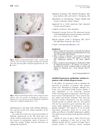
March 2010 in “British journal of dermatology/British journal of dermatology, Supplement” This study demonstrates that mouse eyelashes can effectively model human eyelash growth to analyze morphology, development, and the effects of growth-stimulatory agents like bimatoprost.
 30 citations
,
August 2009 in “Journal of the American Academy of Dermatology”
30 citations
,
August 2009 in “Journal of the American Academy of Dermatology” This study found that while bimatoprost was safe for 16 weeks, it was not effective for eyelash growth in patients with significant loss due to alopecia areata, though some with less loss experienced growth.
 209 citations
,
September 2008 in “Dermatologic Therapy”
209 citations
,
September 2008 in “Dermatologic Therapy” This review discusses the role of androgens in hair follicle regulation and suggests that a better understanding could enhance treatments for conditions like hirsutism and alopecia, but does not present new findings.
 33 citations
,
November 2006 in “Survey of Ophthalmology”
33 citations
,
November 2006 in “Survey of Ophthalmology” This report discusses the various causes and clinical assessment of madarosis, emphasizing the importance of recognizing and diagnosing associated vision or life-threatening conditions, without presenting new findings.
7 citations
,
May 1979 in “Medical & biological engineering & computing” The trichometer accurately measures hair growth and is easy to use.