 41 citations
,
January 2014 in “Annals of Dermatology”
41 citations
,
January 2014 in “Annals of Dermatology” This study found that dermoscopy showed distinctive patterns for different types of alopecia, supporting its clinical usefulness for diagnosing diseases with small round or oval hairless patches on the scalp.
2 citations
,
January 2017 in “International Journal of Trichology” This case report describes the trichoscopic and histological features observed in a 7-year-old boy with morphea en coup de sabre and details the positive response to systemic immunosuppressive therapy.
 1 citations
,
September 2013 in “The Journal of Dermatology”
1 citations
,
September 2013 in “The Journal of Dermatology” An 8-year-old girl developed a rare skin condition in a linear pattern on one side of her body after a lung infection, which improved with treatment.
11 citations
,
June 1974 in “Journal of Cutaneous Pathology” In this study, electron microscopy of follicular mucinosis showed severe cytoplasmic degeneration in hair follicles, with myelin figures and onion-like lamellar structures, but no indications of mucin release through degeneration or degradation were found.
March 2005 in “Journal of the American Academy of Dermatology” Recognizing minor skin lesions can help identify serious cancer syndromes.
April 2025 in “Indian Journal of Dermatology” In this case report, a 24-year-old male with a translucent nodule in the left nasolabial fold was diagnosed with a solitary fibrofolliculoma with cystic changes upon histopathology, emphasizing the rarity and potential for misdiagnosis of these benign cutaneous tumors.
 1 citations
,
January 1980 in “Archives of Dermatology”
1 citations
,
January 1980 in “Archives of Dermatology” This exchange discusses interpretations of syphilitic chancres, noting disagreement over whether multiple lesions are atypical given historical references that describe primary chancres as often being single.
5 citations
,
July 2023 in “Microorganisms” This study analyzed skin biopsies from human monkeypox virus (hMPXV1) cases and found characteristic pustular stage features, including epidermal necrosis, shadow cell appearance, ballooned keratinocytes, and a dense inflammatory infiltrate, expanding histological knowledge crucial for understanding this disease and related Orthopoxvirus infections.
January 2022 in “Clinical Cases in Dermatology” This report describes a case of a 4-year-old boy diagnosed with linear alopecia areata, characterized by patchy hair loss and associated with unique hyperpigmented skin lesions.
 March 2025 in “American Journal of Medical Genetics Part A”
 In this study, researchers found that mosaic PLCD1 hotspot variants, even without the recognized germline "risk allele," may be a rare but significant genetic cause of nevus trichilemmocysticus, warranting DNA testing and sensitive sequencing technologies for accurate diagnosis.
 73 citations
,
April 2010 in “Anais Brasileiros de Dermatologia”
73 citations
,
April 2010 in “Anais Brasileiros de Dermatologia” This study concluded that dermoscopy enhances the diagnostic capability for cicatricial alopecia beyond clinical inspection and identified novel dermoscopic features such as blue-grey dots.
2 citations
,
May 1979 in “PubMed” This report describes four cases of monilethrix in children and concludes that periodic inhibition of keratin synthesis, not a metabolic defect, may explain the hair abnormality.
4 citations
,
December 1994 in “PubMed” This case study reports that secondary milia linked to bullous erysipelas in a 64-year-old woman's leg resolved nearly completely with topical 0.05% tretinoin cream.
 2 citations
,
December 2008 in “Clinical and Experimental Dermatology”
2 citations
,
December 2008 in “Clinical and Experimental Dermatology” This case report describes a 10-year-old girl with a cosmetically concerning forehead lesion and a history of right frontal headaches, featuring a small palpable and pulsatile erythematous lesion with associated macular erythema.
December 2018 in “European Journal of Pediatric Dermatology/PD. European journal of pediatric dermatology” This article discusses the potential involvement of hair follicle melanocytes in follicular vitiligo, noting a pattern of depigmentation centered on follicles and supported by inflammatory infiltrates, without reporting new clinical results.
36 citations
,
November 2011 in “Journal of the European Academy of Dermatology and Venereology” This study identified distinct microscopic characteristics of acne scars, including inflammatory infiltrates and insufficient collagen deposition, suggesting that treatment should consider these histopathological findings and employ combination therapy.
19 citations
,
November 1985 in “Archives of Dermatology” This case study documented a black male newborn developing large bullae that healed with hypopigmentation, suspecting proteolytic enzymes in keratinocytes caused the collagenolysis responsible for the condition.
 80 citations
,
June 2020 in “Dermatopathology”
80 citations
,
June 2020 in “Dermatopathology” This review discusses the various skin lesions associated with COVID-19, which vary in type and severity, and reports that these lesions can appear before other symptoms and typically resolve spontaneously.
 1 citations
,
February 2018 in “Australasian journal of dermatology”
1 citations
,
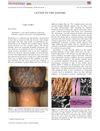
February 2018 in “Australasian journal of dermatology” Advanced imaging techniques are crucial for accurately diagnosing Monilethrix, a rare hair disorder.
 7 citations
,
November 2013 in “Pediatric and Developmental Pathology”
7 citations
,
November 2013 in “Pediatric and Developmental Pathology” This retrospective review of hair samples from pediatric patients indicated that microscopic hair examination might be a useful first-line investigation for diagnosing various genetic conditions.
2 citations
,
February 2023 in “Anais Brasileiros de Dermatologia” 19 citations
,
August 1996 in “British Journal of Dermatology” This study found that dermal papillae in alopecia areata, including clinically normal follicles, exhibited ultrastructural abnormalities that suggest an early pathological role in the disease's development.
 27 citations
,
July 2017 in “European Journal of Dermatology”
27 citations
,
July 2017 in “European Journal of Dermatology” This article reviews the role of microRNAs as epigenetic modulators in dermatology but reports no new clinical findings.
May 2025 in “Preprints.org” This study identified a unique circulating microRNA signature associated with severe alopecia areata, distinguishing it from other inflammatory skin conditions and suggesting these miRNAs as non-invasive biomarkers for diagnosis and potential therapeutic targets.
 17 citations
,
January 2014 in “Annals of Dermatology”
17 citations
,
January 2014 in “Annals of Dermatology” This study observed that using serial sectioning and d-PAS staining improved detection of Malassezia folliculitis, notably in lesions on the trunks of male patients.
18 citations
,
January 2002 in “Pediatric Dermatology” This case report describes a rare instance of cutaneous focal mucinosis in a 12-year-old Chinese girl, presented as a hypopigmented plaque on her chin.
June 2011 in “European Journal of Pediatric Dermatology” This study diagnosed an 11-year-old girl with initial androgenetic alopecia and monilethrix after observing unique hair shaft abnormalities and skin conditions, unlike her affected parents.
 13 citations
,
February 2004 in “Clinical and Experimental Ophthalmology”
13 citations
,
February 2004 in “Clinical and Experimental Ophthalmology” This report describes the clinical and histopathological features of lipoid proteinosis in a brother and sister with lid lesions, highlighting the importance of recognizing such lesions for diagnosis.
August 2022 in “Journal of Pakistan Association of Dermatologists” This case report describes a 7-year-old female from the Middle East with monilethrix, highlighting the disease's rarity in this population, characterized by brittle, sparse hair and keratosis pilaris.
 8 citations
,
November 2015 in “The American journal of dermatopathology/American journal of dermatopathology”
8 citations
,
November 2015 in “The American journal of dermatopathology/American journal of dermatopathology” The authors present a case of punctate follicular porokeratosis, suggesting it as a distinct clinical entity distinguished by keratotic lesions originating specifically from hair follicles.