18 citations
,
January 2018 in “BMC dermatology” This paper describes a case of epidermolysis bullosa simplex with muscular dystrophy associated with a novel PLEC mutation and diffuse alopecia, highlighting a potential genetic link that remains uncertain.
 7 citations
,
July 1975 in “Acta dermato-venereologica”
7 citations
,
July 1975 in “Acta dermato-venereologica” This case study reports a patient with Rothmund-Thomson type congenital poikiloderma, showing primarily skin changes and hair loss, along with slightly elevated lysine and cystine levels in urine.
46 citations
,
November 2014 in “Journal of Cutaneous Pathology” This study describes the diverse histopathological patterns and clinical features observed in patients with folliculotropic mycosis fungoides, emphasizing the importance of accurate recognition to avoid diagnostic errors.
 April 2025 in “Veterinary Dermatology”
 This study observed that dermoscopy is a useful technique for distinguishing between infundibular keratinising acanthoma and follicular cysts in dogs, with specific dermoscopic features noted for each.
July 2026 in “Indian Journal of Dermatology Venereology and Leprology” 2 citations
,
October 1992 in “PubMed” This study found no significant histologic differences in skin structure based on age, sex, or woodchuck hepatitis virus infection status among woodchucks.
June 2020 in “Journal of Investigative Dermatology” This study found that spatial transcriptomics can reveal hidden inflammation patterns in atopic dermatitis by correlating epidermal and dermal gene expression levels, improving understanding of skin pathology.
 June 2017 in “Journal of evolution of medical and dental sciences”
 This study observed that lupus erythematosus-specific skin lesions were more common than nonspecific ones and can serve as diagnostic clues, while nonspecific lesions were more often linked to systemic disease.
1 citations
,
January 2022 in “Skin Appendage Disorders” This study found that trichoscopy is crucial for distinguishing lupus erythematosus-specific alopecia from alopecia areata, leading to more accurate diagnoses and better outcomes for patients.
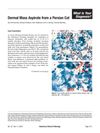 22 citations
,
December 2003 in “Veterinary clinical pathology”
22 citations
,
December 2003 in “Veterinary clinical pathology” This case study reported a diagnosis of dermatophytic pseudomycetoma in a Persian cat with dermal nodules, highlighting potential heritable predisposition and suggesting systemic antifungal therapy for fair prognosis.
December 2025 in “Journal of Paediatrics and Child Health” This study highlights that careful interpretation of bite-centered anatomy and trichoscopic signs can help differentiate tick-bite alopecia from alopecia areata in children, with specific management strategies based on clinical signs.
January 2016 in “Dermatology online journal” This case report describes an adolescent female with a linear array of trichoepitheliomas on her left neck, highlighting the clinical presentation of this benign tumor.
January 2018 in “Journal of Investigative Dermatology” This quiz article provides a series of dermatological diagnosis questions based on a Journal of Investigative Dermatology article and includes explanations but reports no original research findings.
 4 citations
,
March 2013 in “The American Journal of Cosmetic Surgery”
4 citations
,
March 2013 in “The American Journal of Cosmetic Surgery” This review discusses how hair follicle light sensitivity is linked to mesenchymal remodeling and suggests that this connection influences photoepilation outcomes and optimal treatment strategies, reporting no new clinical results.
22 citations
,
March 2007 in “European journal of pediatrics” This study found that scanning electron microscopy revealed considerable abnormalities in hair morphology in MPS I, II, IIIA, and IIIB patients, potentially related to heparan sulfate accumulation.
12 citations
,
January 1991 in “Acta Dermato Venereologica” The researchers reported that BCE-like changes overlying dermatofibroma show a differentiation pattern most similar to normal basal cells based on specific keratin markers.
April 2026 in “Skin Appendage Disorders” This case report documents the first known occurrence of basal cell carcinoma at the site of repeated microneedling use for male androgenetic alopecia, underscoring the need for further studies on the long-term safety of such devices.
 November 2022 in “The journal of investigative dermatology/Journal of investigative dermatology”
 This study found that Imaging Mass Cytometry effectively visualizes multiple biomarkers in alopecia areata, enhancing analysis of immune cell and tissue interactions in hair pathology.
 15 citations
,
April 2007 in “Journal of child neurology”
15 citations
,
April 2007 in “Journal of child neurology” This case report describes an 11-month-old boy with Menkes disease, highlighting symptoms such as developmental delays and poor therapeutic response due to significant brain and vascular abnormalities.
 April 2018 in “Journal of Investigative Dermatology”
 This study found that no patients with moderately dysplastic nevi with positive margins developed melanoma at the biopsy site, but those with a history of multiple nevi may have a higher risk of melanoma elsewhere.
4 citations
,
February 2018 in “Annales de Dermatologie et de Vénéréologie” Onychomatricome is a benign nail tumor with specific dermoscopic features that help distinguish it from cancer.
7 citations
,
May 1978 in “Acta Dermato Venereologica” This case report details a 36-year-old man with atypical necrobiosis lipoidica on his face, characterized by annular lesions and prominent giant cells without clear granuloma formation.
21 citations
,
March 2003 in “Clinical and Experimental Dermatology” This study found two recurrent missense mutations in the hHb6 gene associated with monilethrix in families from Russia and Colombia, supporting their role in this hair disorder worldwide.
September 2024 in “Dermatologica Sinica” This article describes a 10-month-old female with congenital smooth muscle hamartoma, highlighting the importance of differential diagnosis in congenital skin lesions due to potential malignancy risks.
6 citations
,
May 2002 in “British journal of dermatology/British journal of dermatology, Supplement” This case study suggests a possible rare follicular variant of neutrophilic dermatosis linked to myelogenous leukemia, where skin lesions improved following chemotherapy treatment.
35 citations
,
February 2004 in “Veterinary Dermatology” This study observed that cutaneous lymphocytosis in cats is a slowly progressive and relatively benign disease, but predicting individual clinical outcomes from skin lesions was not possible.
25 citations
,
June 2009 in “British Journal of Dermatology” This study classified scars in discoid lupus erythematosus patients into six types based on anatomical location and morphology, suggesting early identification might influence more aggressive treatment strategies.
 2 citations
,
August 2008 in “Journal of Liaquat University of Medical & Health Sciences”
2 citations
,
August 2008 in “Journal of Liaquat University of Medical & Health Sciences” This case report describes a twenty-year-old woman misdiagnosed with a sebaceous cyst that was actually pilomatrixoma, a benign skin lesion from hair matrix cells, confirmed by histopathology after excision.
84 citations
,
March 2002 in “The Journal of Dermatology” This study supports the idea that steatocystoma multiplex is a hamartomatous condition and suggests it may be a variant of eruptive vellus hair cyst, both originating in the pilosebaceous duct.
 4 citations
,
September 2012 in “Journal of Nanoscience and Nanotechnology”
4 citations
,
September 2012 in “Journal of Nanoscience and Nanotechnology” In this experimental study, there was no impact of the surrounding ferromagnetic film on the magnetization reversal processes in submicrometric antidot arrays, though a significant increase in coercivity was observed.