2 citations
,
May 2000 in “Additives for Polymers” This review discusses the role of primary and secondary factors in androgenetic alopecia, suggesting that plant-based folk remedies may ameliorate these factors when used alongside conventional therapies; it reports no new clinical results.
 January 2025 in “Journal of Pharmacognosy and Phytochemistry”
 This review highlights the potential of marine-derived nutraceuticals for treating skin and hair disorders, focusing on Viviscal, a supplement shown to be safe and effective in enhancing hair growth by improving cellular function and strengthening hair.

This study found that protein hydrolysates from mealworms, especially those derived using flavourzyme, significantly enhance adipogenic differentiation in 3T3-L1 preadipocytes, suggesting their potential as sustainable ingredients for glycemic control, skin health, and tissue regeneration products.
 August 2023 in “Stem Cell Research & Therapy”
 This study found that cell-free fat extract (CEFFE) enhanced hair growth in mice with androgenetic alopecia by increasing hair follicle density and promoting proliferation while regulating the DHT/AR pathway.
 4 citations
,
August 2017 in “Cosmetics”
4 citations
,
August 2017 in “Cosmetics” This study observed that Biota orientalis L. leaf extract may promote hair growth and suppress sebum production in human cells, suggesting potential benefits for hair restoration.
 November 2024 in “Applied Sciences”
 This study suggests that a supercritical CO2 extract from wild-strawberry-processing waste may be an innovative and sustainable ingredient for cosmetic applications, particularly in treating androgenic-related skin conditions.
January 2010 in “대한미용학회지” This study found that extracts from Angelica gigas Nakai and Glycyrrhiza uralensis stimulated hair regrowth and follicle development in a shaving mouse model, suggesting potential for hair growth or hair loss prevention in humans.
 February 2023 in “Asian journal of pharmaceutical research and development”
 This survey reports on the types and extraction factors of flavonoids in three aquatic plants from Iraqi marshlands but notes limited information on individual flavonoid profiles and their biological impacts.
 105 citations
,
January 2010 in “Mediators of Inflammation”
105 citations
,
January 2010 in “Mediators of Inflammation” This article reviews the role of skin surface lipid in mediating environmental stressors and discusses potential therapeutic interventions, reporting no new experimental findings.
 57 citations
,
March 2024 in “Nano-Micro Letters”
57 citations
,
March 2024 in “Nano-Micro Letters” In this study, researchers created a core-shell nanozyme, CeO2@ZIF-8/Au, which autonomously regulates ROS levels to efficiently eliminate bacteria, reduce inflammation, and promote wound healing by balancing ROS generation and scavenging in response to environmental conditions.
 49 citations
,
October 2017 in “Nutrients”
49 citations
,
October 2017 in “Nutrients” This study observed that the ethyl acetate extract of Equisetum debile showed high activity against 5α-reductase and lipid peroxidation with no cytotoxicity on dermal papilla cells.
 30 citations
,
February 2022 in “Stem Cell Reviews and Reports”
30 citations
,
February 2022 in “Stem Cell Reviews and Reports” This review of stem cell-based tissue engineering treatments in preclinical burn wound models reports promising improvements in skin repair, suggesting potential as an enhanced therapy for burn wounds.
 11 citations
,
March 2018 in “Protoplasma”
11 citations
,
March 2018 in “Protoplasma” In this laboratory study, procyanidin B2 inhibited early plant growth and biochemical responses in wheat seedlings treated with lipopolysaccharides from Azospirillum brasilense, suggesting that plant response activation requires LPS recognition by plant cells.
 8 citations
,
March 2020 in “Dermatologic Therapy”
8 citations
,
March 2020 in “Dermatologic Therapy” This study found that a new formulation kit of Pielus Anti-hair loss lotion and shampoo, used daily for 90 days, was safe and effective in reducing hair loss and increasing hair strength and density among patients with telogen effluvium and/or androgenetic alopecia.
 3 citations
,
March 2024 in “Discover Applied Sciences”
3 citations
,
March 2024 in “Discover Applied Sciences” In this study, researchers found that a protein-enriched cream made from Spirulina platensis improved the physical structure of natural hair, as evidenced by more intact and smoother cuticles compared to a control cream without protein, suggesting its potential for hair care applications.
 1 citations
,
January 2022 in “Journal of experimental and clinical medicine”
1 citations
,
January 2022 in “Journal of experimental and clinical medicine” This review examines the relationship between glycation, insulin resistance, and PCOS, discussing various treatments and highlighting M. oleifera and S. platensis as potential therapeutic agents, but reports no new clinical results.
 1 citations
,
June 2019 in “Food Research”
1 citations
,
June 2019 in “Food Research” In this study, tempeh oil rich in PUFAs, particularly from black soybean, significantly down-regulated MMP-9 gene expression in UVB-irradiated mice skin, indicating potential for use in preventing skin photoaging.
 May 2026 in “Scientific and Technical Bulletin оf State Scientific Research Control Institute of Veterinary Medical Products and Fodder Additives аnd Institute of Animal Biology”
 The researchers reported that zinc carbonate nanoparticles stabilized with polyvinylpyrrolidone did not show local irritant or skin-resorptive effects in preclinical tests on rabbits and rats.
 May 2026 in “International Journal of Homoeopathic Sciences”
 This article explores the use of homeopathy in aesthetic medicine, discussing various remedies like Silicea 30 and Arnica 30 for conditions such as wrinkles and acne, and highlighting their holistic approach targeting underlying causes without reported side effects.
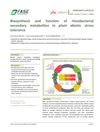 November 2025 in “Frontiers of Agricultural Science and Engineering”
 This study observed that rhizobacterial strain RT3 significantly improved drought tolerance in lettuce by increasing survival rates and fresh biomass after rewatering, with metabolites such as proline and glycine enhancing stress resilience.
 September 2025 in “Clinical Cosmetic and Investigational Dermatology”
 This review highlights that while moderate physical activity benefits skin health by improving circulation and reducing stress, intense exercise or inadequate protective measures can harm the skin, emphasizing the need for sun protection and personalized care.
 March 2025 in “GSC Biological and Pharmaceutical Sciences”
 In this review, the authors examined the potential benefits of using wood tar in dermatology and cosmetics in Sub-Saharan Africa, based on its historical application in skin care and its worldwide usage.

This study utilized polarized light microscopy to examine hair shafts in ten children with rare genetic disorders, such as Netherton syndrome and ectodermal dysplasia, providing valuable diagnostic insights into hair thickness, composition, and structural irregularities associated with these conditions.
 January 2025 in “Journal of Pharmacognosy and Phytochemistry”
 This study developed plant-pigment-based shampoos using extracts from Neem, Fenugreek, Hibiscus, and Butterfly Pea, which demonstrated stability, antimicrobial properties, and potential scalp benefits such as hair growth promotion and dandruff reduction, making them a promising alternative to synthetic dyes.
 February 2024 in “International journal of biology, pharmacy and allied sciences”
 This study formulated a herbal hair oil using various plant extracts in coconut oil and reported its physical and chemical properties, such as viscosity and pH, but did not provide findings on its effects on hair health.
 February 2024 in “Research Square (Research Square)”
 This study optimized the extraction process for abomasum protein from Tianshan red deer, identifying two proteins with anti-inflammatory and anti-tumor activities, suggesting they could be beneficial in foods and nutraceuticals.
 October 2023 in “Arab Gulf journal of scientific research”
 This study found that adding Cinnamomum zeylanicum bark extract to a powder shampoo formulation significantly improved antioxidant activity without affecting its cleansing ability, although its clinical effectiveness remains to be tested.
Custom skincare can be made based on genes, fewer cats in Lublin have FeLV/FIV than national average, and studies also looked at small water bodies, river pollution, guppy growth, toxins in biochars, palm oil issues, and pumpkin seed oil for hair strength.
 December 2019 in “University of Malaya Students Repository”
 This study found that Soxhlet extraction is more effective at removing the toxin mimosine from Leucaena leucocephala, and mimosine shows promise as a biodiesel additive due to its antioxidative properties.
 January 2002 in “Journal of Toxicology-cutaneous and Ocular Toxicology”
 Botanical extracts are increasingly important in cosmetics and drugs for their effectiveness and safety, backed by traditional use and scientific evidence.