 5 citations
,
December 2014 in “Medicine and Pharmacy Reports”
5 citations
,
December 2014 in “Medicine and Pharmacy Reports” This study found that antiandrogenic therapy with Melleva 35 for three months was effective in reducing hair loss and improving acne in women with both Androgenetic Alopecia and Acne Vulgaris.
6 citations
,
January 2019 in “Indian Journal of Pharmacology” In this case study, a 14-year-old female with premature hair graying showed improved hair color after treatment with a topical Melitane 5% formulation and oral hair supplements.
 15 citations
,
March 2015 in “Experimental Dermatology”
15 citations
,
March 2015 in “Experimental Dermatology” Clotrimazole, an antifungal cream, may safely reduce skin pigmentation by breaking down the enzyme needed for making melanin.
 10 citations
,
June 2005 in “Small ruminant research”
10 citations
,
June 2005 in “Small ruminant research” This study found that melatonin combined with bromocryptine treatment in Spanish goats increased secondary hair follicle numbers and extended the cashmere growth phase during spring.
68 citations
,
January 2012 in “Lasers in surgery and medicine” This study found that combining microdermabrasion, a topical regimen, and low-fluence QS Nd:YAG laser treatment effectively cleared melasma in women, with 81% of participants achieving over 75% clearance and minimal side effects.
 40 citations
,
November 2017 in “International journal of nanomedicine”
40 citations
,
November 2017 in “International journal of nanomedicine” In this study, the researchers reported that chloramphenicol-loaded liposomes, particularly those incorporating deoxycholic acid, enhanced follicular uptake and showed strong antibacterial activity against methicillin-resistant Staphylococcus aureus, offering potential for treating MRSA-infected skin conditions with good skin biocompatibility and minimal toxicity.
January 2021 in “Systematic Reviews in Pharmacy” This study found that melatonin, alone or with minoxidil, significantly reduced hair loss and increased hair growth in mice by enhancing antioxidant activity and lowering lipid peroxidation.
 13 citations
,
October 2017 in “Bioorganic & Medicinal Chemistry”
13 citations
,
October 2017 in “Bioorganic & Medicinal Chemistry” This study found that compound 3, a tetrahydropyridoindole carboxymethylated at position 5, significantly inhibited sorbitol accumulation in both rat eye lenses and tissues affected by diabetes, indicating its potential as a lead compound for ALR2 inhibition.
1 citations
,
January 2013 in “Journal of clinical & experimental dermatology research” This study found that melatonin enhanced whisker growth in vitro and identified MT1 receptor presence in the granular layer of mouse epidermis and the outer root sheath, suggesting potential for hair growth treatment.
February 2009 in “Journal of the American Academy of Dermatology” Both skin products were equally effective in improving facial discoloration and skin quality.
 June 2006 in “Almustansiriya journal of pharmaceutical sciences/Al-Mustansiriyah journal of pharmaceutical sciences”
 This study found that melatonin may reduce the dose of prednisone needed for treating alopecia areata and its associated side effects by attenuating free radical damage on the immune system.
20 citations
,
February 2017 in “European journal of pharmaceutical sciences” This study found that the cocrystal of mycophenolic acid with isonicotinamide significantly improved solubility and dissolution rate, while two other cocrystals showed decreased performance in these areas.

In this study, researchers reported that hardshell capsules using the DiluCap® line of excipients demonstrated varying dissolution profiles under gastrointestinal-simulating conditions, with minoxidil and finasteride showing rapid release and melatonin and naltrexone displaying controlled release, indicating their suitability for different applications in compounding pharmacies.
This study found that Polygonum multiflorum radix ethanol extract may promote melanin synthesis, potentially helping to turn gray hair back to black by enhancing antioxidant activity and increasing tyrosinase expression.
 29 citations
,
January 2010 in “Journal of oleo science”
29 citations
,
January 2010 in “Journal of oleo science” In this study, mannosylerythritol lipids from soybean oil notably increased fibroblast and papilla cell viability, suggesting potential as a hair growth agent.
 July 2025 in “International Journal of Dermatology Venereology and Leprosy Sciences”
 This review explores the potential of microneedling as a drug delivery system for treating melasma, focusing on its mechanisms, safety, efficacy, and clinical advantages over conventional therapies like hydroquinone and lasers.
3 citations
,
November 2024 in “Pediatric Dermatology” This study found that dermatologic adverse events are common in children taking MEK inhibitors, with selumetinib patients experiencing less severe reactions and a lower risk of dosage adjustments. Age was noted as a factor in the likelihood of specific skin reactions.
11 citations
,
March 2023 in “Marine Drugs” In this study, researchers isolated five new compounds from Monascus purpureus wmd2424 and found that four exhibited mild antifungal activity against several fungi.
 6 citations
,
August 2013 in “한국응용생명화학회지”
6 citations
,
August 2013 in “한국응용생명화학회지” This study found that among eleven tested polymethoxyflavones, 5-hydroxy-7,4′-dimethoxyflavone was the strongest steroid 5α-reductase inhibitor and suggests potential use for benign prostatic hyperplasia treatment.
3 citations
,
March 2012 in “Arab Journal of Urology” This study found that cromakalim and pinacidil significantly inhibited porcine detrusor muscle contractions, suggesting these ATP-sensitive potassium channel openers may have potential in treating certain bladder diseases.
 December 2023 in “Journal of ethnopharmacology”
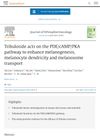
 This study found that tribuloside, a flavonoid from Tribulus terrestris L., enhances melanin production in human melanocytes, zebrafish, and human skin samples without causing toxicity, potentially through inhibiting PDE to increase cAMP levels and promote the melanin biosynthesis pathway.
 November 2022 in “Journal of Investigative Dermatology”
 This study developed a chalcone-based molecule that significantly increased tyrosinase inhibition and solubility, showing potential as a safe and effective skin depigmenting and antiaging agent, with supportive epigenetic and antioxidant properties observed in vitro.
 13 citations
,
February 2020 in “Journal of the American Academy of Dermatology”
13 citations
,
February 2020 in “Journal of the American Academy of Dermatology” This study found that both oral tranexamic acid and microneedling improve melasma treatment outcomes when added to standard therapy, with microneedling showing a more sustained remission.
 April 2026 in “bioRxiv (Cold Spring Harbor Laboratory)”
 This study introduced hydrogel microneedles loaded with palladium nanoparticles, which utilize the inherent cytotoxicity of polyethyleneimine to enhance the effectiveness of doxorubicin in treating melanoma, achieving a tumor inhibition rate of up to 98% in a murine model.
33 citations
,
January 2015 in “Journal of Ginseng Research” This study found that ginsenoside Rg3 significantly inhibited melanogenesis in human melanocytes and B16F10 cells by activating the ERK pathway, suggesting potential as a skin-whitening agent.
 6 citations
,
April 2014 in “European journal of medicinal chemistry”
6 citations
,
April 2014 in “European journal of medicinal chemistry” This study found that several newly synthesized dihydrobenzopyran compounds inhibited insulin secretion and had vasorelaxant activity, with some more potent than reference KATP channel activators, though compound 21 functioned as a Ca2+ entry blocker.
23 citations
,
March 2021 in “Gels” This study found that minoxidil solubilized in gelatin-containing microemulsions resulted in over 5% of the drug remaining in porcine skin, significantly more than the reference gel.
This study identified 92 novel regulators of melanogenesis, highlighting Aldehyde dehydrogenase 1A1 as a potential target for developing new treatments for hyperpigmentation disorders like melasma.
 57 citations
,
February 1994 in “Experimental dermatology”
57 citations
,
February 1994 in “Experimental dermatology” This study found that murine skin is a target for melatonin bioregulation, as melatonin affected DNA synthesis and tyrosinase activity in skin organ culture.
 June 2023 in “NILES Journal forGeriatric and Gerontology/NILES Journal for Geriatric and Gerontology”
 In this study, oral tranexamic acid significantly improved melasma in 40 female patients over three months, with no adverse effects like post-inflammatory hyperpigmentation or bleeding, demonstrating its potential as a safe and effective treatment option.